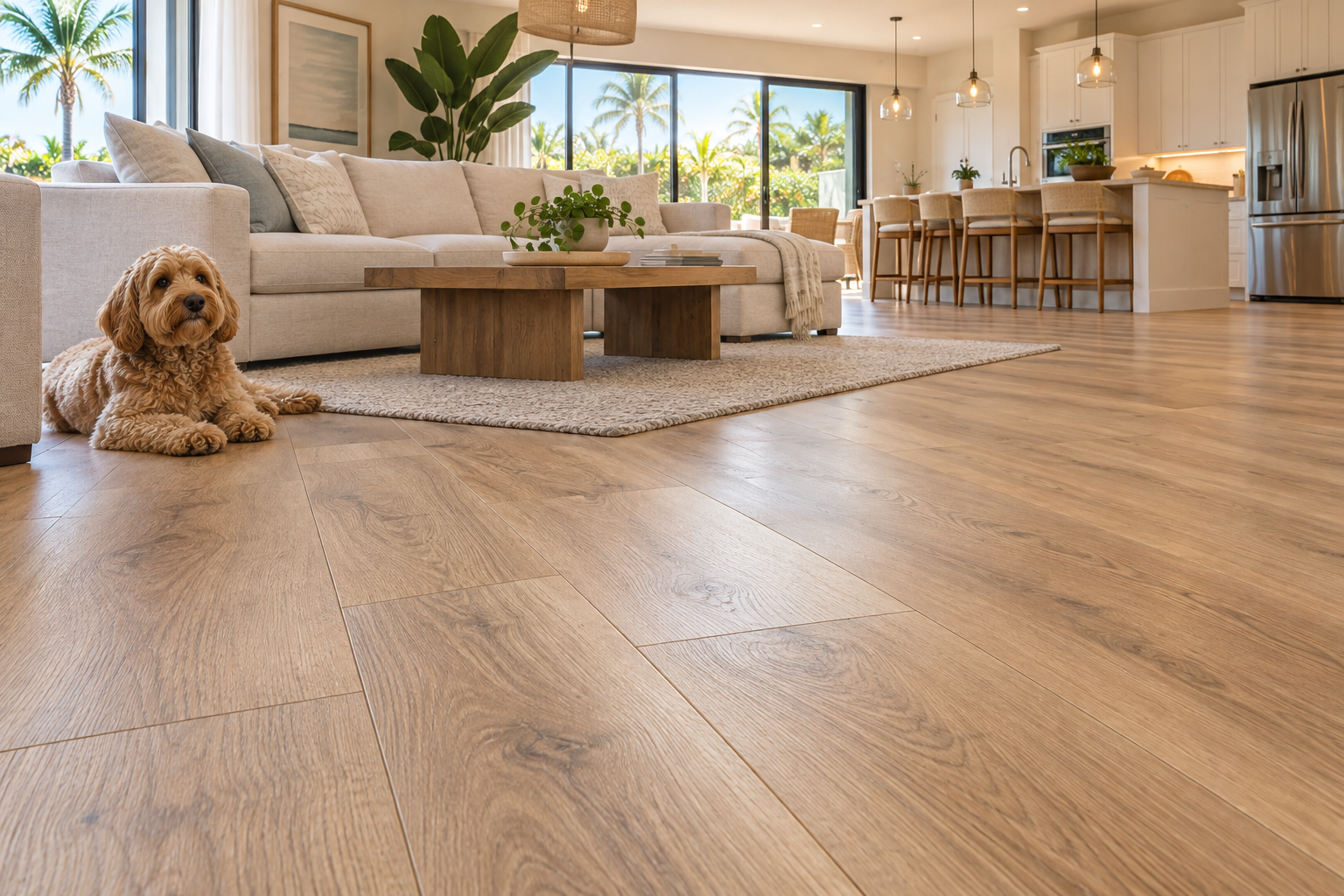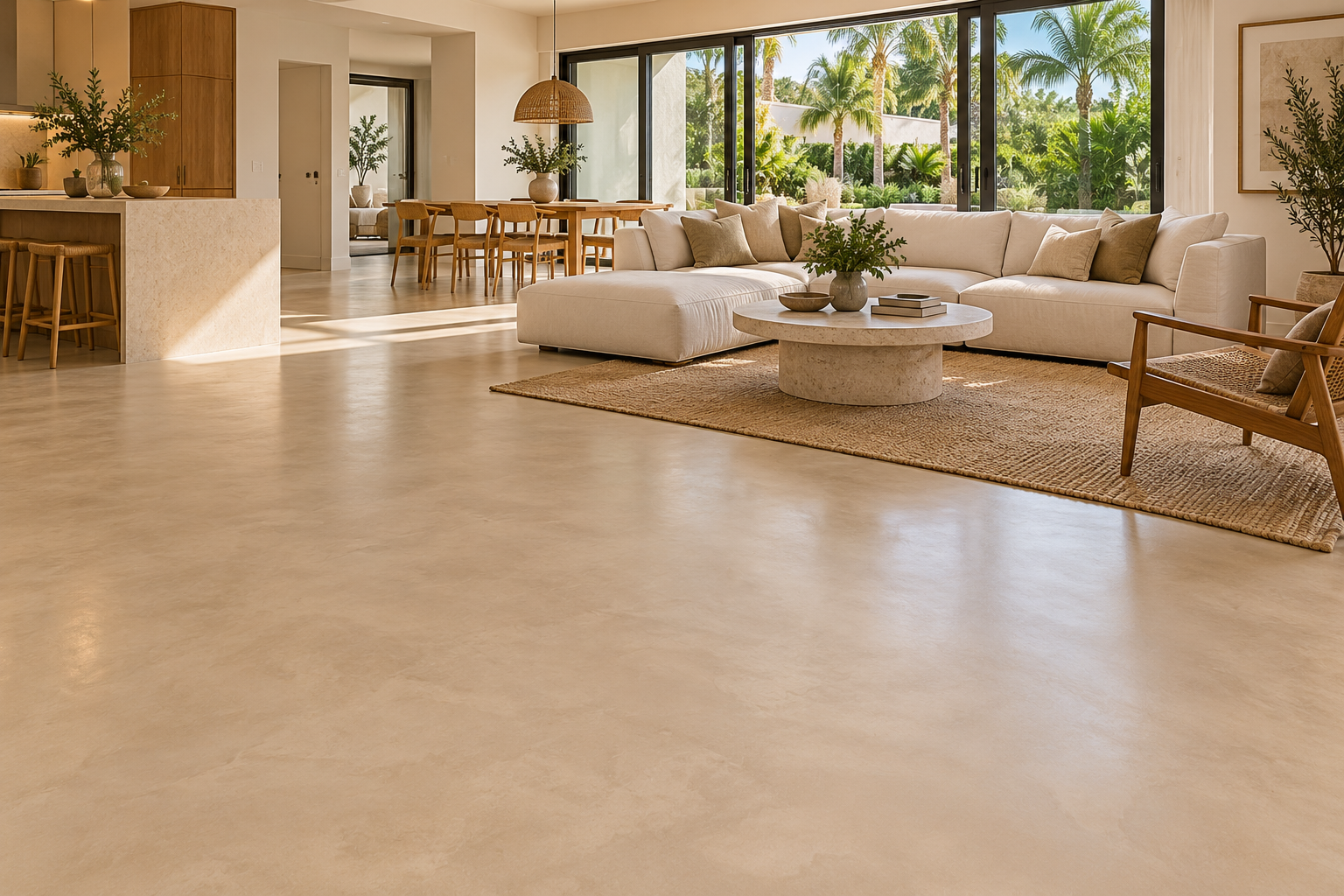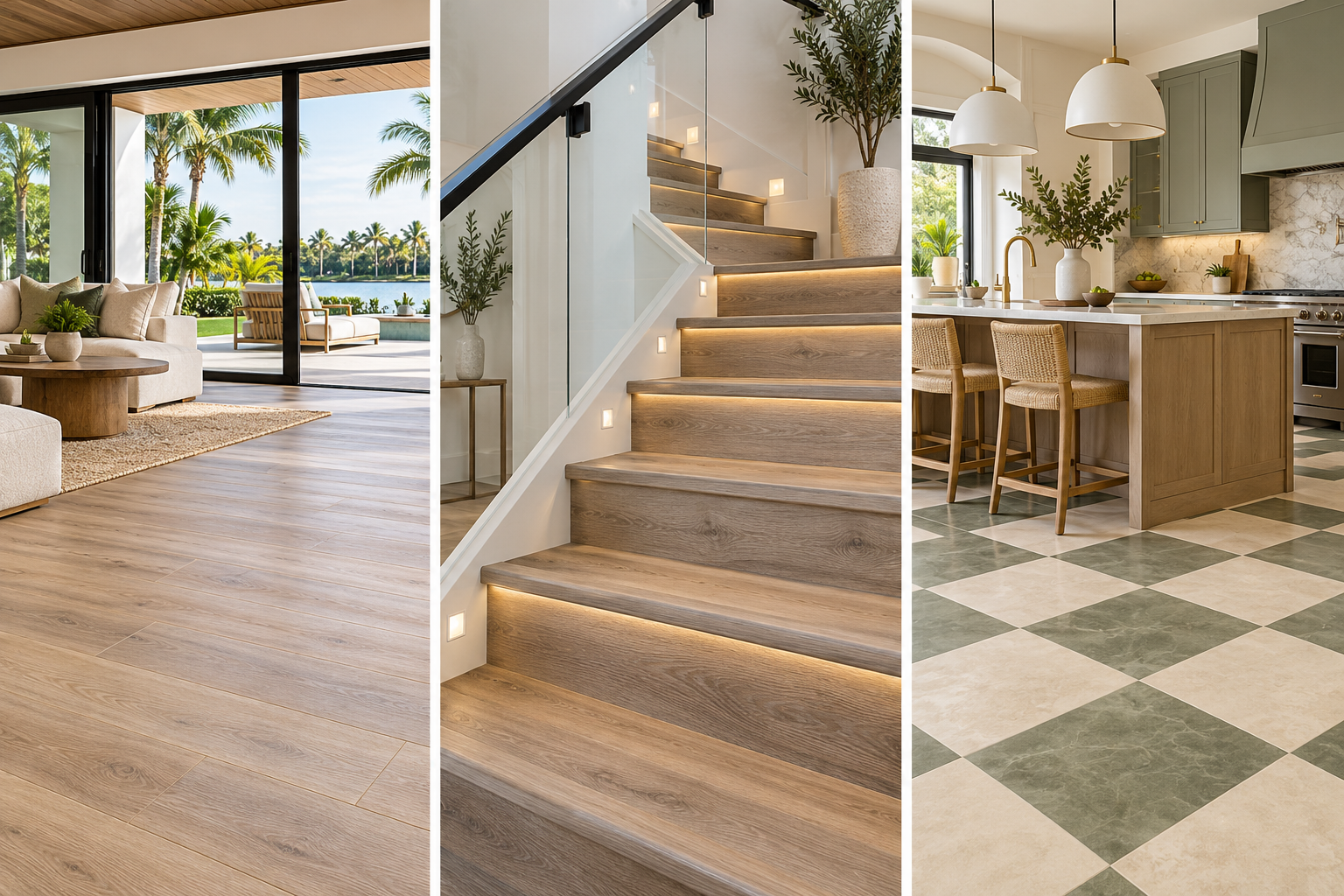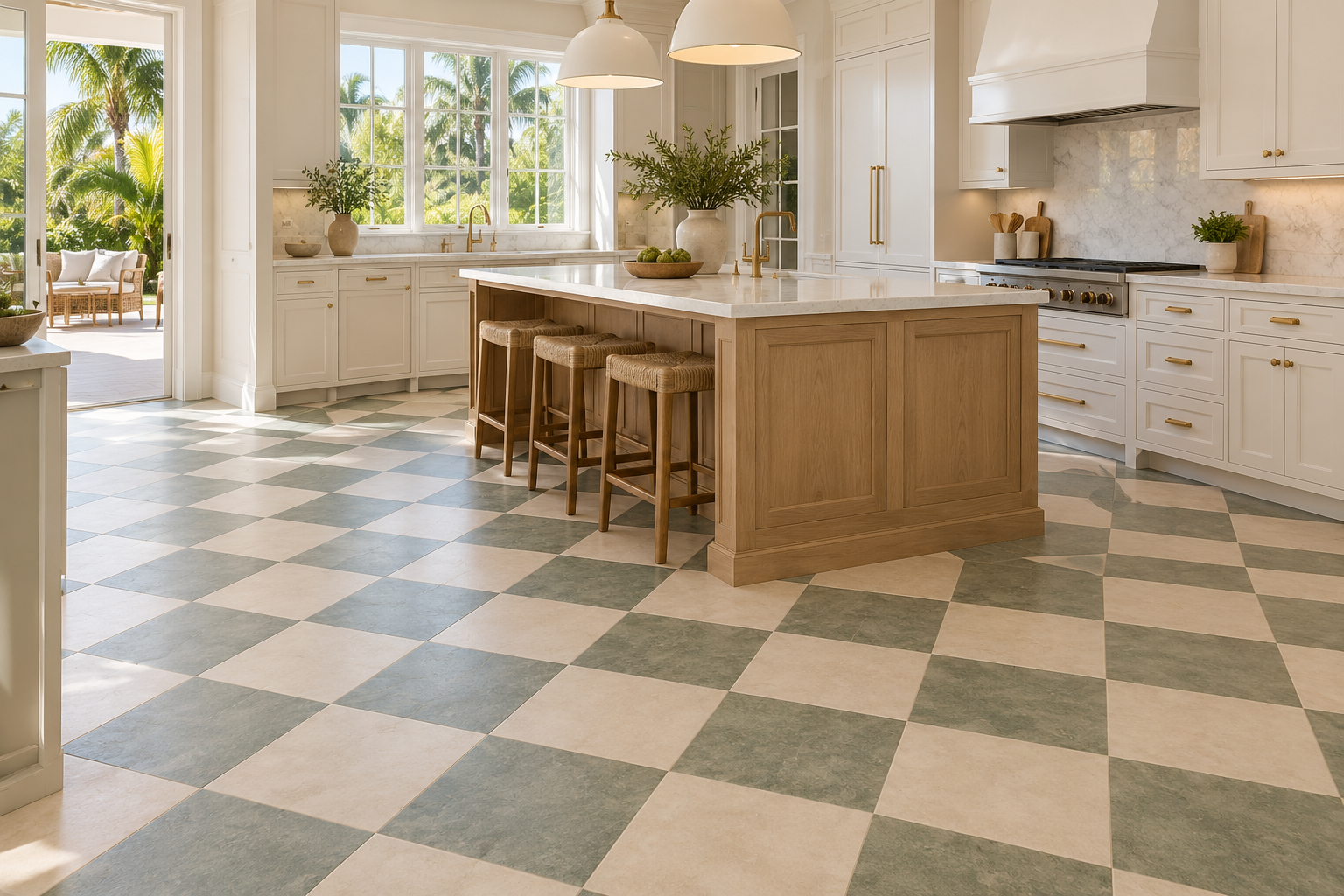
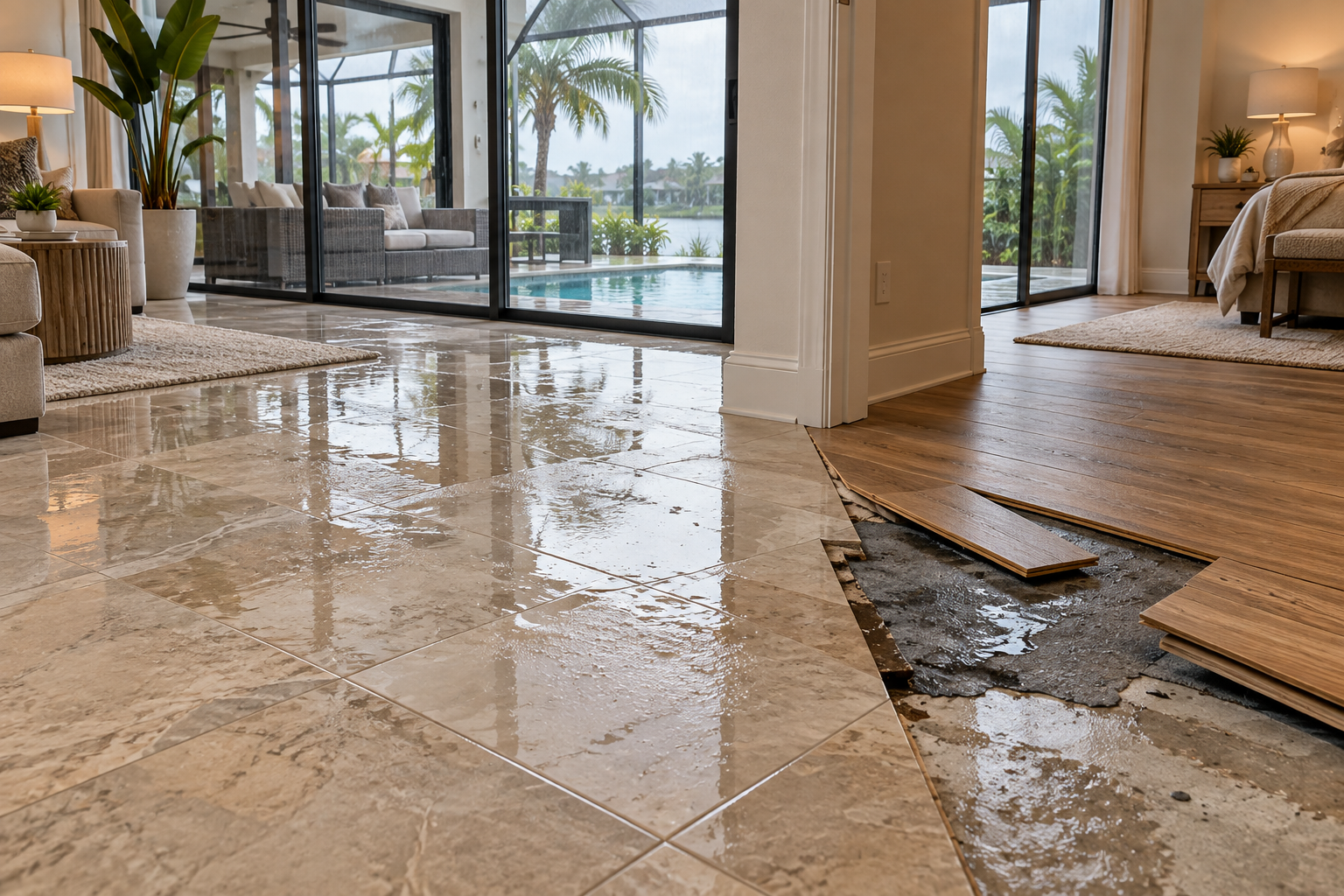
In Florida, “waterproof flooring” and flood-resistant flooring are not the same thing.
That distinction matters more than ever for homeowners dealing with tropical storms, heavy rain, plumbing failures, slab moisture and occasional floodwater intrusion.
A floor may be marketed as waterproof because its core does not absorb water easily. But after a real flood, the performance of the entire flooring system matters: the surface, seams, adhesive, underlayment, concrete slab and what may be trapped underneath.
So if you live in Florida, the better question is not simply, “Is this floor waterproof?” It is:
Can this flooring system be cleaned, dried and safely restored after significant water exposure?
Why Flood-Resistant Flooring Matters in Florida
Florida homes face a combination of conditions that make moisture performance especially important:
- Heavy seasonal rainfall
- Tropical storms and hurricanes
- Flood zones and coastal exposure
- Concrete slab construction
- High indoor and outdoor humidity
- Pool, patio and lanai traffic
- Plumbing leaks and appliance failures
FEMA guidance on flood damage-resistant materials specifically distinguishes materials that can withstand direct and prolonged contact with floodwater from materials that often require removal after saturation.
What Does “Flood Damage-Resistant” Actually Mean?
FEMA uses the term flood damage-resistant material for materials that can withstand direct and prolonged contact with floodwater without sustaining significant damage that would require more than cosmetic repair.
That definition is much more demanding than everyday “waterproof” marketing.
For flooring, FEMA identifies materials such as concrete, ceramic or porcelain tile, terrazzo and certain properly installed vinyl systems as acceptable in flood-prone applications, while engineered wood, laminate, carpet and conventional wood flooring are generally not considered flood damage-resistant.
1. Porcelain Tile: One of the Strongest Choices After Floodwater
Porcelain tile is one of the strongest flooring choices for Florida homes where flood resilience is a priority.
Its advantages include:
- Very low water absorption
- Excellent dimensional stability
- High resistance to staining and surface damage
- Easy cleaning after water exposure
- Strong performance over concrete slabs
However, the tile itself is only part of the system.
Floodwater can still affect grout, setting materials, membranes and the slab underneath. If contaminated water enters the home, professional cleaning and evaluation may still be necessary.
Best for: homeowners prioritizing maximum water resilience, durability and easier post-flood cleanup.
2. Concrete and Terrazzo: Extremely Resilient Base Materials
Concrete and terrazzo are also among the materials FEMA considers appropriate in flood-resistant construction.
They do not contain wood fiber, paper backing or other highly absorbent components that can swell or delaminate when saturated.
For Florida homes with exposed or decorative concrete floors, this can significantly simplify recovery after water intrusion.
But the slab still needs to dry thoroughly before coatings, sealers or replacement flooring are installed.
3. Vinyl Flooring: Flood Performance Depends on the System
This is where homeowners need to be careful.
Many SPC and LVP products are marketed as “100% waterproof.” That often refers to the plank itself.
Floodwater, however, can move through perimeter gaps, transitions and joints and become trapped beneath a floating floor.
Once water is trapped under the flooring, several problems can occur:
- Moisture remains against the concrete slab
- Underlayment may stay wet
- Organic debris can support mold growth
- Odors can develop
- The locking system may be damaged during removal
FEMA guidance considers some homogeneous vinyl sheet or tile systems acceptable when paired with appropriate flood-resistant adhesives. That is very different from assuming every floating vinyl plank floor will survive a flood without removal.
Can SPC Flooring Be Reused After a Flood?
Sometimes the plank itself may remain dimensionally stable, but that does not automatically mean the floor should stay in place.
The correct decision depends on:
- The type of water involved
- How long the water remained
- Whether moisture reached the underlayment
- Whether the slab is dry
- Whether the flooring can be removed without damage
- Manufacturer instructions
If floodwater is contaminated, replacement may be the safer option even when the plank itself appears visually intact.
4. Laminate: Usually a Poor Choice for Flood Exposure
Waterproof laminate has improved dramatically for everyday spills, pet accidents and routine residential moisture.
But flood exposure is different.
Laminate and engineered wood products typically contain fiber-based or wood-based components that can swell, distort or lose structural integrity after prolonged saturation.
FEMA lists engineered wood and laminate flooring among materials that are generally unacceptable as flood damage-resistant flooring.
That does not make laminate a bad product. It simply means homeowners should distinguish between water-resistant daily performance and true flood resilience.
5. Hardwood and Engineered Wood
Natural and engineered wood flooring can be beautiful, but neither is ideal when repeated flood exposure is a serious risk.
Water can cause:
- Cupping
- Crowning
- Warping
- Finish failure
- Adhesive failure
- Mold beneath the floor
In homes with meaningful flood risk, homeowners should carefully weigh aesthetics against recovery cost.
6. Carpet: Usually the Most Difficult Flooring to Recover
Carpet and padding are highly absorbent.
EPA and CDC guidance notes that porous materials that cannot be thoroughly cleaned and dried may need to be discarded after flooding, particularly when they remain wet for extended periods.
For homes with recurring water exposure, carpet generally creates the greatest post-flood cleanup burden.
The Concrete Slab Is Part of the Decision
One of the biggest mistakes after flooding is reinstalling flooring too quickly.
A concrete slab can look dry while still containing significant moisture.
EPA guidance recommends allowing the structure to dry completely before replacing flooring. Moisture meters can help determine whether materials are ready for refinishing, and the slab should be evaluated before a new floor traps moisture again.
In Florida, this step is especially important because high ambient humidity can slow drying.
How Fast Should a Flooded Home Be Dried?
EPA and CDC guidance consistently emphasizes rapid drying and moisture control.
Wet materials should be cleaned, dried or removed as quickly as possible—ideally within the first 24 to 48 hours—to reduce the risk of mold growth.
That means homeowners should not simply mop the floor and reinstall baseboards.
A proper recovery process may include:
- Remove standing water
- Identify whether the water is clean or contaminated
- Remove materials that cannot be properly cleaned and dried
- Dry the slab and wall cavities
- Use dehumidification and air movement when appropriate
- Verify moisture levels before rebuilding
Floodwater vs. a Small Plumbing Leak
Not all water events are equal.
A small clean-water leak that is discovered immediately is very different from stormwater, sewage backup or floodwater that has entered the home from outdoors.
Contaminated floodwater may contain bacteria, chemicals and debris. In those cases, health and remediation considerations are more important than whether the flooring still “looks good.”
Best Flooring Choices for a Florida Home With Flood Risk
If flood resilience is a major priority, a practical ranking by material behavior is:
- Porcelain or ceramic tile
- Concrete or terrazzo
- Properly specified flood-resistant vinyl systems
- Floating SPC/LVP — strong for everyday water, but may require removal after flooding
- Waterproof laminate — good for spills, less suitable for prolonged flood exposure
- Hardwood or engineered wood
- Carpet and padding
The best choice still depends on the property, flood risk, installation method, budget and design goals.
Should Every Florida Home Use Tile?
No.
Most Florida homeowners are not selecting flooring solely around a catastrophic flood event.
SPC, LVP and other modern resilient products can still be excellent choices for everyday Florida living because they handle routine moisture, humidity and maintenance extremely well.
The key is understanding the difference between:
waterproof in everyday use and recoverable after a true flood.
What Should You Ask Before Buying Flooring in a Flood-Prone Area?
- Is this product rated only as waterproof, or is the full system flood damage-resistant?
- What happens if water gets under the floor?
- Can the product be removed and reinstalled?
- What type of underlayment is used?
- What adhesive is specified?
- Does the manufacturer address flood exposure in the warranty?
- How will the concrete slab be tested before installation?
Final Thought
Florida homeowners should not choose flooring based on the word “waterproof” alone.
A product can survive water while the installation beneath it cannot.
If your property has meaningful flood exposure, the strongest strategy is to evaluate the entire flooring system: finish material, adhesive, underlayment, slab and recovery process.
At Green House Floors and More, we help homeowners, builders and contractors choose flooring based not only on appearance, but on how the complete system will perform in real Florida conditions.
Frequently Asked Questions
What flooring is most flood-resistant in Florida?
Porcelain or ceramic tile, concrete and terrazzo are among the strongest choices because they tolerate direct water exposure better than wood-based or absorbent flooring systems.
Is waterproof vinyl the same as flood-resistant flooring?
No. A waterproof vinyl plank may resist water itself, but floodwater can still become trapped beneath the flooring and affect the underlayment, adhesive or concrete slab.
Can SPC flooring stay in place after a flood?
It depends on the water source, exposure time, underlayment, slab moisture and manufacturer guidance. In some cases the floor may need to be removed so the structure can dry properly.
Is laminate flooring flood-resistant?
Generally no. Even modern waterproof laminate is designed primarily for routine spills and household moisture, not prolonged floodwater exposure.
How long should a concrete slab dry after flooding?
There is no universal number of days. Drying can take days or weeks depending on conditions. Moisture testing should be used before installing replacement flooring.
Should flooring be replaced after contaminated floodwater enters a home?
Often, materials that cannot be completely cleaned and dried should be removed. Contaminated water requires a more conservative cleanup approach and may require professional remediation.