Aging in place is changing the way Florida homeowners think about flooring. The best choice is not simply the softest floor or the most expensive product. A good aging-in-place floor should balance traction, smooth transitions, easy maintenance, comfort, moisture performance and long-term durability.
That matters especially in Florida, where many homes combine concrete slabs, pool and lanai traffic, wet bathrooms and year-round indoor-outdoor living.
Why Flooring Matters for Aging in Place
Flooring can influence how easy a home is to move through. Common design issues include slippery wet surfaces, glossy finishes, loose rugs, raised transition strips, uneven flooring heights and damaged edges.
The goal is not to make a home look institutional. The goal is to reduce unnecessary obstacles while keeping the space attractive and practical.
What Makes Flooring Better for Aging in Place?
Traction
The surface should provide dependable grip for everyday walking, especially in kitchens, bathrooms and entries where moisture may be present.
Smooth Transitions
Changes from one flooring material to another should be as flush and gradual as possible. Raised transitions can interrupt walking paths and make movement with walkers or wheelchairs more difficult.
Stable Surface
The finished floor should remain flat, secure and free of curled edges or shifting pieces.
Easy Maintenance
Low-maintenance surfaces are valuable because heavy waxing or polishing can change how a floor feels underfoot.
Florida Moisture Performance
Bathrooms, concrete slabs, humidity, wet shoes and pool traffic all need to be considered when choosing a flooring system.
Is LVP or SPC Good for Aging in Place?
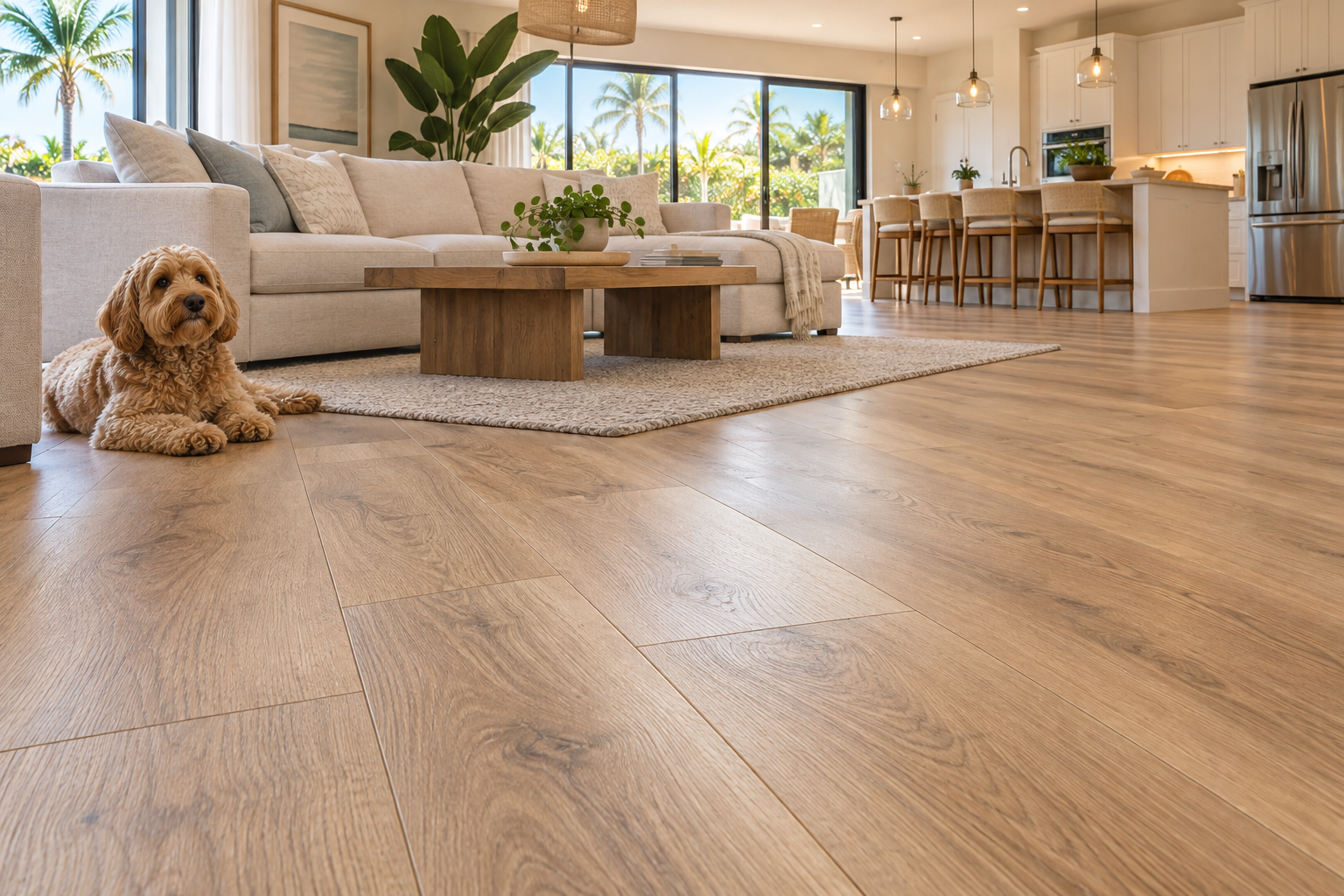
For many Florida homes, high-quality LVP or SPC can be a strong option. These floors can provide water resistance, easy cleaning, lower-profile installation and a more forgiving feel underfoot than some harder surfaces.
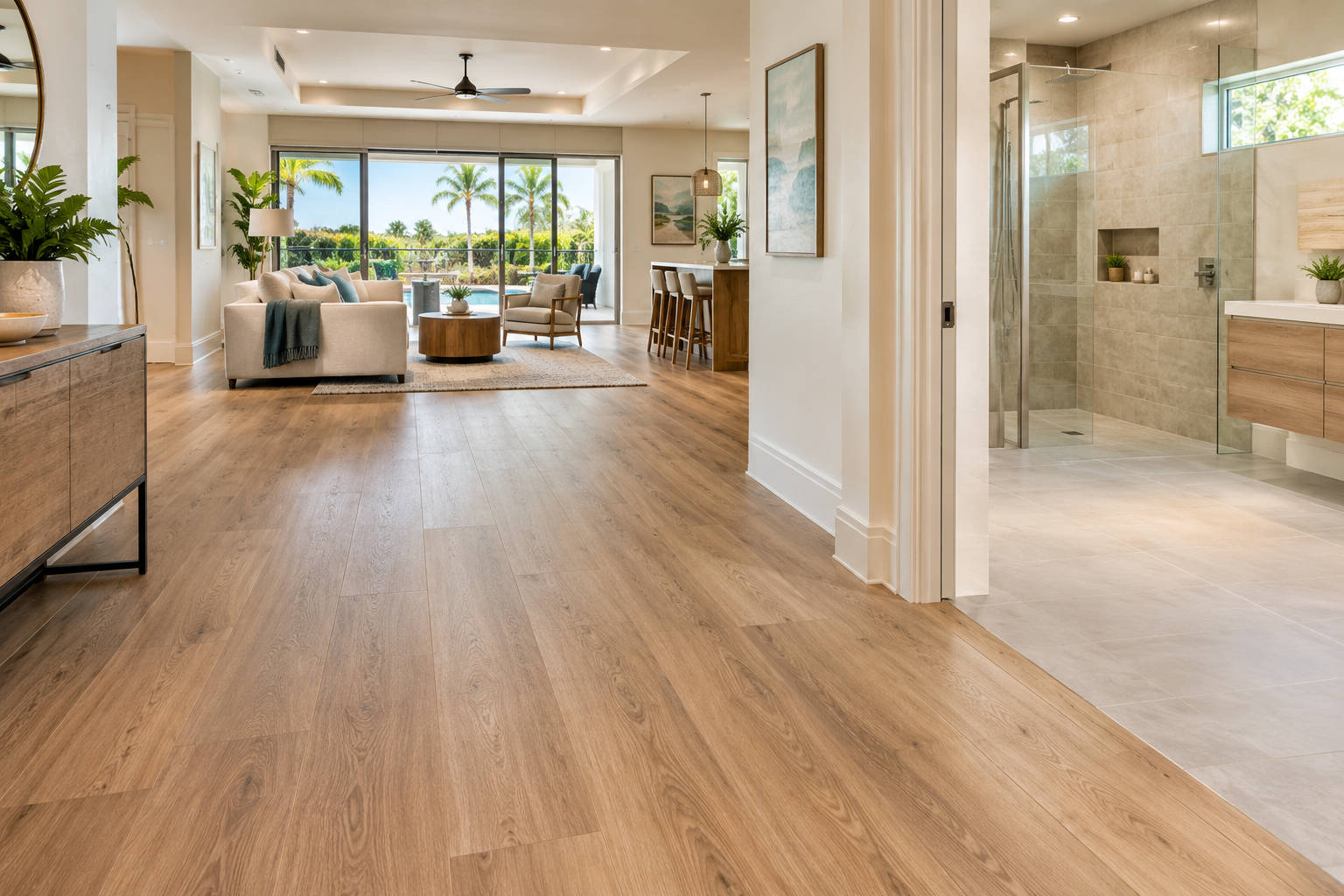
One of the biggest advantages is continuity. LVP or SPC can often run through large areas of the home with fewer breaks, which helps reduce unnecessary transition strips.
When selecting a product, pay attention to surface finish. Matte or lightly textured products are generally more practical than very glossy, slick-looking surfaces.
Is Porcelain Tile Too Slippery?
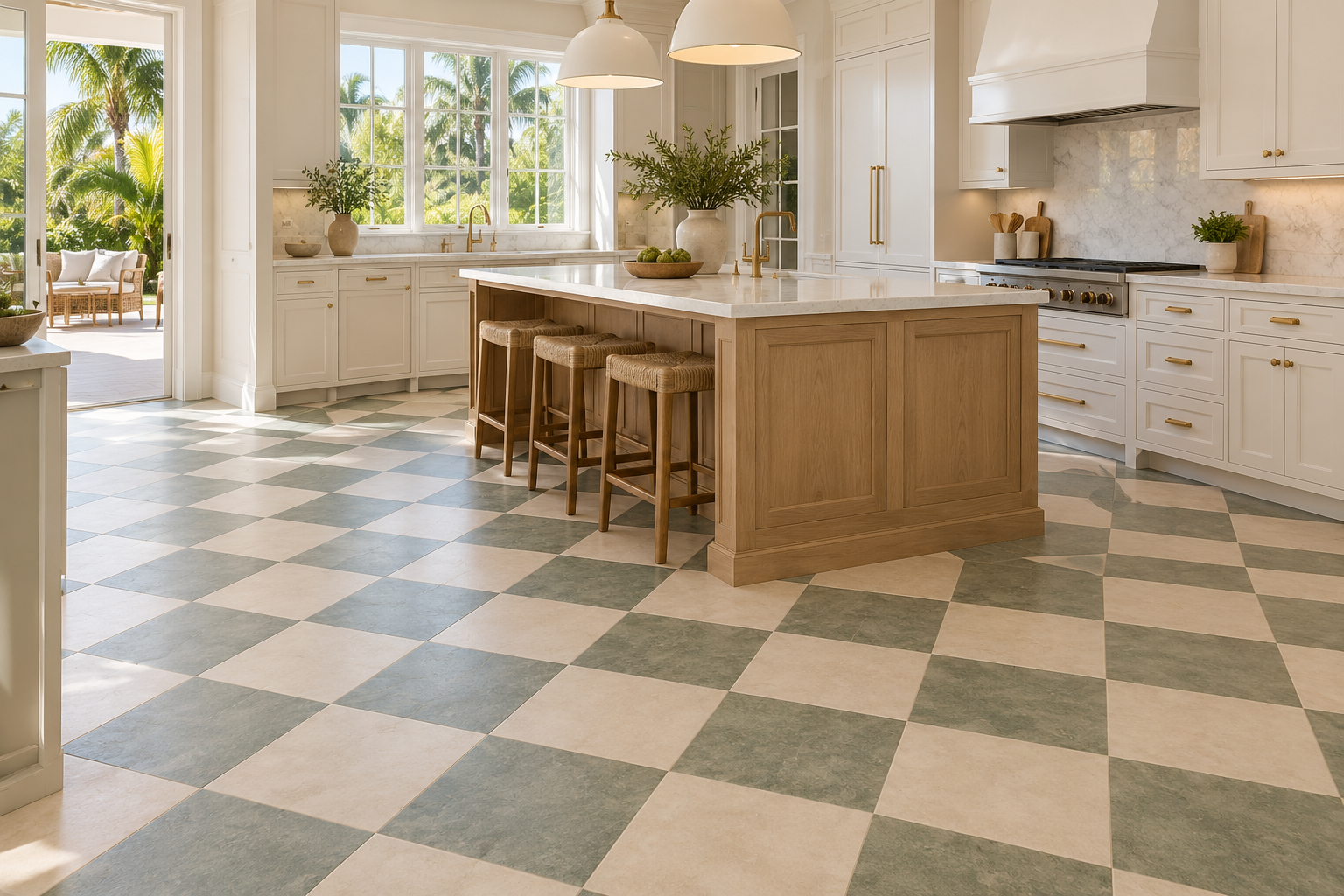
Not necessarily. Porcelain tile can work very well when the right product is selected for the location. It is durable, water-resistant and especially useful in Florida bathrooms and wet areas.
The important factor is surface traction. Instead of choosing tile based only on appearance, review the manufacturer’s slip-resistance information and whether the tile is recommended for wet or dry areas.
What Is DCOF?
DCOF stands for Dynamic Coefficient of Friction. It is one of the measurements used to evaluate tile traction under specific test conditions.
DCOF should not be treated as a single universal safety number. Real-world performance also depends on whether the floor is wet, the surface texture, footwear, cleaning products, slope and other environmental conditions.
Why Matte and Textured Finishes Are Popular
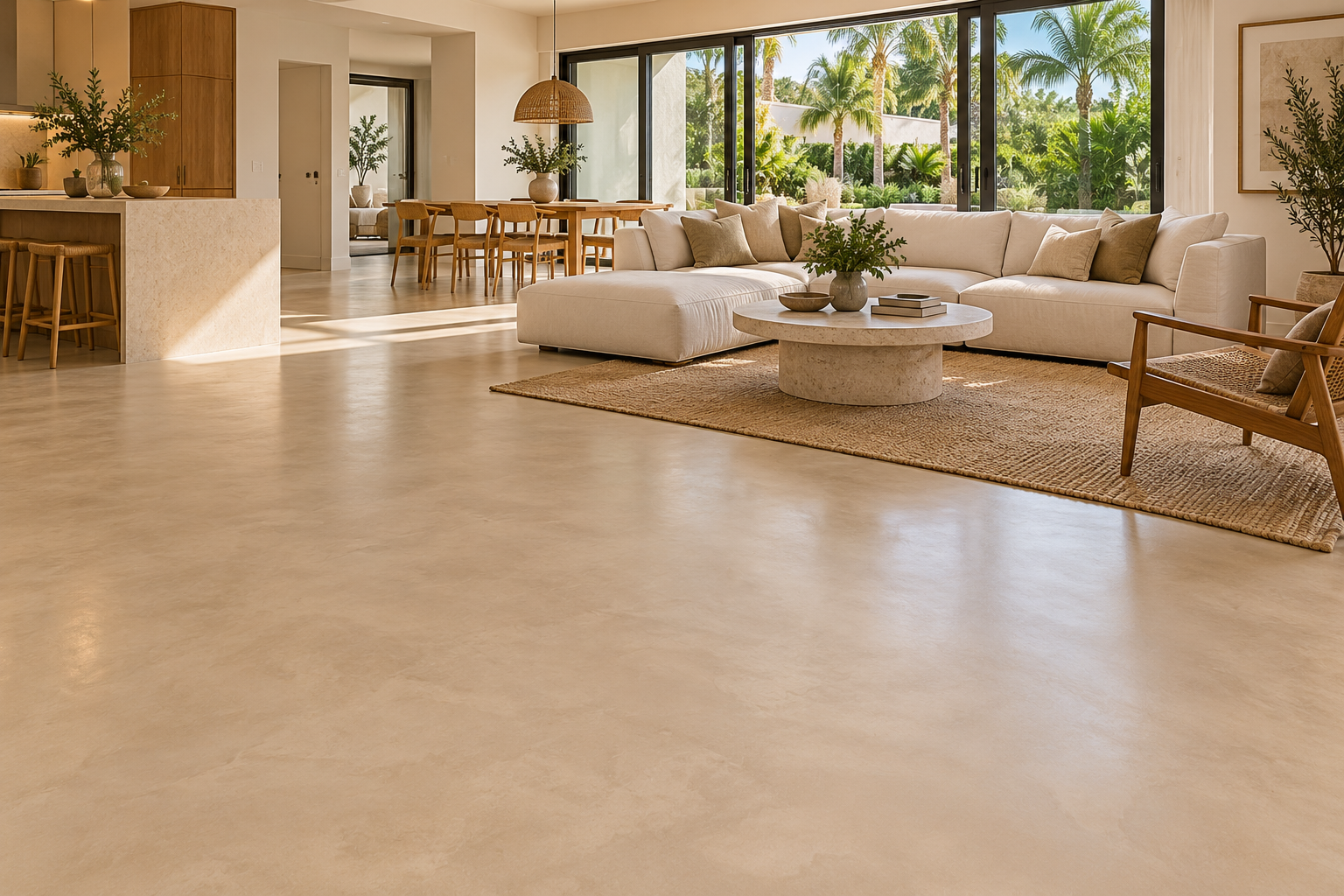
Matte and lightly textured floors are increasingly popular because they reduce glare and can provide a more practical walking surface than high-gloss finishes.
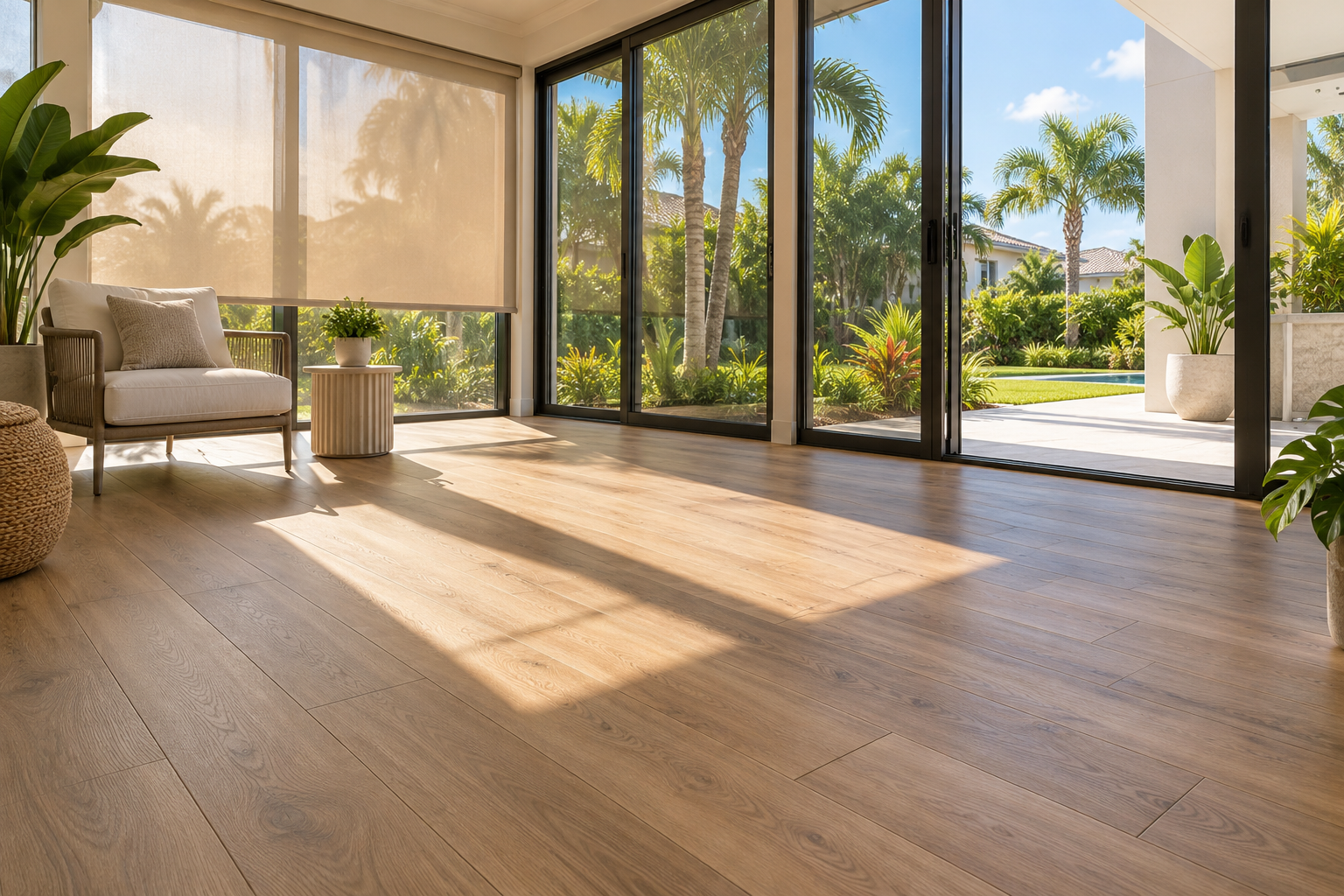
In bright Florida homes with large windows, reducing glare can also make transitions and walking surfaces easier to see.
Why Continuous Flooring Matters
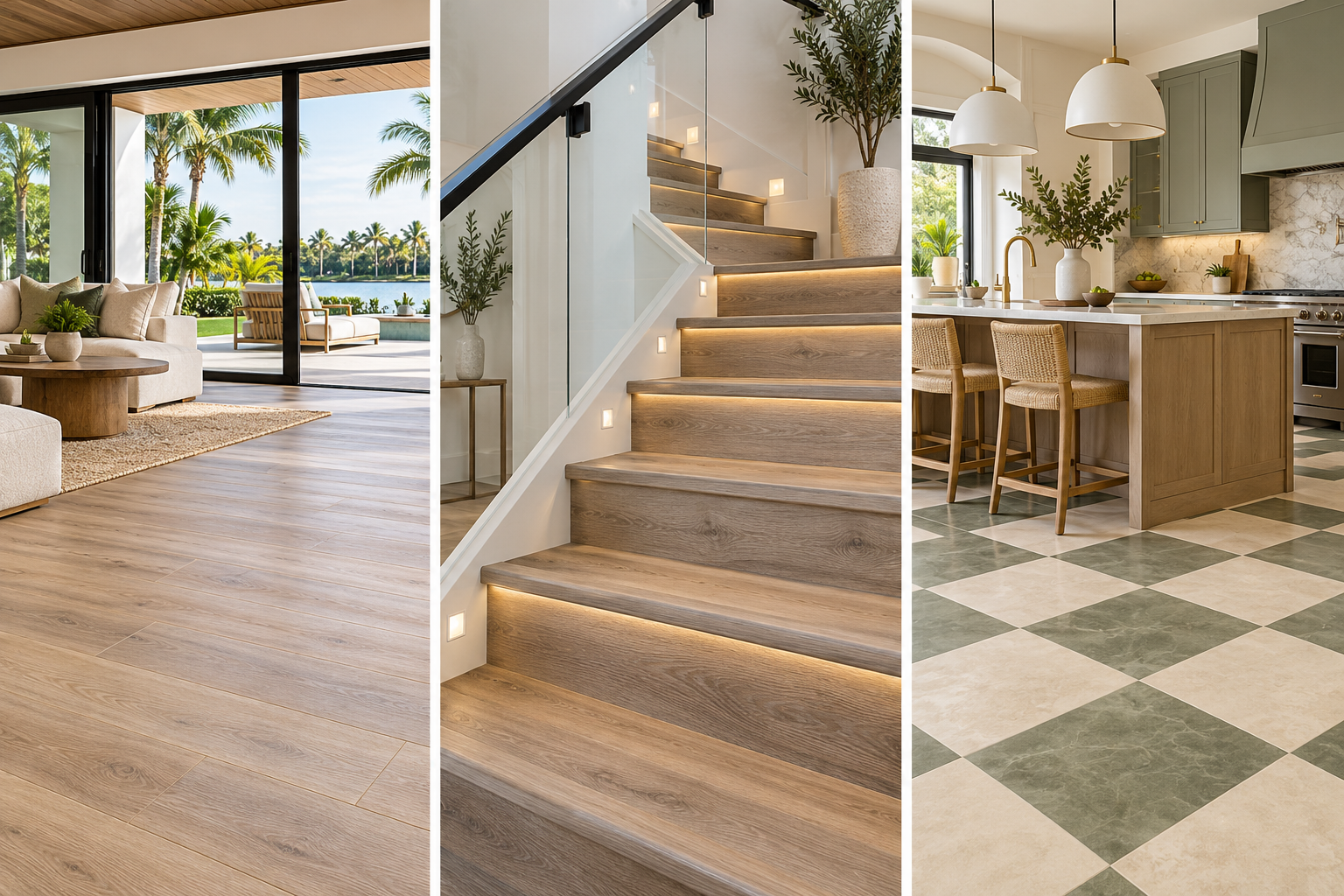
Continuous flooring can make movement through the home simpler. When the same material runs through living areas, hallways and bedrooms, there are fewer abrupt changes in height.
This is useful for people using walkers, wheelchairs or canes, and it can also make the home feel larger and more cohesive.
Are Transition Strips a Problem?
Transition strips are sometimes necessary, but they should be low-profile, secure and smoothly tapered. The goal is to avoid unnecessary height changes in primary walking paths.
Why Curbless Showers Are Growing in Popularity
Curbless showers are one of the most visible aging-in-place design trends. They create a smoother transition into the shower area and can make bathrooms easier to navigate.
However, they require careful planning for drainage, waterproofing, slope, tile selection and transition height. A curbless shower should be designed as a complete system, not simply as a shower with the curb removed.
What Flooring Works Best in Bathrooms?
Matte or textured porcelain tile remains one of the strongest choices for Florida bathrooms because it handles water well and can be integrated into a curbless shower system.
Key details include appropriate wet-area use, slip-aware surface texture, correct drainage, proper installation and minimal height change at the doorway.
What About Loose Rugs?
Loose rugs can shift or curl at the edges. If rugs are used, they should be secured and kept out of primary walking paths whenever possible.
What About Carpet?
Carpet provides softness and warmth, but thick plush carpet can create more rolling resistance for walkers and wheelchairs. If carpet is selected, lower-pile products with firm construction are usually easier to navigate than deep, soft carpet.
What About Engineered Hardwood?
Engineered hardwood can work in dry living areas when moisture conditions are well controlled and the finish is not overly glossy. In Florida, concrete slab moisture and humidity should always be considered before installation.
What Flooring Works Best for Wheelchairs and Walkers?
Stable hard surfaces such as LVP, SPC, porcelain tile and some engineered wood floors generally allow easier movement than thick plush carpet.
The bigger issue is often not the flooring category itself. It is the presence of uneven transitions, thresholds and damaged surfaces.
Florida-Specific Flooring Considerations
- Concrete slab subfloors
- Moisture testing before installation
- Humidity
- Wet shoes and pool traffic
- Sand and grit brought indoors
- Strong sunlight through large windows
A flooring product should be evaluated for both accessibility and Florida conditions.
Best Flooring Choices for Aging in Place in Florida
Textured or Matte LVP/SPC
A strong all-around option for continuous living areas because it combines easy maintenance, water performance and a relatively comfortable feel underfoot.
Matte Porcelain Tile
Excellent for bathrooms, kitchens and wet areas when the correct surface is selected.
Engineered Hardwood
Can work well in dry living areas when moisture is controlled and the finish provides appropriate traction.
What Should You Ask Before Buying?
- Is the surface appropriate for wet or dry use?
- How does it perform when wet?
- Can this material run continuously through multiple rooms?
- Will transitions be flush or raised?
- Is the surface easy to maintain?
- How will it perform over a Florida concrete slab?
- Is it practical for walkers or wheelchairs?
- Can bathroom thresholds be minimized?
Final Thought
The best flooring for aging in place is flooring that quietly makes the home easier to move through. That means appropriate traction, fewer thresholds, smooth transitions, easy maintenance, clear walking paths and materials that perform correctly in Florida’s climate.
At Green House Floors and More, we believe aging-in-place flooring should combine accessibility, durability and design—not force homeowners to choose between them.
Frequently Asked Questions
What flooring works well for aging in place in Florida?
Matte or textured LVP/SPC and appropriately selected porcelain tile are strong options because they can provide stable surfaces, easy maintenance and good moisture performance.
Is LVP good for aging in place?
Yes. High-quality LVP can work very well because it is relatively comfortable underfoot, easy to clean, water resistant and suitable for continuous installation across large areas.
Is porcelain tile too slippery?
Not necessarily. Porcelain tile is available in many textures and traction levels. The correct product should be selected for the specific dry or wet environment.
Are transition strips a concern?
Raised transitions can interrupt walking paths. Aging-in-place designs should minimize unnecessary transitions and use secure, low-profile, smoothly tapered transitions when required.
What flooring works well for a wheelchair?
Stable hard surfaces such as LVP, SPC, porcelain tile and some engineered wood floors generally allow easier wheelchair movement than thick plush carpet.
Why are curbless showers popular?
A properly designed curbless shower can improve accessibility by eliminating a step-over threshold, but drainage, waterproofing, slope and tile selection are essential.