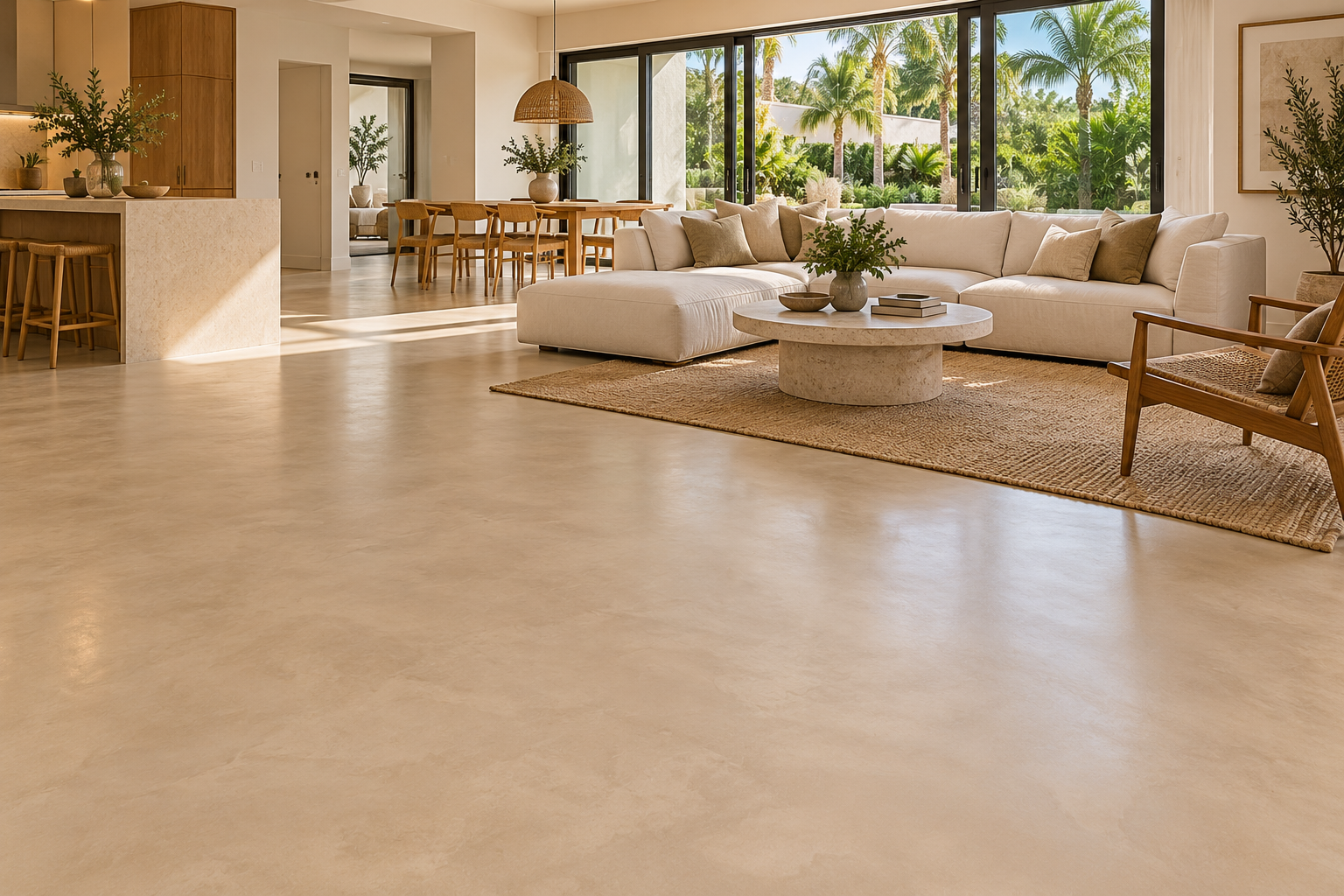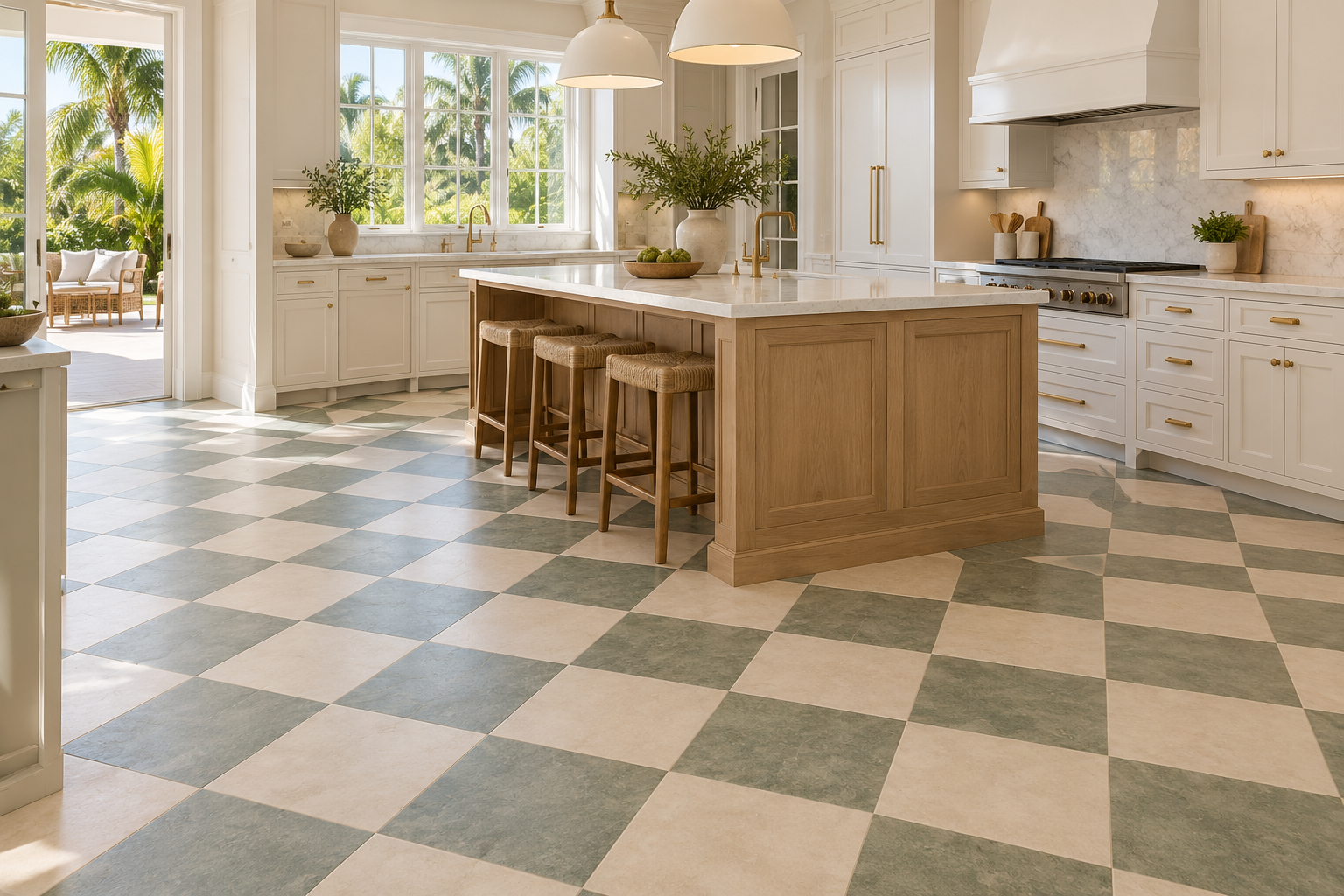
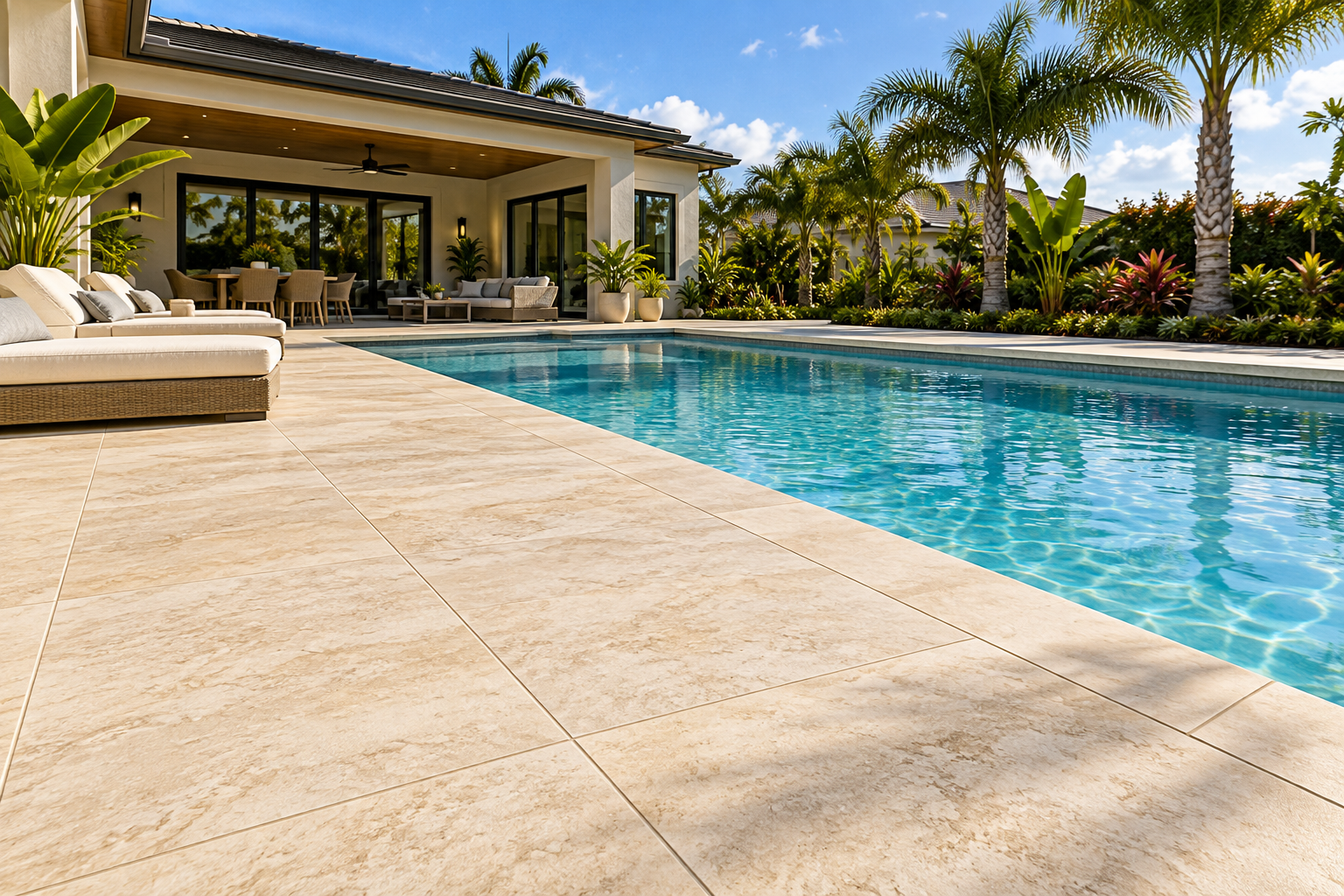
Florida homeowners are looking beyond conventional concrete and natural stone when renovating pool decks. One option gaining attention in outdoor flooring collections is 2cm (20mm) porcelain pavers: thick, outdoor-rated porcelain units available in limestone-, travertine-, and concrete-inspired finishes. Their clean appearance can suit a modern Orlando pool area, but the most important questions are practical: will the surface provide suitable wet traction, become uncomfortably hot, and work with the proposed installation method?
What Are 2cm Porcelain Pavers?
A 2cm porcelain paver is approximately 20 millimeters thick—substantially thicker than many standard indoor porcelain tiles. It is manufactured for specified outdoor paving applications. Depending on the exact product and manufacturer, it may be approved for installation over a properly designed aggregate base, on pedestals, or bonded to a suitable concrete substrate. Not every 20mm product is suitable for every method, load, or pool-deck detail.
Why Are Outdoor Porcelain Pavers Appealing in Florida?
Large square formats, matte stone-look finishes, and coordinated indoor-outdoor collections suit the open living spaces and lanais common in Central Florida. Porcelain is generally low in water absorption and does not require the same routine sealing as many natural stones. Yet these benefits do not eliminate the need for drainage, movement accommodation, correct edge restraint, and product-specific installation instructions.
Are 2cm Porcelain Pavers Slip-Resistant Around Pools?
They can be, but never choose a pool-deck surface based on the word ‘matte’ alone. Request the manufacturer’s slip-resistance testing, outdoor wet-use classification, and recommendations for barefoot poolside use. A DCOF number or generic anti-slip label is not a universal guarantee of safety in all wet conditions. Surface texture, slope, drainage, contaminants, cleaning practices, and footwear or bare feet all affect slip risk.
What to Check Before Selecting a Finish
Ask for a physical sample and the technical data sheet. Confirm the exact SKU is approved for pool surrounds, not merely patios. Review the manufacturer’s test method and any application limitations. Evaluate comfort and traction when wet in a controlled sample setting, and avoid glossy indoor-only finishes for wet pool-deck areas.
Do Porcelain Pavers Get Hot in the Florida Sun?
Yes. Porcelain pavers can become hot under direct sunlight, just like concrete, natural stone, and other hardscape materials. Surface temperature depends on color, solar exposure, finish, weather, airflow, and other factors. Light-colored pavers may absorb less solar energy than darker alternatives, but a pale appearance does not establish a safe barefoot temperature. Compare actual samples in the sun at the site and consider shaded paths and seating zones.
Which Installation Method Works Best?
Bonded Installation Over Concrete
A qualified contractor may install compatible outdoor porcelain pavers over a sound, properly prepared concrete substrate using an approved exterior setting system. The assembly needs suitable drainage slope, mortar coverage, movement joints, and detailing at pool edges. Existing cracks, moisture-related conditions, and slab movement require assessment.
Aggregate-Base Installation
Some 20mm pavers are approved for placement over a compacted, engineered granular base. Proper excavation, base design, compaction, drainage, bedding, joint treatment, and edge restraints are essential. Installation requirements depend on the manufacturer, site soil, and local conditions; do not assume indoor tile-setting practices apply.
Pedestal Systems
Certain pavers are designed for supported pedestal installations on appropriate structural decks. This method requires product-specific load and span approval, pedestal spacing, wind considerations, perimeter restraint, and code-compliant structural design. Elevated or exposed installations may have additional safety requirements. A pedestal system should never be selected based on paver thickness alone.
Florida Pool-Deck Details That Matter
Drainage and Standing Water
Pool decks need intentional drainage away from structures and toward appropriate collection points. Poor slope can leave standing water, increase slip risk, and create maintenance problems. Coordinate the deck drainage plan with the pool contractor and applicable local requirements.
Pool Coping and Exposed Edges
The paver field and pool coping must be compatible. Confirm the manufacturer’s available coping profiles, edge finishing, bonding or support method, and joint details. Avoid sharp, unsupported, or poorly finished edges where swimmers enter and exit the pool.
Movement Joints and Existing Concrete
Exterior paving is exposed to sun, temperature swings, and substrate movement. Movement accommodation is necessary for bonded tile assemblies, following applicable industry guidance such as TCNA EJ171 and the system manufacturer’s instructions. Grouting all joints rigidly is not a substitute for properly located movement joints.
Hurricane, Wind, and Structural Conditions
Florida projects may involve wind-uplift and building-code considerations, especially on raised decks, rooftops, and pedestal installations. Consult the manufacturer and qualified design professionals where structural or wind performance is relevant. Do not extrapolate a ground-level patio detail to an elevated deck.
2cm Porcelain Pavers vs. Travertine and Concrete Pavers
Porcelain offers manufactured consistency and a broad range of stone-look designs. Travertine provides genuine natural-stone variation but may require different maintenance and sealing considerations. Concrete pavers offer numerous formats and finishes and can be practical for many outdoor layouts. None is automatically cooler, safer, or more durable in every application. Compare the specific products’ wet traction, solar heat behavior, installation assembly, maintenance requirements, and total project costs.
What Does a 2cm Porcelain Pool Deck Cost in Florida?
There is no single reliable statewide installed price. The total depends on paver brand and format, site access, demolition, base or concrete preparation, drainage, coping, edge restraints, cuts, labor, and the chosen installation method. Ask contractors to itemize the substrate work and pool-edge details rather than comparing material price per square foot alone.
A Pre-Purchase Checklist for Orlando Homeowners
Before ordering, confirm that the exact product is rated for outdoor poolside use; review wet slip-resistance documentation; test a sample for barefoot heat in local sunlight; verify the approved installation method; inspect existing slab or soil conditions; plan drainage and coping; and obtain an itemized proposal covering preparation, labor, transitions, and warranty requirements. Green House Floors and More can help customers compare material options and questions to bring to a qualified outdoor installer.
Frequently Asked Questions
Are 2cm porcelain pavers good for Florida pool decks?
They can be an excellent option when the exact product is approved for wet outdoor poolside use and installed on a suitable, properly drained assembly.
Are outdoor porcelain pavers slippery when wet?
Slip performance varies by finish and product. Request manufacturer test data and confirmation of suitability for barefoot wet pool surrounds; a matte appearance alone is not enough.
Do porcelain pool-deck pavers get hot?
Yes, especially in direct sun. Color and finish can influence heat absorption, but test physical samples under actual Florida sunlight before choosing.
Can 20mm porcelain pavers be installed over concrete?
Some can, using an approved exterior bonding system over suitable concrete. Preparation, drainage slope, movement joints, and manufacturer requirements are essential.
Can 2cm porcelain pavers be installed on sand?
Certain products are approved for properly designed granular-base systems. A loose layer of sand without engineered base preparation and edge restraint is not an adequate universal installation specification.
Do porcelain pavers need sealing?
Many porcelain surfaces do not require routine sealing, but grout, joints, or surrounding materials may have separate maintenance needs. Follow the exact manufacturer’s care instructions.
Are 2cm porcelain pavers better than travertine?
Neither material is universally better. Compare wet traction, barefoot heat, maintenance, appearance, installation conditions, and full installed cost for the specific products.
Can porcelain pavers be used on a raised deck?
Only where the exact paver and support system are engineered and approved for the proposed structural, loading, and wind conditions.
Choose the Right System, Not Just the Right Look
Light stone-look porcelain pavers can create a striking Florida pool deck, but performance starts with selecting the correct outdoor-rated product and installation assembly. Verify wet traction, barefoot comfort, drainage, coping, and substrate requirements before purchasing. For flooring and hardscape material options in the Orlando area, contact Green House Floors and More to discuss your project and the technical questions worth asking before installation.