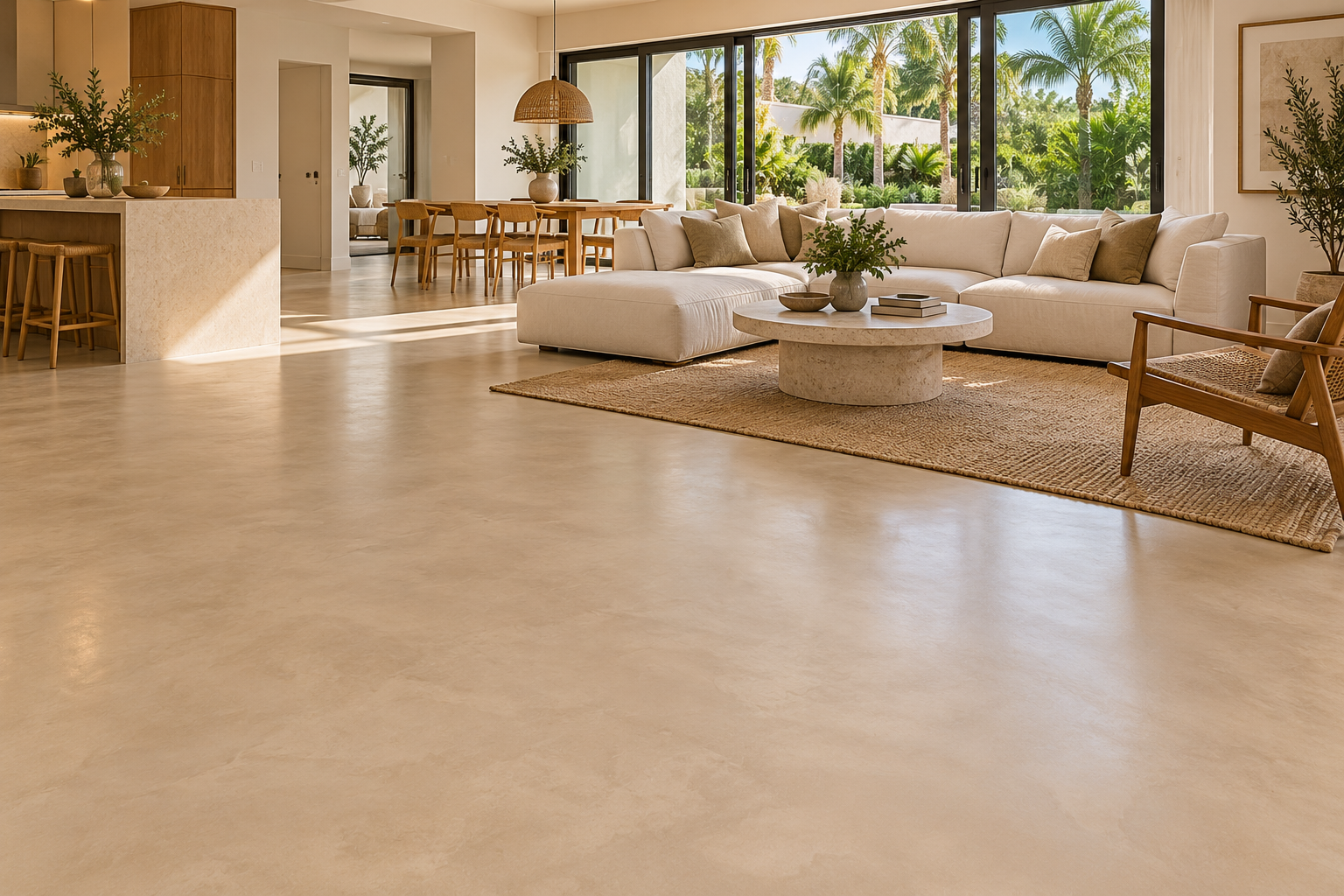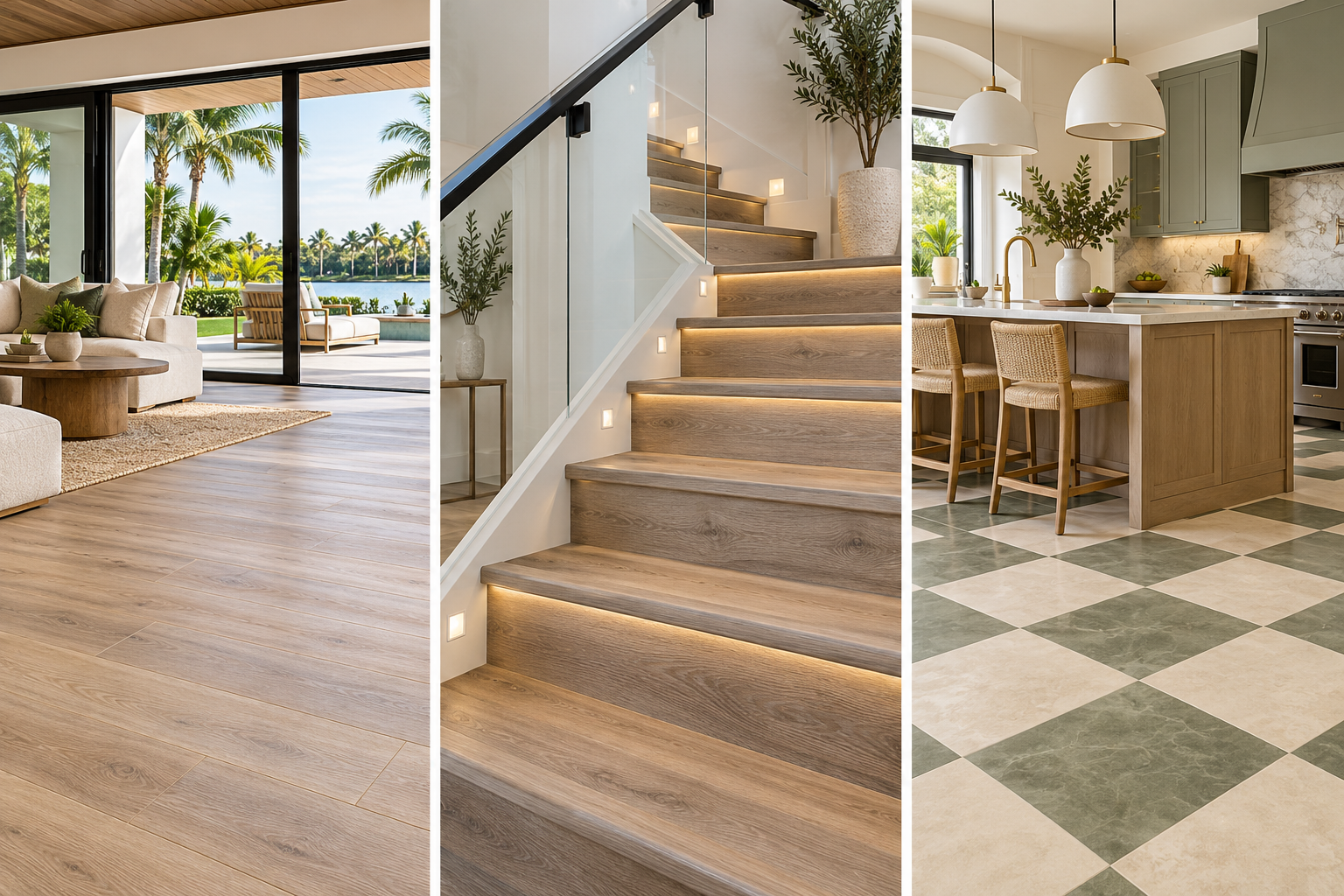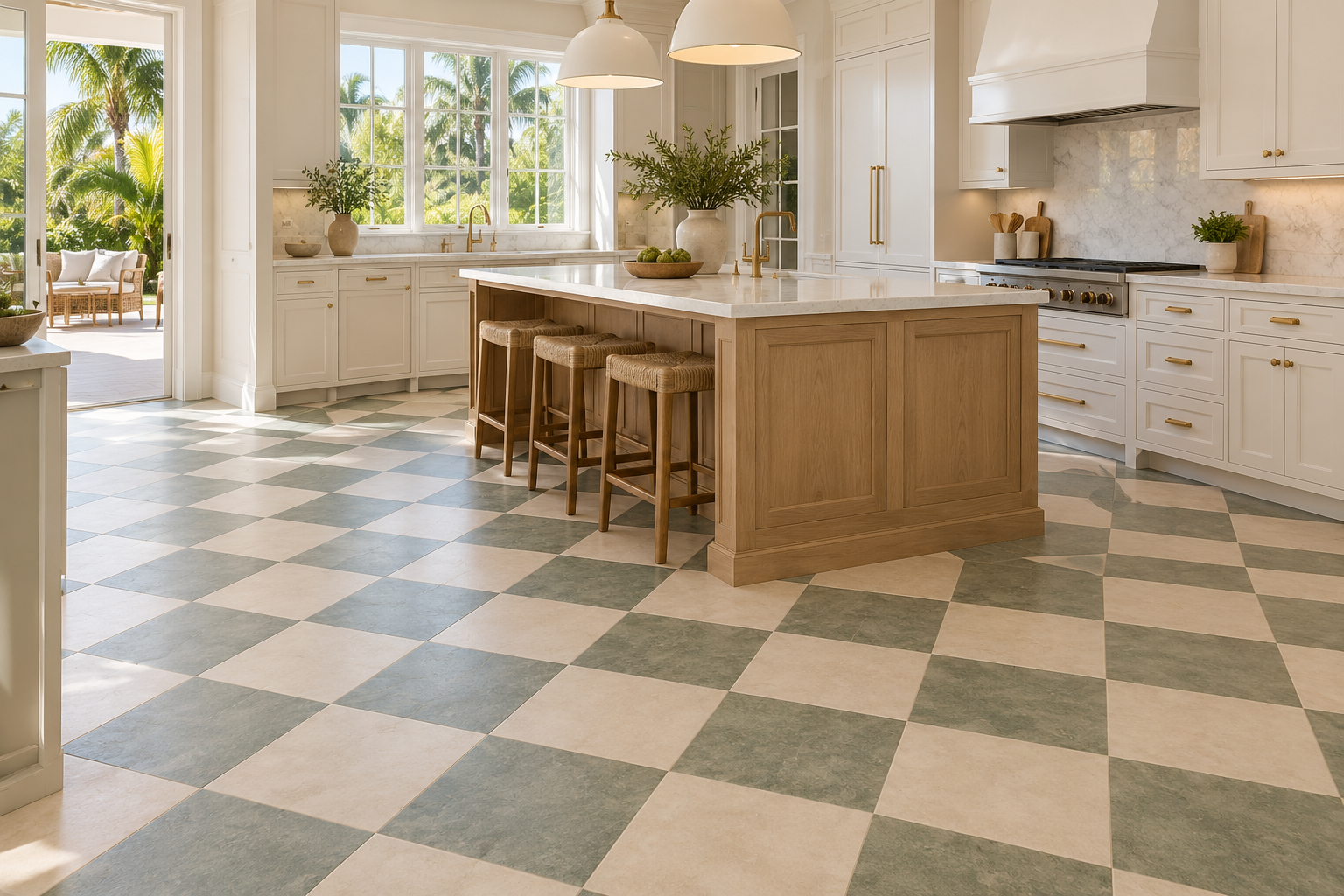
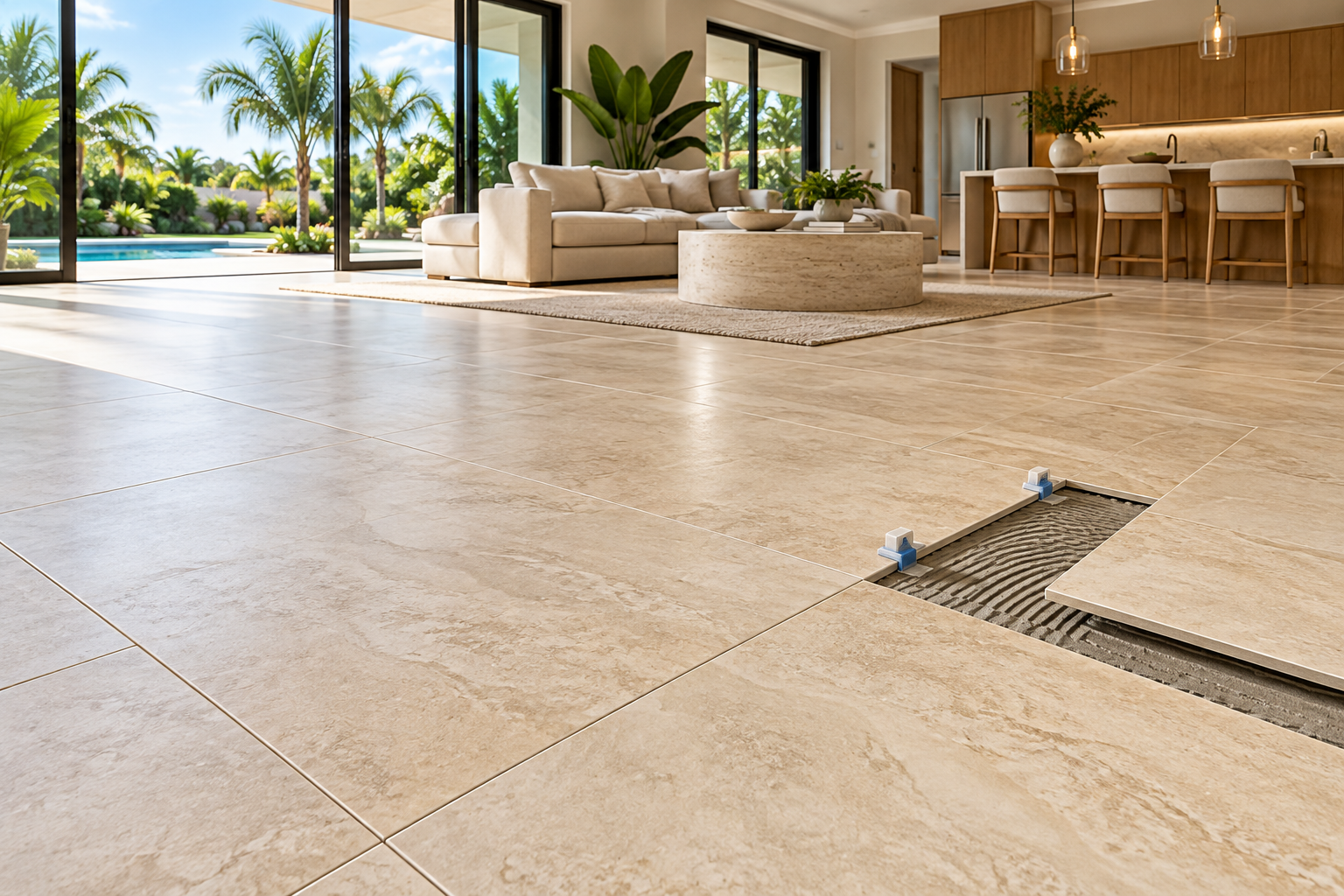
Large-format 24×48 porcelain tile is an increasingly visible choice in Florida remodeling. Its expansive surface, fewer grout lines, and stone-inspired finishes can make open-plan living areas feel cohesive. But the larger the tile, the less forgiving the installation. Before selecting a color or requesting a quote, Florida homeowners should understand the concrete slab, moisture, and workmanship requirements that determine whether the finished floor performs as beautifully as it looks.
Why Are 24×48 Porcelain Tiles Popular in Florida Homes?
A 24-by-48-inch tile covers eight square feet, allowing fewer visible joints than smaller formats. Warm limestone-look, travertine-look, and softly veined porcelain fit contemporary Florida interiors without requiring the same maintenance as many natural stones. Porcelain is also an attractive option for homes with pets, sandy shoes, and frequent cleaning. Its performance depends on the specific product, finish, and installation system.
Large-format porcelain is not a grout-free floor. Grout joints and movement accommodation remain necessary even when the goal is a visually continuous surface.
Is 24×48 Porcelain Tile a Good Choice for Florida’s Climate?
Often, yes. Properly selected porcelain is highly resistant to water absorption and can be suitable for many conditioned indoor spaces. However, water-resistant tile does not make the entire floor assembly waterproof. Moisture in the concrete, cracks, inadequate waterproofing in wet locations, and poor installation can still cause problems. A qualified installer should evaluate the substrate and intended use before recommending a system.
What About Slab Moisture and Cracks?
Many Florida homes have concrete slab-on-grade floors. Before installation, the contractor should inspect the slab for cracks, contamination, moisture-related conditions, and existing coatings. Any testing and mitigation must follow the selected setting-material and membrane manufacturers’ instructions. A crack-isolation membrane may be appropriate for certain nonstructural cracks, but it is not a cure for active structural movement.
Five Installation Mistakes to Avoid With 24×48 Tile
1. Skipping a Proper Flatness Check
For tile with an edge of 15 inches or longer, commonly cited ANSI substrate-flatness criteria are a maximum variation of 1/8 inch in 10 feet and 1/16 inch in 24 inches, measured from the high points. A floor can be level but not flat. The installer should check multiple directions with a suitable straightedge and correct high or low areas using compatible preparation materials.
2. Using the Wrong Mortar or Inadequate Coverage
Large tile needs a setting material approved for its size and the substrate. Directional troweling, appropriate trowel selection, and back-buttering can help achieve adequate contact. Industry guidance commonly calls for at least 80% mortar contact in dry interior areas and 95% in wet or exterior applications, with properly supported edges and corners; product-specific instructions may be more stringent. Installers should periodically lift tiles during placement to verify actual coverage.
3. Ignoring Lippage and Tile Warpage
Lippage is the height difference between adjacent tile edges. Larger pieces make substrate imperfections and inherent tile warpage more noticeable. Layout planning, proper preparation, and careful setting matter. Leveling clips can assist alignment, but they cannot substitute for a flat substrate or proper mortar coverage.
4. Choosing an Unsuitable Grout Joint or Offset
Rectified tile may allow narrower joints, but the minimum width depends on actual tile dimensions, warpage, manufacturer guidance, and applicable standards. Avoid assuming a nearly invisible joint is always possible. Some running-bond patterns require a limited offset to reduce lippage; confirm the pattern before installation.
5. Omitting Movement Joints
Tile assemblies need appropriate movement accommodation at perimeters, changes in plane, and other locations identified by the project design and TCNA EJ171 guidance. Grouting every joint rigidly can contribute to tenting or cracking when the assembly moves. Florida’s sun-exposed rooms and transitions to exterior spaces deserve particular attention.
Matte or Polished: Which Finish Works Better?
Matte and lightly textured stone-look finishes are popular for relaxed, natural-looking interiors and may reduce the visibility of smudges compared with highly reflective surfaces. Polished porcelain offers a brighter appearance but can highlight lippage and may be slippery when wet. For bathrooms, entryways, lanais, and other potentially wet locations, choose a product specifically rated by its manufacturer for that application and consider its measured slip resistance. An indoor tile should not automatically be extended outdoors.
What Should a Florida Homeowner Ask Before Buying?
- Has the concrete slab been checked for flatness, cracks, and moisture-related concerns?
- What substrate preparation is included in the written estimate?
- Which mortar, grout, and optional membrane are specified for this tile?
- What grout width, layout, and movement-joint plan will be used?
- Is the chosen finish suitable for each room’s wet-use and slip-resistance needs?
- Who is responsible for documenting manufacturer-compliant installation and warranty conditions?
Frequently Asked Questions
Are 24×48 porcelain tiles too large for a small room?
Not necessarily. Large tiles can reduce visual interruptions even in smaller rooms, although room dimensions, cuts, and layout affect the final appearance and waste.
Can 24×48 porcelain tile be installed directly over a Florida concrete slab?
Sometimes. The slab must be suitable, properly prepared, sufficiently flat, and compatible with the selected installation system. Cracks and moisture-related issues require evaluation before setting tile.
Does large-format tile need special mortar?
Typically, the installer should use a mortar specifically approved for large and heavy tile and the project’s substrate and conditions. Follow the tile and setting-material manufacturers’ specifications.
Does 24×48 tile eliminate grout lines?
No. It reduces the number of grout lines compared with smaller tiles, but grout joints and appropriate movement joints are still required.
Is matte porcelain safer than polished porcelain?
A matte appearance alone does not establish slip resistance. Compare the actual product’s test data and manufacturer recommendations for the intended dry or wet location.
How do I find the right tile for a home in Orlando or Central Florida?
Start with the room’s use, finish preference, substrate condition, and budget. Green House Floors and More can help you explore flooring material options and the questions to ask your installation professional before purchasing.
Plan the Floor, Not Just the Look
The appeal of 24×48 porcelain is easy to see, but long-term results start below the surface. Choose a suitable product, confirm the slab condition, and insist on a documented installation plan. For flooring options in Orlando and throughout Florida, contact Green House Floors and More to discuss your project and available materials.