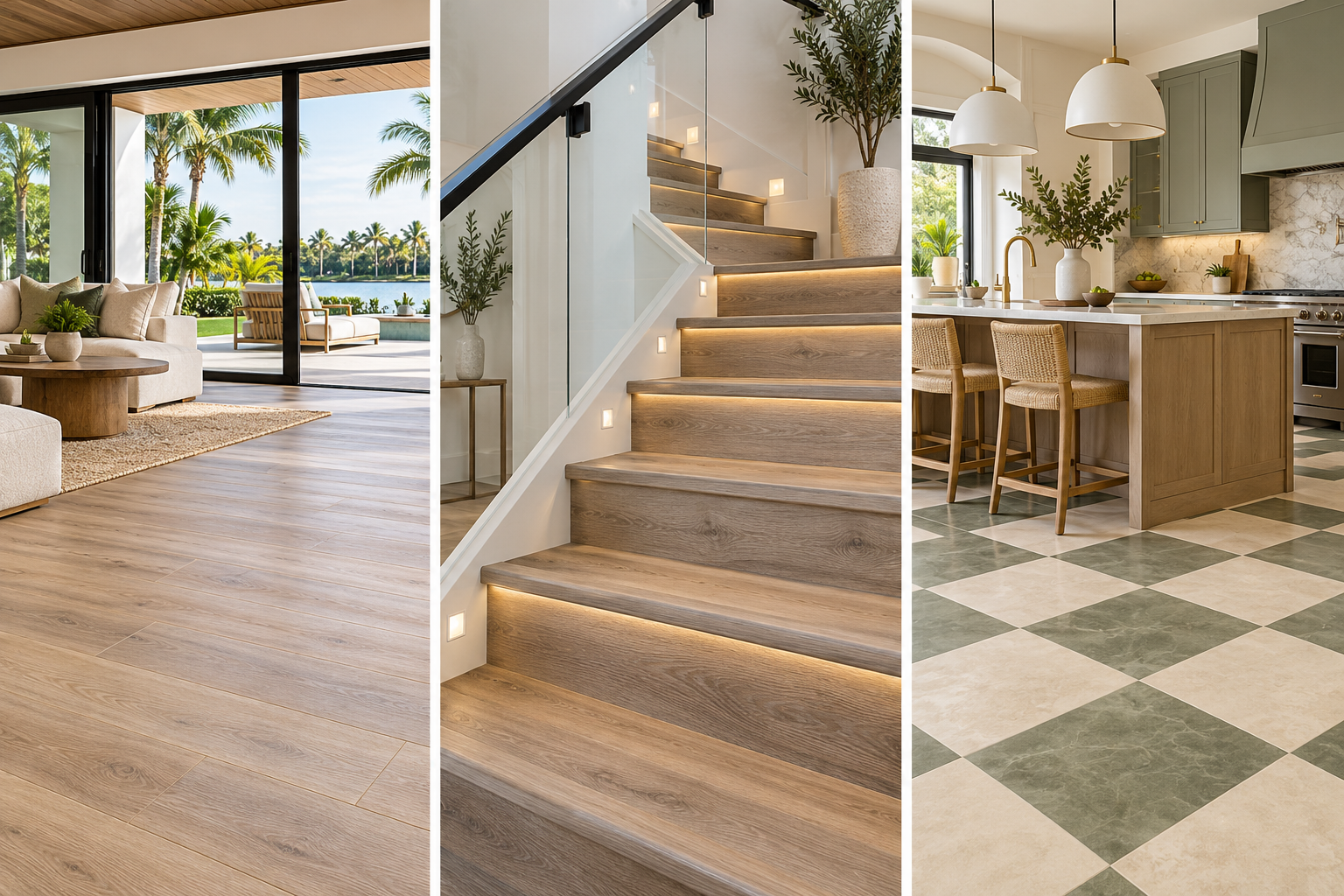
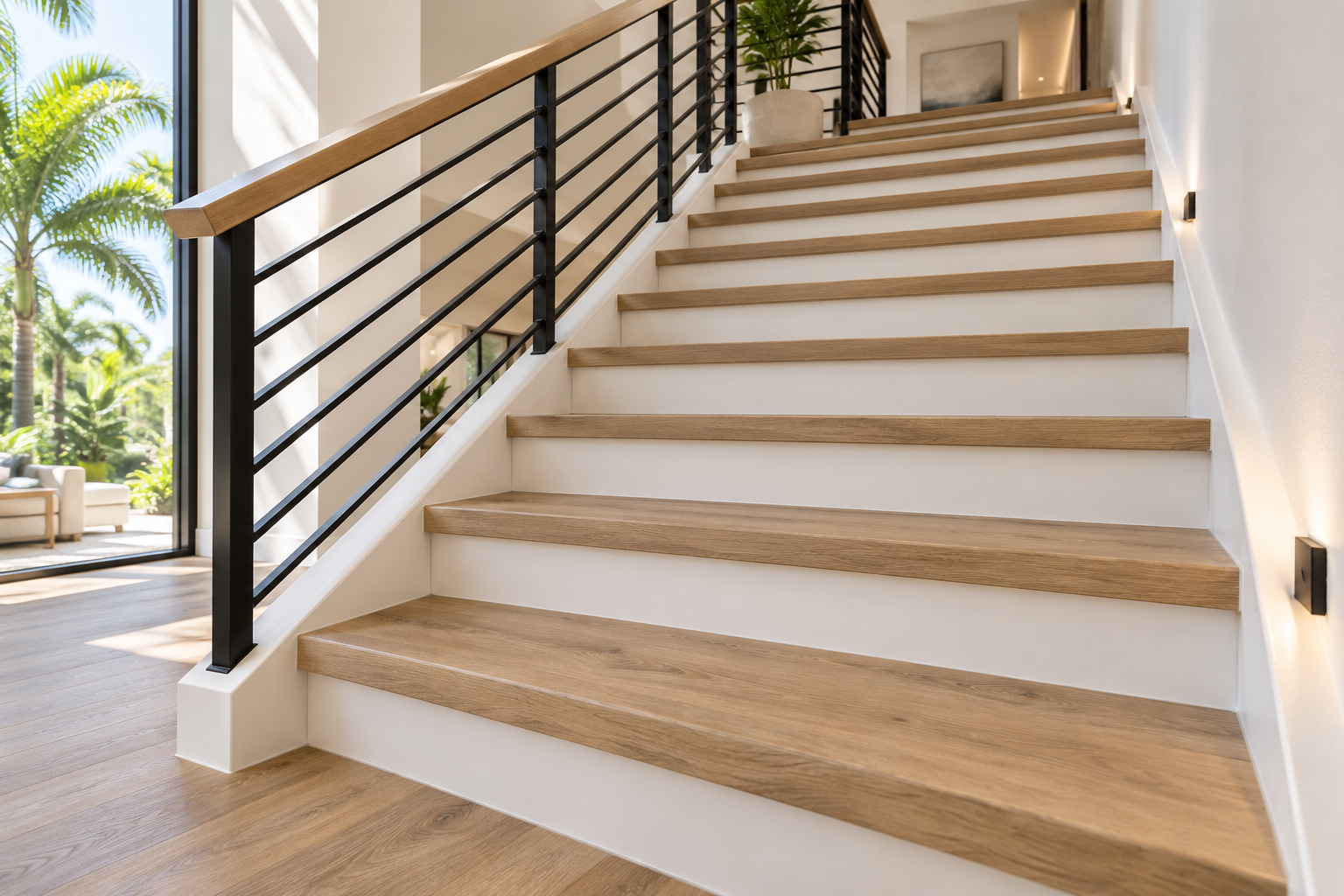
A continuous wood-look floor can make a two-story Florida home feel more cohesive—but stairs are not simply another place to install ordinary luxury vinyl planks. Homeowners in Orlando, Kissimmee, and throughout Central Florida increasingly want staircase finishes that match their LVP or SPC floors. Two common approaches are factory-made one-piece stair treads and separate stair-nosing profiles used with compatible flooring. Understanding the differences can help you avoid mismatched finishes, loose edges, and unsafe stair geometry.
What Is a Matching LVP Stair Tread?
A matching stair tread is a stair-specific component designed to coordinate with a luxury vinyl plank flooring collection. Some products are one-piece tread-and-nose units, while others combine an approved plank or tread surface with a separate stair-nosing profile. Colors and textures may coordinate rather than match perfectly, especially across different production batches or product lines.
One-Piece Stair Treads vs. Separate Stair Nosing
One-Piece Stair Treads
A one-piece stair tread incorporates the walking surface and the front-edge profile into a single manufactured component. Depending on the product, it may offer a clean, uninterrupted appearance with fewer visible joints at the leading edge. Dimensions, thickness, installation method, and permitted substrate conditions vary by manufacturer. The product must be designed for stair use.
Separate Stair-Nosing Profiles
A separate nosing is a manufactured trim piece installed at the front edge of a stair. It may be used with compatible LVP or SPC material, but only in an approved stair assembly. Some nosings overlap the flooring surface, while others create a flush appearance. Each system has different attachment and fit requirements.
Which Option Looks Better in a Modern Florida Home?
One-piece treads often create a streamlined appearance because the front edge is integrated. Separate nosing can be useful when matching a particular flooring collection or accommodating an existing stair configuration. Neither approach is automatically superior. Examine full-size samples under the home’s actual lighting, including the riser, tread edge, and landing transitions. Warm oak and natural wood-look finishes can complement contemporary interiors, but visual preference should never override safe stair construction.
Can Regular Click-Lock LVP Be Installed on Stairs?
Do not assume a floating-floor installation method is acceptable on stair treads. Stairs generally require a secure, manufacturer-approved attachment system, and many flooring manufacturers specify direct bonding or a dedicated stair-tread accessory. Floating click-lock installation on stair steps may allow movement and can be unsafe. Always follow the exact flooring and stair-accessory instructions.
Why Stair Dimensions Matter More Than Appearance
Replacing carpet or wood finishes with LVP stair components can change the height of individual steps, tread depth, and front-edge projection. Inconsistent riser heights can create a trip hazard. Applicable Florida Building Code provisions depend on the building and project, so the installer or qualified contractor should verify required riser uniformity, tread dimensions, nosing geometry, landings, and handrail conditions before ordering. Never add layers to a staircase without checking the finished geometry.
Check the First and Last Riser
New flooring on the lower or upper landing can alter the first or last step height. Measure the entire staircase as one system, including landings, before installation.
Inspect the Existing Stair Structure
The substrate must be sound, stable, dry, and appropriate for the selected adhesive or attachment system. Squeaking, movement, damaged treads, or loose existing nosings should be addressed before adding a finish.
How Are LVP Stair Treads Installed?
The exact process depends on the stair product, substrate, and manufacturer. A typical professional evaluation includes removing incompatible existing coverings, inspecting the stair structure, checking tread and riser geometry, preparing surfaces, dry-fitting components, selecting approved adhesives or mechanical fasteners where specified, and protecting the installation during the required cure period. Do not substitute general-purpose construction adhesive or improvise a nosing connection.
Do You Need Matching Risers?
Not necessarily. White painted risers with oak-look treads create a familiar contrast, while coordinating wood-look risers provide a more continuous finish. The choice depends on design preference, product availability, maintenance, and installation requirements. Ensure the finished tread-to-riser junction is neat, secure, and consistent.
Are LVP Stair Treads Slippery?
Traction depends on the specific surface texture, finish, footwear, cleaning products, and environmental conditions. A matte finish does not automatically establish adequate slip resistance. Ask the manufacturer whether the product is intended for stair use and what performance information is available. Keep stairs free of water, dust, and residue; avoid treatments that make surfaces slippery.
What About Stair Nosing Color Mismatches?
A matching accessory may be made with a different production process from the floor planks. Color, gloss, texture, and grain repetition can vary. Before purchasing a full staircase package, place the tread or nosing sample directly beside the flooring in daylight and artificial light. Confirm availability for the entire staircase, including landings and returns.
How Much Do Matching LVP Stairs Cost in Florida?
Costs vary with the number and shape of steps, existing carpet or finish removal, stair repairs, product type, specialty nosing, landings, labor, and trim work. Winder stairs, open-sided stairs, and complex railings may require additional fabrication. Request an itemized quote covering all stair components, substrate preparation, adhesives or fasteners, risers, landings, and finishing details. Comparing only the price of the plank flooring can substantially underestimate the staircase portion of a renovation.
Questions to Ask Before Ordering
Confirm that the exact tread or nosing is approved for stair use and compatible with the selected flooring. Ask whether the assembly is bonded or mechanically secured, what substrate preparation is required, how finished riser heights will be checked, whether matching returns and landing transitions are available, and which installation conditions affect the warranty. A qualified installer should review the existing staircase before materials are ordered.
Frequently Asked Questions
What is the difference between a one-piece LVP stair tread and stair nosing?
A one-piece tread integrates the walking surface and front edge. Separate stair nosing is an accessory installed with a compatible tread or flooring surface according to a manufacturer-approved stair assembly.
Can I use the same LVP planks from my floor on the stairs?
Only if the manufacturer approves those planks for a specific stair installation system. Standard floating click-lock methods should not be assumed safe for stairs.
Do LVP stairs need to be glued down?
Many systems require direct bonding or another secure attachment method, but the exact requirements vary. Follow the stair-component manufacturer’s installation instructions.
Can SPC flooring be used on stairs?
Some SPC collections offer dedicated stair treads or compatible nosing systems. Verify the specific product and approved installation method.
Are one-piece stair treads safer than separate nosing?
Neither is inherently safer in every installation. Secure attachment, consistent stair geometry, suitable traction, and compliance with applicable code are more important than whether the edge is integrated.
Can LVP stairs match existing LVP flooring exactly?
Coordinating accessories are often available, but perfect color and texture matches are not guaranteed. Compare actual samples before ordering.
Do I need to replace my staircase when switching from carpet to LVP?
Not always. The existing structure may be reusable if sound and dimensionally suitable, but a qualified contractor should evaluate the substrate, tread shape, and finished riser dimensions.
How long should I wait before walking on newly installed LVP stairs?
Follow the exact adhesive and product manufacturer’s curing and traffic instructions. Timing varies by system and site conditions.
Plan Your Staircase as a Complete Flooring System
Matching stairs can make an Orlando-area home renovation feel finished, but the staircase must be planned separately from the flat floor. Select stair-rated products, verify geometry and attachment requirements, compare real samples, and budget for risers and landing transitions. Green House Floors and More can help you explore coordinating flooring materials and stair accessories so you can discuss a complete installation plan with a qualified contractor.