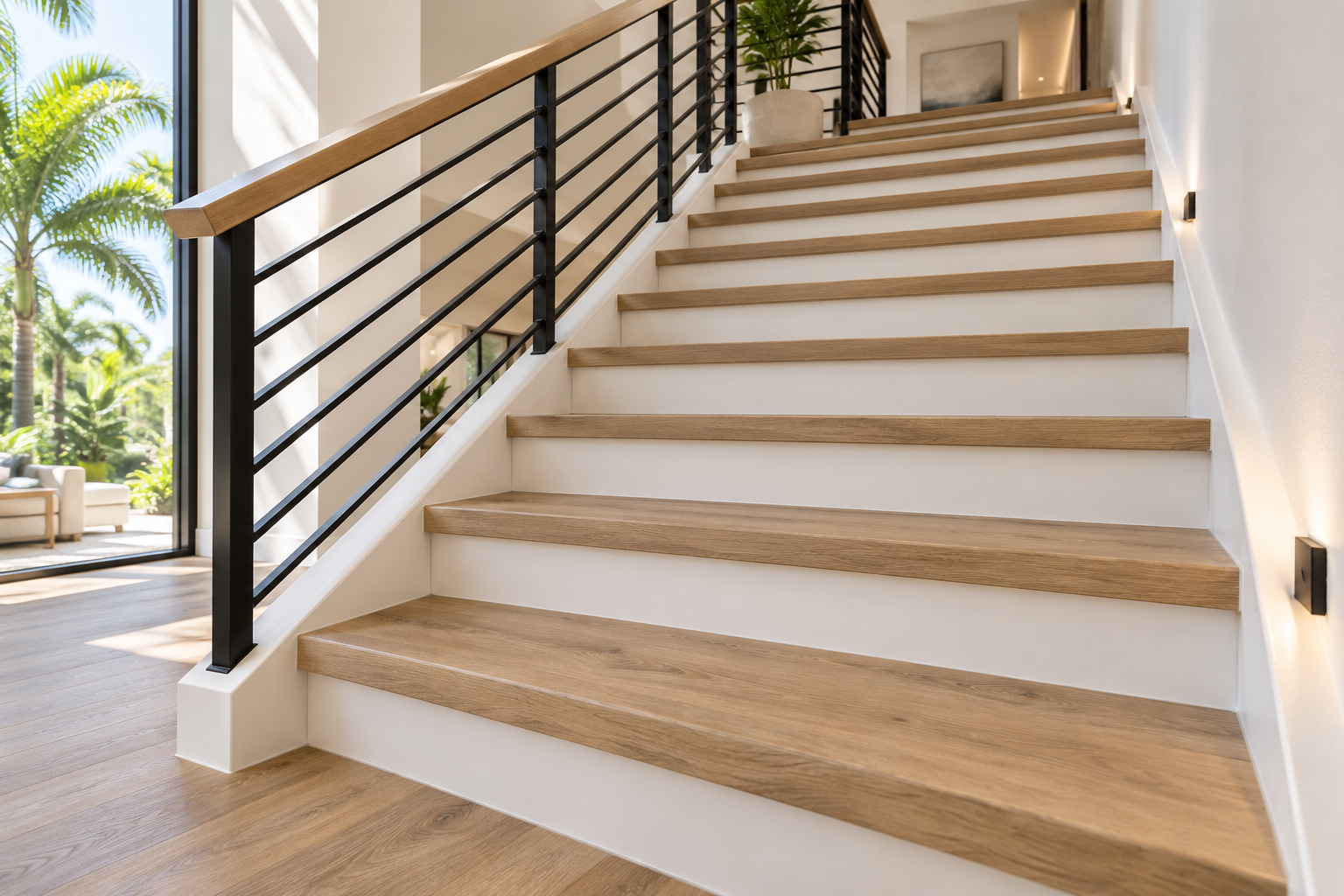
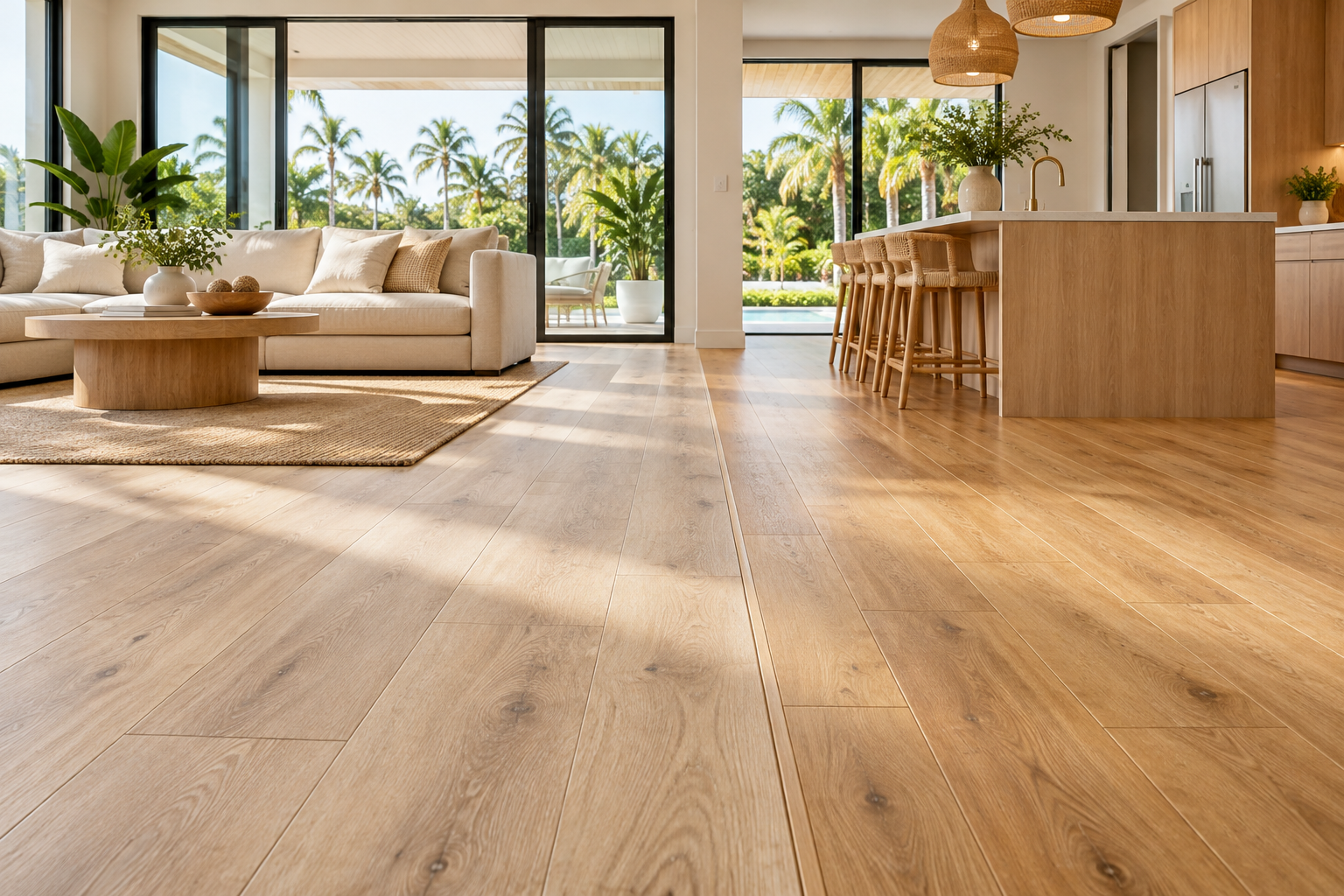
Flooring technology is changing, and one of the most interesting developments in 2026 involves a material many homeowners thought they already understood: laminate flooring.
For years, luxury vinyl plank and SPC rigid-core flooring have been popular choices for Florida homes because of their water-resistant construction and relatively easy maintenance.
But modern laminate flooring has evolved.
Manufacturers are introducing products with improved water-resistant locking systems, realistic wood textures, stronger surface protection, and enhanced performance against everyday spills.
This raises an important question for homeowners, builders, and flooring contractors across Florida:
Is waterproof laminate becoming a serious alternative to SPC flooring?
The answer depends on how the floor will be used, the condition of the subfloor, and the actual performance specifications of the product.
Understanding those differences can help homeowners make a better investment and help contractors recommend the right flooring for each project.
Why Is Waterproof Laminate Getting Attention in 2026?
The laminate flooring category is undergoing a technical transformation.
Traditional laminate flooring was often associated with swelling edges, damaged joints, and problems caused by prolonged exposure to moisture.
Modern water-resistant laminate products are designed to address some of those weaknesses.
Improvements include tighter locking systems, enhanced edge treatments, protective surface technologies, and more realistic decorative finishes.
At the same time, homeowners are increasingly looking for alternatives that combine the appearance of hardwood with practical everyday durability.
According to an August 2026 industry report from Floor Covering Weekly, the U.S. laminate category showed signs of stabilization following several years of declining sales.
Meanwhile, the North American Laminate Flooring Association announced progress in updating its LF-01 performance standard, which evaluates characteristics such as wear resistance, impact resistance, moisture performance, and dimensional stability.
These developments make laminate worth reconsidering.
However, improvements in laminate technology do not mean every laminate product performs equally well in wet environments.
What Is the Difference Between Waterproof Laminate and SPC Flooring?
The primary difference is the construction of the flooring core.
Waterproof Laminate Flooring
Most conventional laminate flooring uses a high-density fiberboard core made from compressed wood fibers.
Above the core are a decorative layer and a protective wear surface.
Water-resistant laminate products may incorporate specialized joint treatments and moisture-protection technologies designed to reduce water penetration.
However, the performance of the product depends on the complete flooring system.
Because many laminate products contain wood-based materials, prolonged moisture exposure can still cause swelling or other damage.
SPC Flooring
SPC stands for Stone Plastic Composite.
It is a type of rigid-core luxury vinyl flooring that typically combines a mineral-filled polymer core with decorative and protective layers.
Unlike conventional wood-fiber laminate, the SPC core is designed to resist water absorption.
This gives SPC an advantage in applications where accidental spills and surface moisture are frequent concerns.
However, waterproof core construction does not make the entire flooring installation waterproof.
Water can still reach the subfloor through perimeter gaps, transitions, or other openings.
Is Waterproof Laminate Really Waterproof?
This is one of the most important questions buyers should ask.
The term waterproof is frequently used in flooring marketing, but it does not necessarily mean the product can withstand unlimited exposure to standing water.
Some laminate manufacturers offer specific water-resistance warranties.
Those warranties may depend on the duration of water exposure, the type of liquid, proper installation, and required perimeter treatments.
For example, a product may be designed to resist ordinary household spills when cleaned within the manufacturer’s specified period.
That does not automatically mean it is suitable for flooding, persistent leaks, or continuously wet environments.
Before purchasing, homeowners should request the written warranty and installation instructions for the exact product.
The most important question is not simply whether the packaging says waterproof.
It is what the manufacturer actually guarantees and under which conditions.
Waterproof Laminate vs. SPC: Which Handles Florida Humidity Better?
Florida’s climate creates special considerations for flooring selection.
Homes in Orlando, Kissimmee, Tampa, Miami, and other parts of the state frequently experience high outdoor humidity, heavy rainfall, and substantial differences between indoor and outdoor temperatures.
Many homes also have concrete slab foundations.
SPC and Humidity
SPC’s rigid composite core does not behave like traditional wood-fiber laminate when exposed to water.
That can make it an attractive option for homes where moisture exposure is a concern.
However, SPC installations still require appropriate substrate preparation and compliance with manufacturer moisture requirements.
Laminate and Humidity
Modern laminate products can perform well in climate-controlled Florida homes when installed according to their specifications.
The key is maintaining suitable indoor conditions and preventing moisture problems.
Because many laminate products use wood-based cores, excessive moisture exposure can affect dimensional stability.
The Florida Installation Factor
Neither flooring material should be installed over a concrete slab with unresolved moisture-related problems.
A qualified installer should evaluate the slab and follow the selected manufacturer’s requirements for moisture testing, vapor control, flatness, and preparation.
Bottom line: SPC generally offers an advantage where exposure to water is more likely, while properly selected water-resistant laminate can be a practical choice for conditioned living spaces.
Which Flooring Is More Scratch-Resistant?
Scratch resistance is another important consideration, especially in homes with pets, children, and heavy foot traffic.
Laminate Scratch Resistance
Many laminate products feature durable protective surfaces engineered to resist abrasion and everyday wear.
Some products are evaluated under industry performance standards that include wear, impact, and scratch-related testing.
Higher-quality laminate can perform particularly well against everyday surface abrasion.
SPC Scratch Resistance
SPC flooring typically uses a transparent wear layer over its decorative surface.
Wear-layer thickness is often expressed in mils.
However, a thicker wear layer does not automatically guarantee superior scratch resistance.
The protective coating, surface formulation, manufacturing quality, and testing results also matter.
Which Is Better for Dogs?
Both materials can work in homes with dogs.
The best choice depends on the specific product’s scratch resistance, surface texture, traction, and water performance.
Dog nails, sand, furniture movement, and abrasive debris can damage either surface.
Buyers should compare actual product specifications instead of assuming that one entire flooring category is always more scratch-resistant.
Which Looks More Like Real Hardwood?
This is where modern laminate flooring has become particularly competitive.
Many premium laminate products offer detailed wood-grain visuals, textured surfaces, and natural-looking plank variation.
Some use embossed-in-register technology, which aligns the surface texture with the printed wood pattern.
Premium SPC products can also provide highly realistic wood visuals.
The appearance of either material depends on the decorative film, texture, finish, bevel design, and repetition of the printed pattern.
The 2026 Design Direction
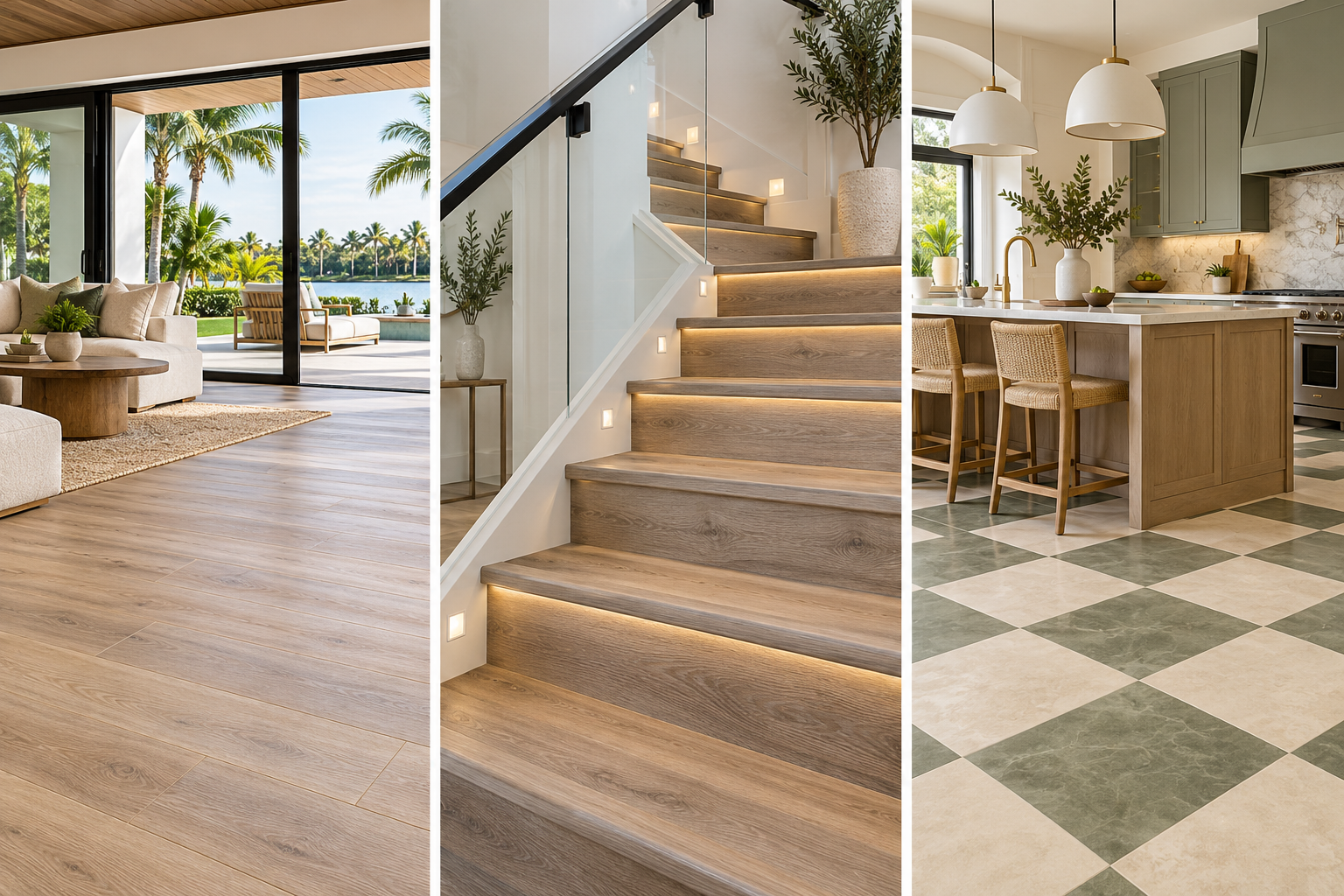
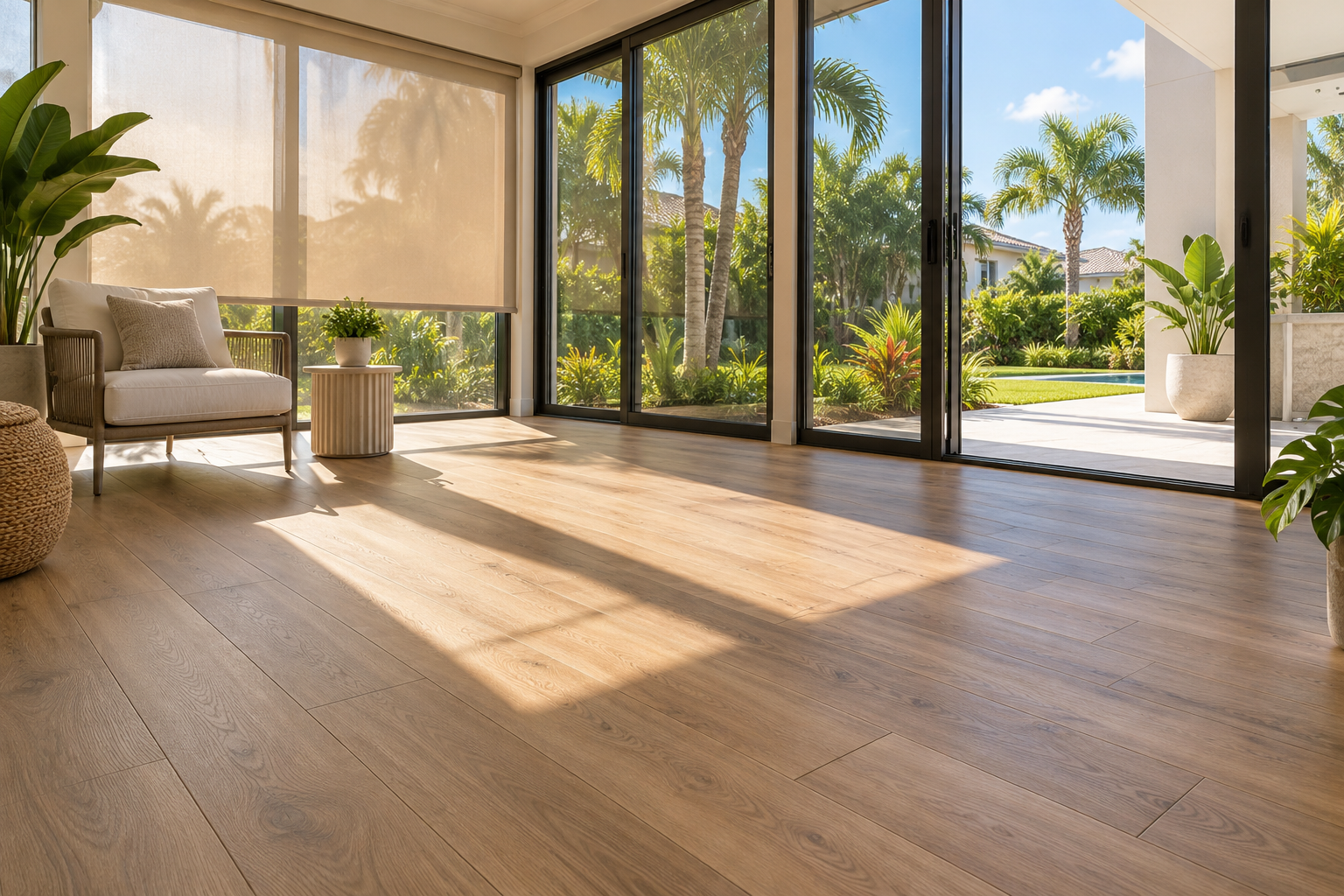
Warm oak, honey, natural beige, and medium brown finishes are prominent in current flooring collections.
Matte and low-gloss surfaces are also attractive choices for homeowners seeking a natural appearance.
In Florida homes with abundant sunlight, these finishes can complement contemporary, transitional, and coastal-inspired interiors.
The best way to compare realism is to examine large installed samples under the lighting conditions of the actual home.
Which Feels Better Underfoot?
Comfort depends on more than the flooring core.
Laminate and SPC may feel different because of their construction, thickness, attached backing, underlayment, and the substrate beneath them.
Laminate Flooring
Some laminate products provide a firm walking surface with a different acoustic character from rigid-core vinyl.
The type of underlayment can influence comfort and sound transmission.
SPC Flooring
SPC generally has a dense, rigid core.
Products with attached acoustic backing may offer improved walking comfort and sound performance compared with versions without padding.
However, adding extra underlayment is not always permitted.
The manufacturer must approve the complete installation system.
For Florida condominiums, acoustic requirements may also influence which product is appropriate.
Can Waterproof Laminate Be Installed Over Concrete in Florida?
Yes, when the selected product is approved for concrete installation and the substrate meets the manufacturer’s requirements.
Concrete slab preparation is particularly important in Florida.
Before installation, contractors should evaluate moisture conditions, flatness, cracks, contamination, and existing flooring materials.
Some laminate products require a specific vapor-control layer over concrete.
Other systems have different requirements.
The installer should never assume that an attached pad automatically replaces a required vapor barrier.
Is SPC Better for Florida Kitchens and Bathrooms?
The answer depends on the room and the manufacturer’s approved applications.
Kitchens
Both SPC and selected water-resistant laminate products may be suitable for kitchens.
Homeowners should consider spills, cleaning habits, appliance leaks, and the manufacturer’s water-exposure warranty.
SPC may be preferable when water exposure is a significant concern.
Bathrooms
Bathrooms present additional challenges because water can accumulate around tubs, showers, toilets, and vanities.
Not every laminate product is approved for bathroom installation.
Even when a product is approved, the manufacturer may require specific perimeter sealing or installation procedures.
SPC products may offer broader wet-area compatibility, but their installation requirements must still be followed.
Neither floating laminate nor SPC should be treated as a substitute for a properly designed waterproofing system.
Is Waterproof Laminate Cheaper Than SPC?
Not necessarily.
Pricing varies considerably by manufacturer, collection, construction, warranty, and retailer.
Entry-level laminate may cost less than premium SPC, while advanced water-resistant laminate can compete directly with higher-priced rigid-core products.
Installation costs also depend on the existing subfloor.
For example, an inexpensive flooring product may become a costly project if the concrete slab requires extensive preparation.
Homeowners should compare the complete installed price, including materials, labor, moisture-control requirements, underlayment, transitions, baseboards, and any removal or disposal work.
A lower material price does not always mean a lower project cost.
What Does NALFA Certification Mean?
The North American Laminate Flooring Association develops performance standards and certification programs for laminate flooring.
Its LF-01 standard evaluates several characteristics relevant to product performance, including wear, impact, moisture resistance, dimensional stability, and other properties.
NALFA also provides additional testing and certification resources related to water resistance and surface swelling.
For buyers, independent performance testing can provide more meaningful information than broad marketing claims.
However, certification should be evaluated alongside the product’s intended use, installation instructions, and warranty.
Not every laminate product carries the same certifications.
Waterproof Laminate vs. SPC: Which Should You Choose?
There is no universal winner.
Consider Water-Resistant Laminate When:
The home is consistently climate-controlled. The flooring will be installed in an approved living area or bedroom. Scratch and abrasion resistance are important priorities. The homeowner prefers a particular laminate texture or visual. The product’s water-resistance warranty is appropriate for the intended use.
Consider SPC When:
Accidental spills are a frequent concern. The room requires a product with greater core resistance to water. The installation location is approved for the selected SPC system. The homeowner wants a specific rigid-core construction or visual. The flooring must satisfy the project’s moisture, dimensional, and installation requirements.
In either case, product selection should follow an evaluation of the home rather than relying exclusively on marketing claims.
What Should Florida Flooring Contractors Verify Before Recommending Either Product?
For contractors working in Orlando and throughout Central Florida, recommending the right flooring requires more than comparing price per square foot.
Before finalizing a proposal, verify the manufacturer’s approved installation locations, concrete slab requirements, moisture testing procedures, flatness tolerances, and underlayment compatibility.
Review expansion-space requirements, room-size limitations, transitions, sunlight exposure, and the manufacturer’s written warranty.
Contractors should also confirm whether the flooring is appropriate for the building’s occupancy and expected traffic.
These steps can reduce installation problems and help customers make informed purchasing decisions.
Frequently Asked Questions
Is waterproof laminate better than SPC flooring?
Neither material is universally better. Water-resistant laminate may offer attractive scratch resistance and realistic wood visuals, while SPC generally provides greater resistance to water absorption in its core. Compare specific products and their approved applications.
Can waterproof laminate be installed in Florida homes?
Yes. Many water-resistant laminate products are suitable for properly conditioned Florida homes when the substrate and installation conditions meet the manufacturer’s requirements.
Is SPC flooring completely waterproof?
Many SPC products have water-resistant cores, but the complete flooring installation is not necessarily waterproof. Water can still reach the subfloor through openings or other pathways.
Does waterproof laminate swell when wet?
Some laminate products can swell after excessive or prolonged moisture exposure, particularly when water reaches a wood-based core. Performance depends on the product’s construction, exposure conditions, and warranty limitations.
Which flooring is better for pets: laminate or SPC?
Both can work well. Compare scratch resistance, traction, surface durability, water performance, and ease of cleaning for the exact products being considered.
Can laminate flooring be installed over a concrete slab in Orlando?
Yes, when the product is approved for concrete installation and the slab meets the manufacturer’s moisture, flatness, and preparation requirements.
Is waterproof laminate cheaper than luxury vinyl plank?
Sometimes. Pricing varies by product quality, manufacturer, and installation requirements. Compare complete installed costs rather than material prices alone.
What is the best flooring for a Florida kitchen?
SPC and selected water-resistant laminate products can both be suitable, depending on the manufacturer’s instructions and the expected exposure to water. Consider spills, appliance leaks, cleaning practices, and substrate conditions.
What should I check before buying waterproof laminate?
Review the written water-resistance warranty, product construction, certification information, approved installation locations, moisture requirements, and manufacturer installation instructions.
The Future of Flooring Is About Performance, Not Just Labels
The evolution of laminate flooring is giving homeowners more choices.
Improved water resistance, realistic wood visuals, and modern surface technologies are making laminate worth considering alongside SPC.
But the most important distinction remains the same: product performance must match the conditions of the home.
For Florida homeowners, that means considering moisture exposure, concrete slab conditions, room usage, and the manufacturer’s specifications before making a purchase.
At Green House Floors and More, we believe flooring decisions should begin with understanding the materials—not simply choosing the most attractive sample.
Whether you are renovating a home, planning a multifamily project, or selecting materials for your next installation, comparing the right products can help you make a more informed investment.