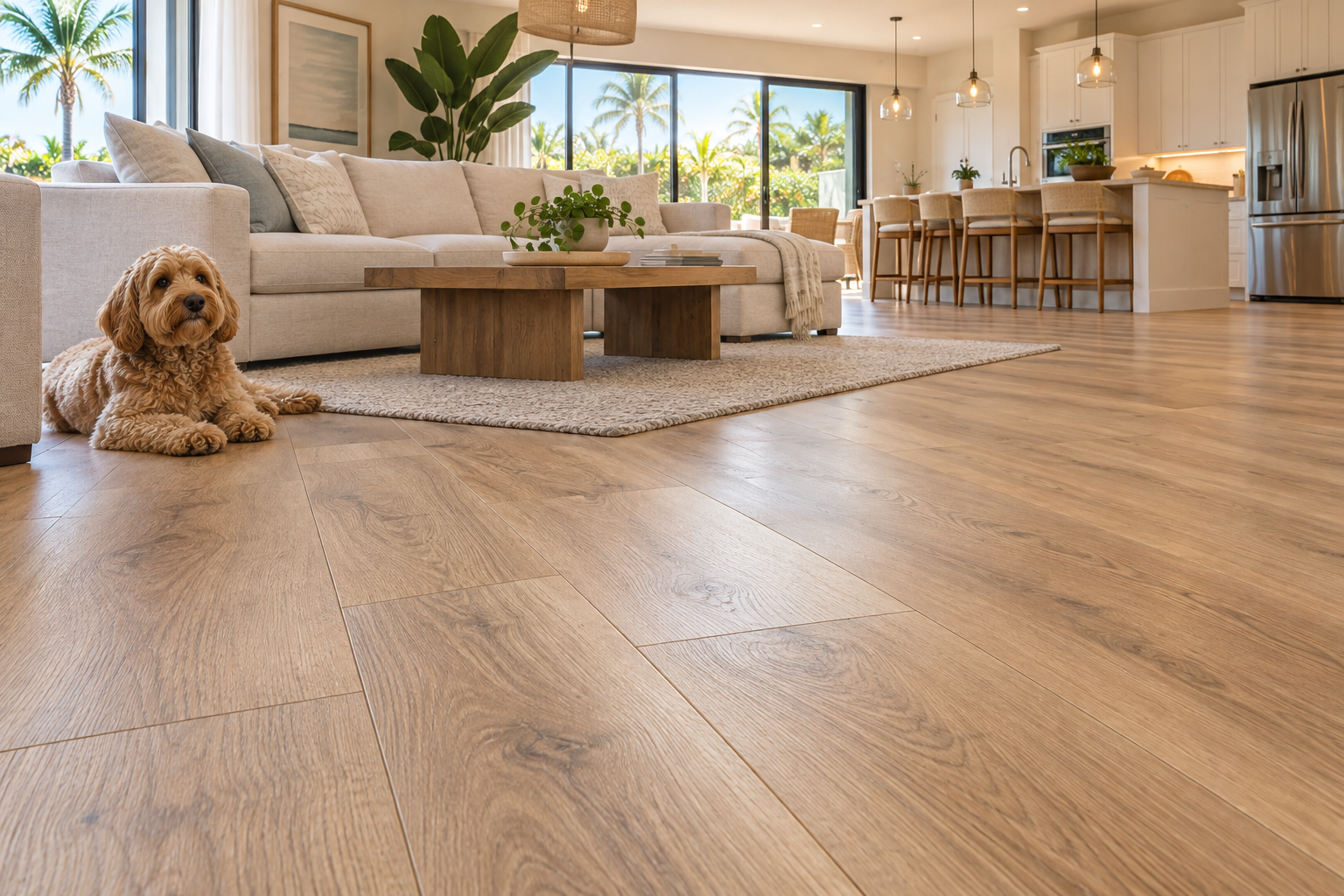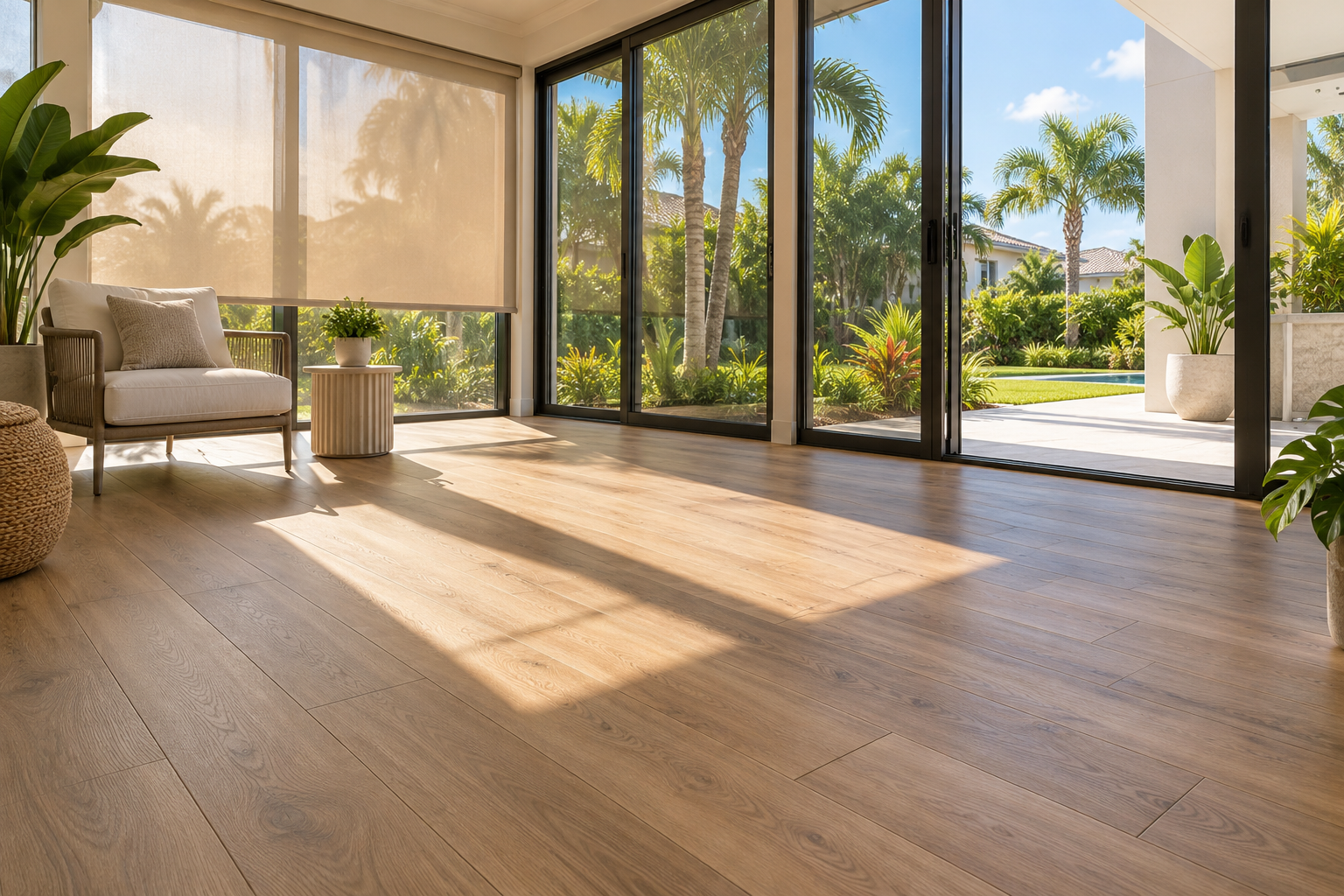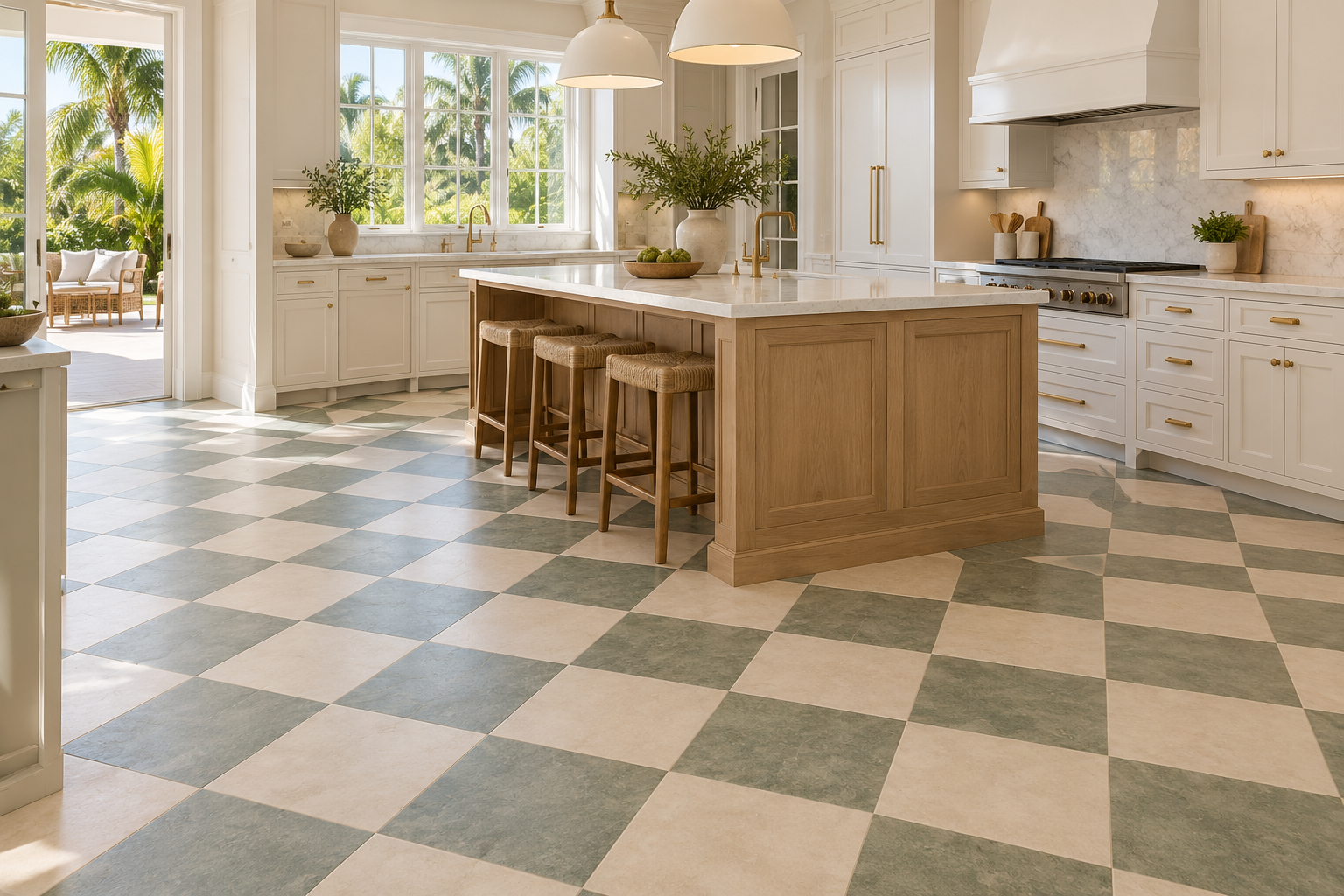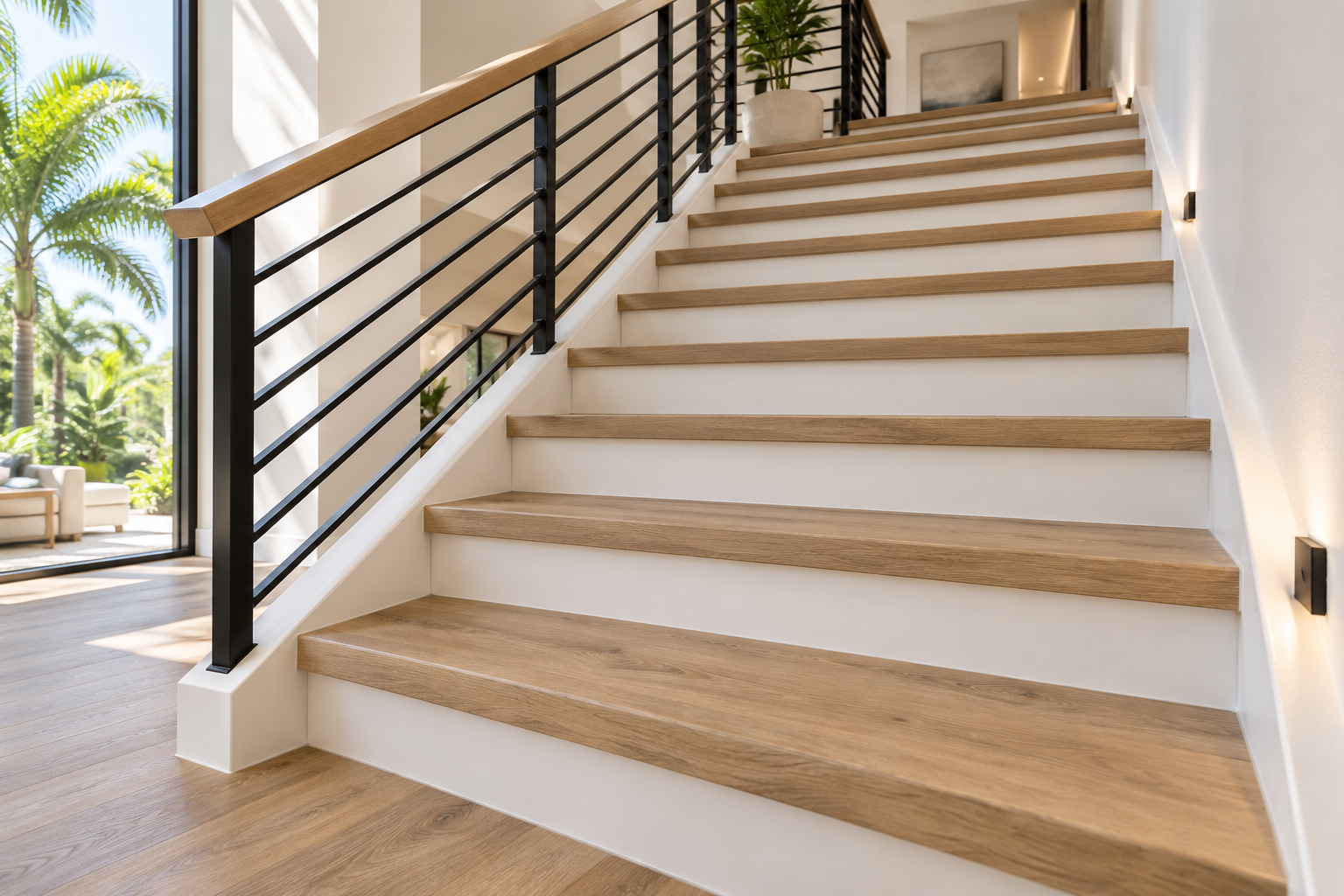
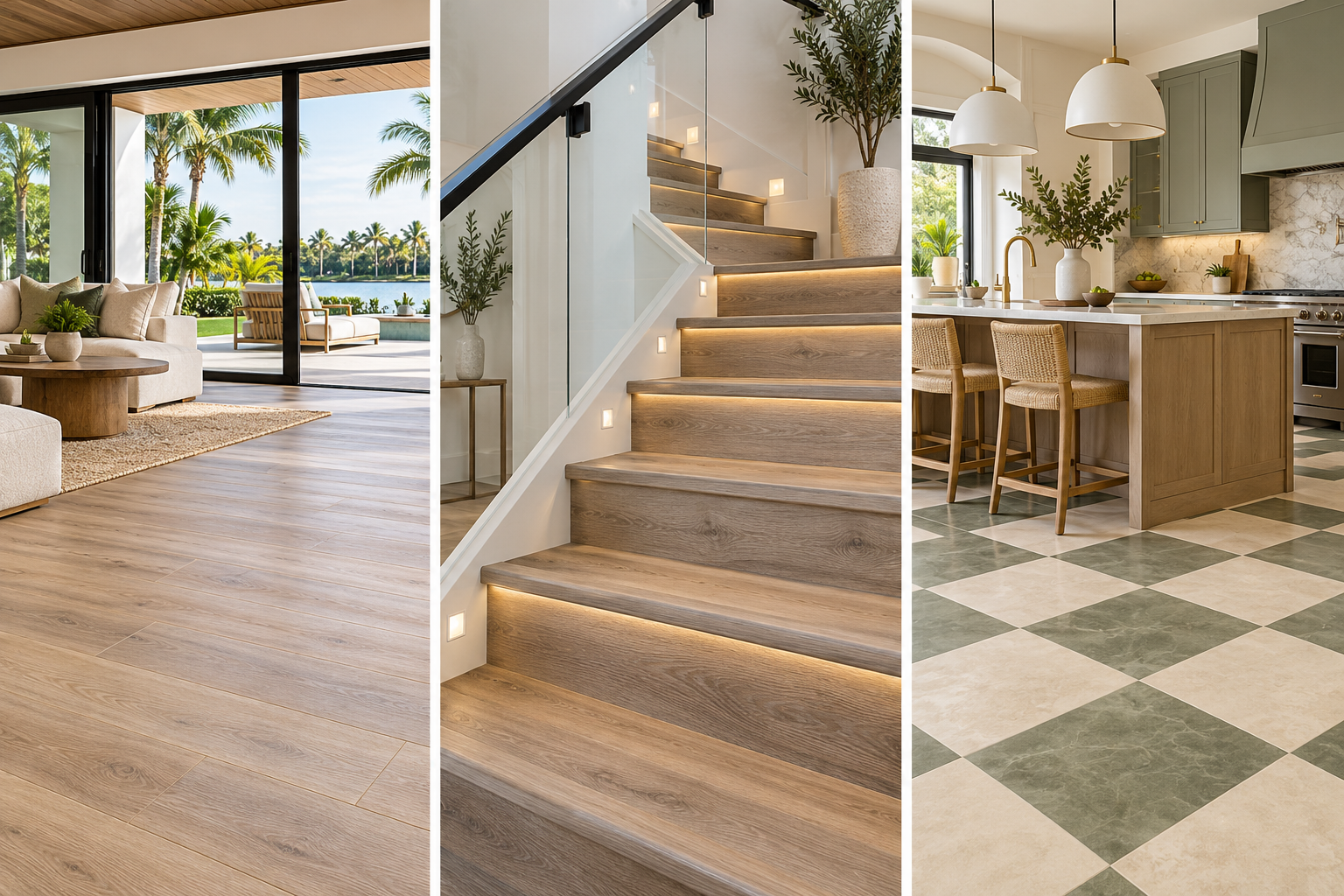
Florida kitchen remodels increasingly combine open layouts, large storage islands, and continuous wood-look flooring. That combination raises an important installation question: can a permanent kitchen island sit on top of floating SPC flooring?
Quick answer: For many floating click-lock SPC products, the answer is no. A fixed island or cabinet can restrict the floor’s designed movement, creating stress at the joints and potentially causing buckling or separation. The usual approach is to install fixed cabinetry first, then fit the floating flooring around it with the required clearance. Always follow the exact product’s written installation instructions.
Why This Question Matters in Florida Kitchens
Kitchen islands increasingly serve as prep spaces, storage, and gathering areas. In Orlando, Kissimmee, St. Cloud, and Winter Garden, replacing tile with SPC while expanding an island requires coordinating the cabinetry and flooring plans before installation begins. An island with a sink, outlets, or a dishwasher is generally a fixed installation, not movable furniture.
What Is Floating SPC Flooring?
SPC means stone plastic composite, a rigid-core type of luxury vinyl flooring. Floating SPC planks connect through a locking system rather than being permanently fastened to the subfloor. The assembled floor needs to accommodate movement within the manufacturer’s specified temperature and site conditions. Expansion clearance is commonly required at walls, columns, and fixed objects. A waterproof plank core does not eliminate these requirements.
Can You Put a Kitchen Island on Top of Floating SPC?
The General Rule
Many manufacturers prohibit placing permanent cabinetry directly on floating floors. The problem is not simply weight: anchoring or pinning the floor can prevent the movement intended by the installation system. For example, CALI’s Select and Select XL vinyl installation guidance advises against installing the floor beneath permanent cabinetry and against fastening through a floated floor.
Are There Exceptions?
Some collections allow different installation methods or have product-specific instructions. Do not assume that gluing a few planks beneath an island makes a floating installation acceptable. Ask the manufacturer for written approval for the exact flooring SKU and proposed assembly.
Should Cabinets or Flooring Be Installed First?
For floating SPC systems that prohibit fixed cabinetry on top, install and secure the cabinets and island first, then fit the flooring around them with the required clearance. Plan toe kicks, exposed edges, and transitions in advance. If the island may be relocated later, discuss how the missing flooring beneath it would be patched and keep spare material from the same production lot when practical.
How Much Expansion Gap Is Needed Around an Island?
There is no universal SPC expansion-gap dimension. Requirements vary by product, room dimensions, and installation system. Some instructions specify a quarter-inch gap, but that figure should never be applied automatically to a different product. Check clearance around cabinets, door frames, walls, and transitions. Trim should conceal the gap without pinching the floating floor or fastening through it.
What Happens If an Island Pins a Floating Floor?
Potential symptoms include raised edges, buckling, gaps, clicking, and localized joint separation. These symptoms can also result from subfloor irregularities, temperature exposure, or damaged locking joints. Have a qualified flooring professional evaluate the layout and substrate before attempting repairs. Do not move or modify an anchored island without accounting for countertops, plumbing, and electrical connections.
What About Refrigerators and Dishwashers?
Freestanding appliances are not necessarily treated like fixed cabinetry. Their suitability depends on support points, weight, and the product’s instructions. Plan appliance service access and finished-floor height so a dishwasher can be removed without damaging the floor. Protect planks when moving refrigerators or other heavy appliances.
Can Glue-Down LVP Go Beneath Cabinets?
Some direct-glue vinyl systems may be approved for installation beneath fixed cabinetry, but approval depends on the selected product, adhesive, substrate, and permanent loads. Glue-down LVP and floating SPC are not interchangeable methods. Glue-down installations have their own requirements for substrate moisture, flatness, adhesive selection, and curing.
Florida Concrete Slabs Add Another Consideration
Many Central Florida kitchens sit on concrete slabs. Before installing SPC or glue-down vinyl, check substrate flatness, moisture conditions, cracks, contamination, and the suitability of existing flooring. Waterproof flooring does not resolve moisture beneath the installation. If existing tile remains, confirm that the new product allows installation over it and that height transitions are acceptable.
What If the Island Has Plumbing or Electrical Connections?
A kitchen island with a sink, dishwasher, or electrical services is generally fixed. Coordinate the flooring sequence with cabinet anchoring, plumbing, and electrical work. Never drill through a floating floor to secure an island unless the exact manufacturer-approved system permits it. Local permit and code requirements may apply to changes in utilities.
How to Keep a Continuous Wood-Look Design
Installing floating SPC around an island does not mean the kitchen must look visually interrupted. Accurate layout, compatible trim, and a coordinated toe-kick detail can maintain a cohesive appearance. Compare full-size wood-look samples in the home’s actual light, and confirm matching transitions are available.
What Should Be Included in a Contractor’s Quote?
Request an itemized proposal identifying the flooring SKU, installation method, substrate preparation, moisture-control requirements, expansion clearances, cabinetry sequence, transitions, and warranty responsibilities. Clarify who coordinates the island and flooring installation if different contractors are involved.
Frequently Asked Questions
Can I install floating SPC flooring under a kitchen island?
Many floating SPC manufacturers prohibit placing fixed islands on top. Install the island first and fit the floor around it unless the exact product instructions approve another method.
Why can’t a floating floor go under fixed cabinets?
Fixed cabinets can restrict the movement allowed by a floating installation, stressing the locking joints and potentially causing defects.
Does waterproof SPC still need an expansion gap?
Yes, whenever the manufacturer’s instructions require one. Water resistance and expansion clearance address different issues.
How big should the gap be around kitchen cabinets?
Use the exact manufacturer’s required clearance. There is no single correct gap for all SPC flooring products.
Can I put a refrigerator on floating SPC flooring?
Many products permit freestanding appliances under specified conditions, but check weight, support, movement, and the manufacturer’s installation requirements.
Is glue-down LVP better for a kitchen with a large island?
It may be suitable when the manufacturer approves the complete assembly. Compare the product’s installation requirements, substrate conditions, and maintenance needs.
What if the island is already installed over floating SPC?
Ask a qualified flooring contractor to inspect the installation and review the product instructions before making changes.
Can SPC flooring be installed over existing tile in a Florida kitchen?
Some products permit installation over sound existing tile when flatness, stability, and other requirements are satisfied.
Plan the Island and Flooring Together
The best kitchen renovation coordinates fixed cabinetry and flooring from the start. Before ordering SPC, verify manufacturer instructions for islands, expansion clearance, substrate preparation, and installation method. Green House Floors and More can help Florida homeowners and contractors compare flooring options and identify the questions to resolve before installation.