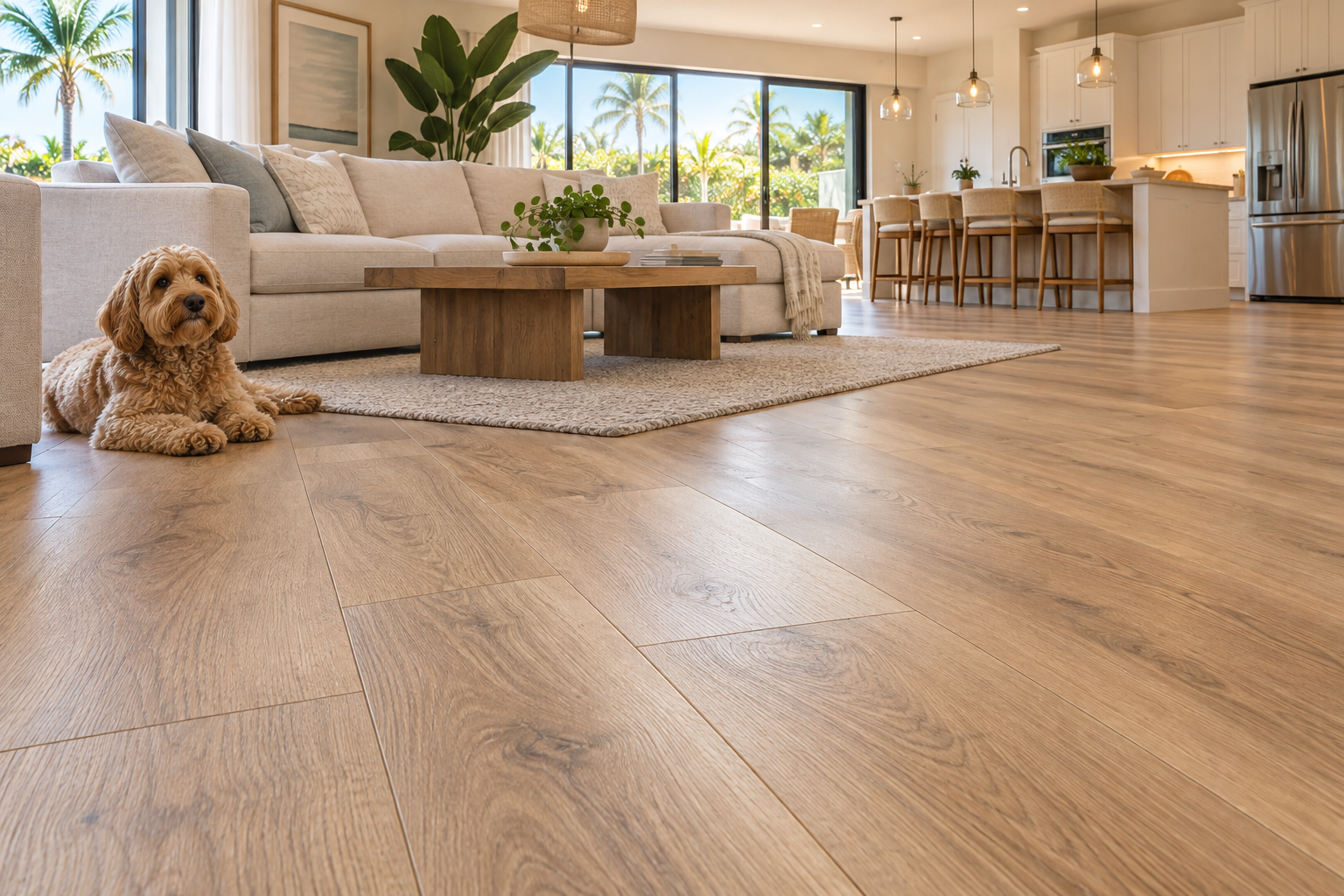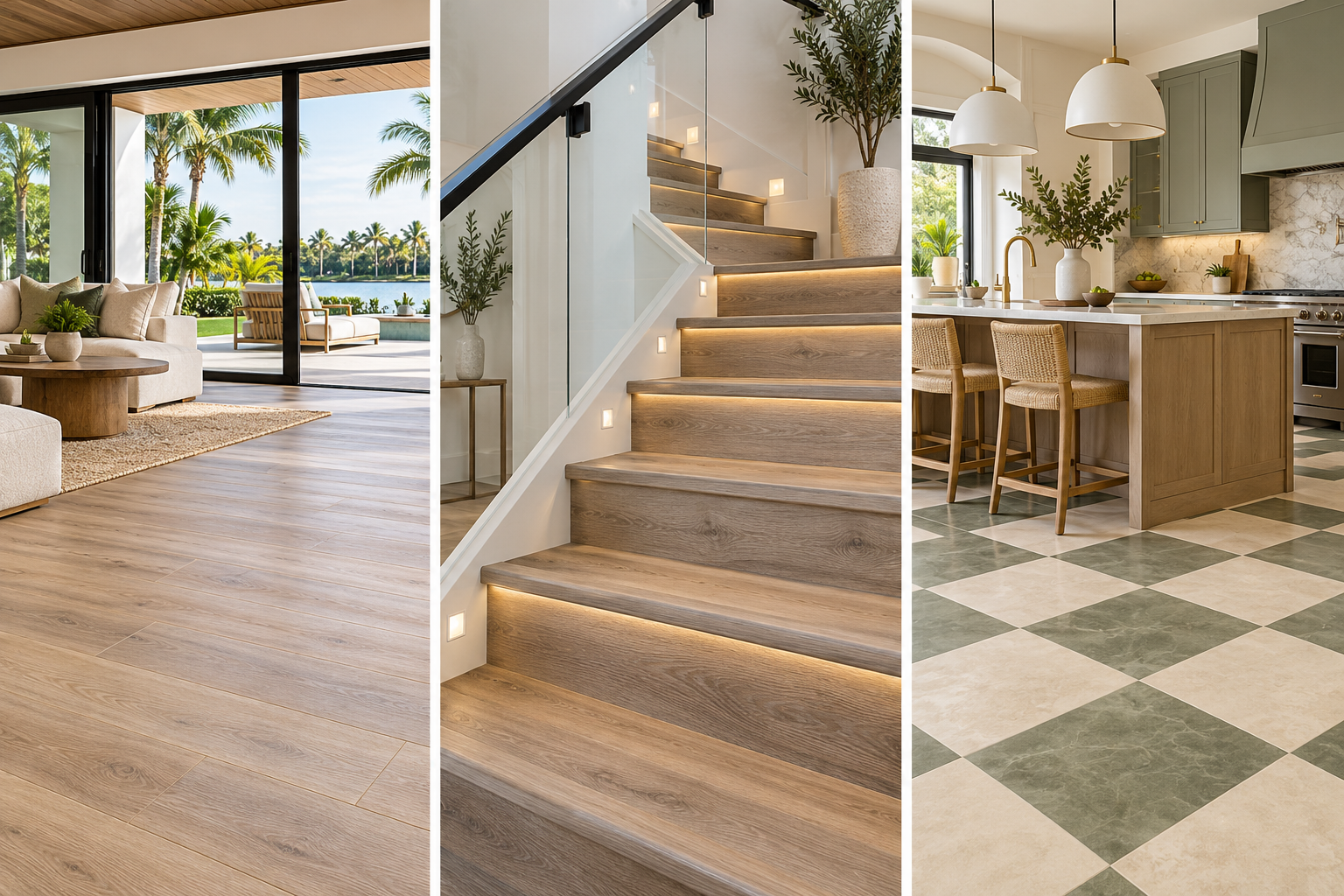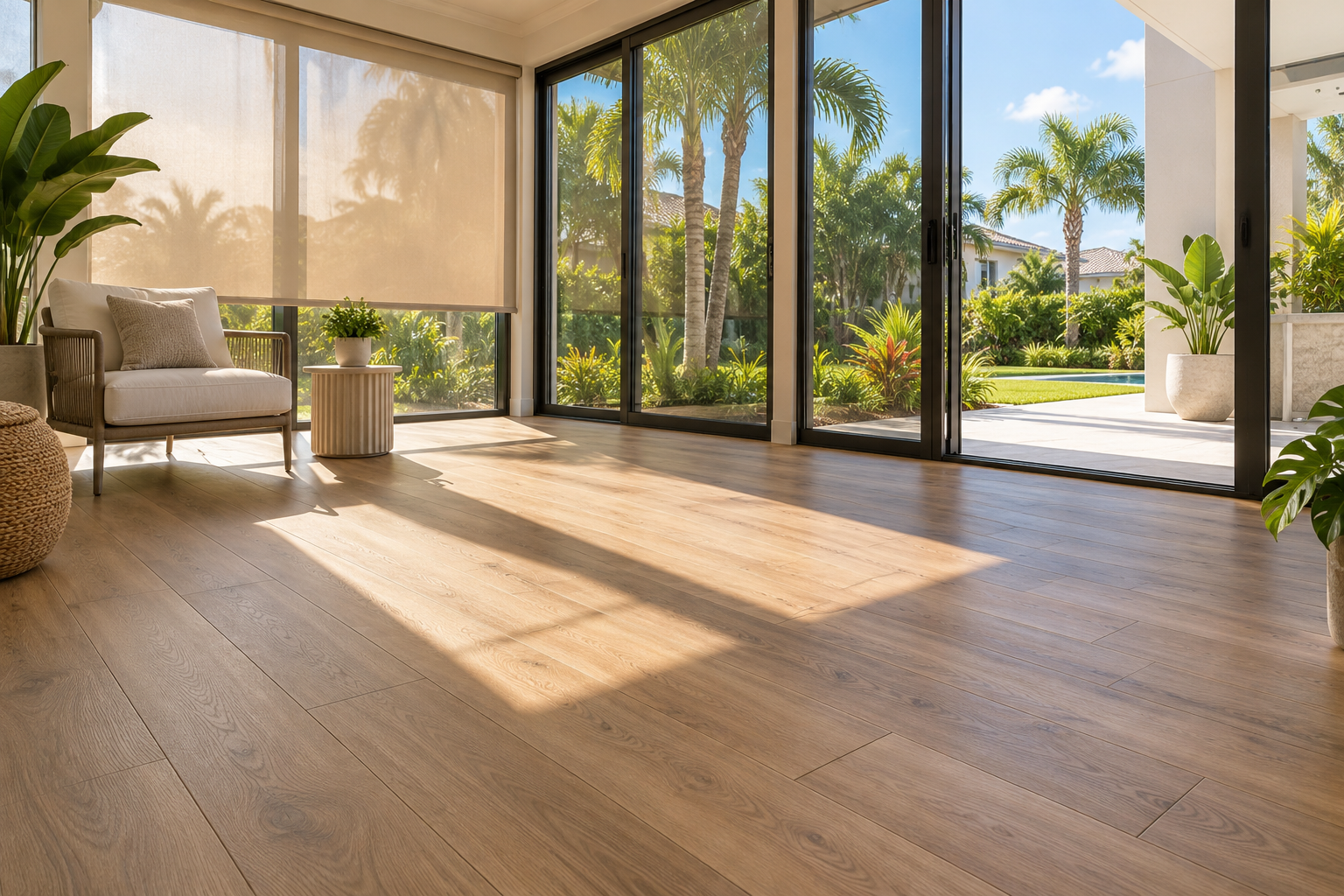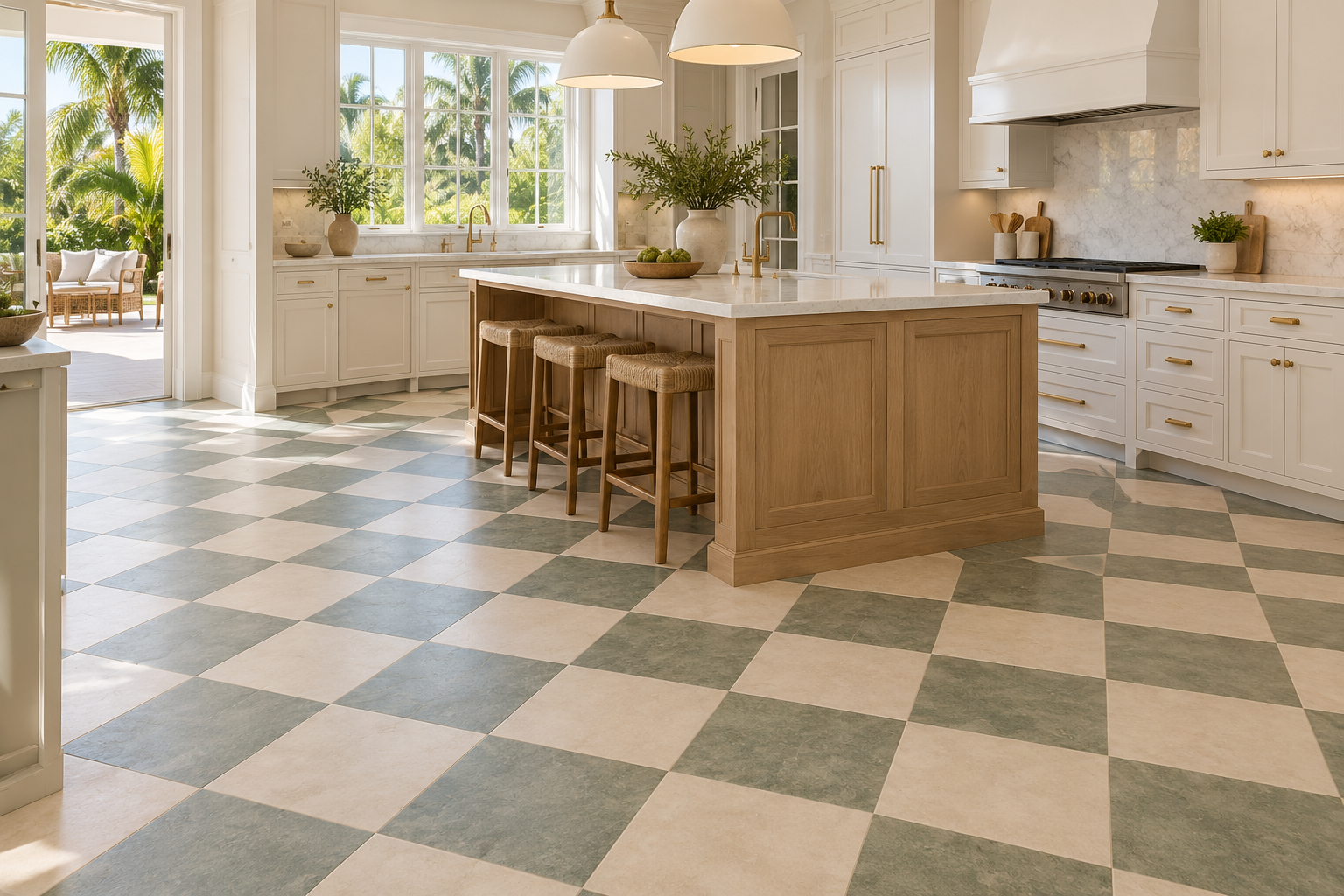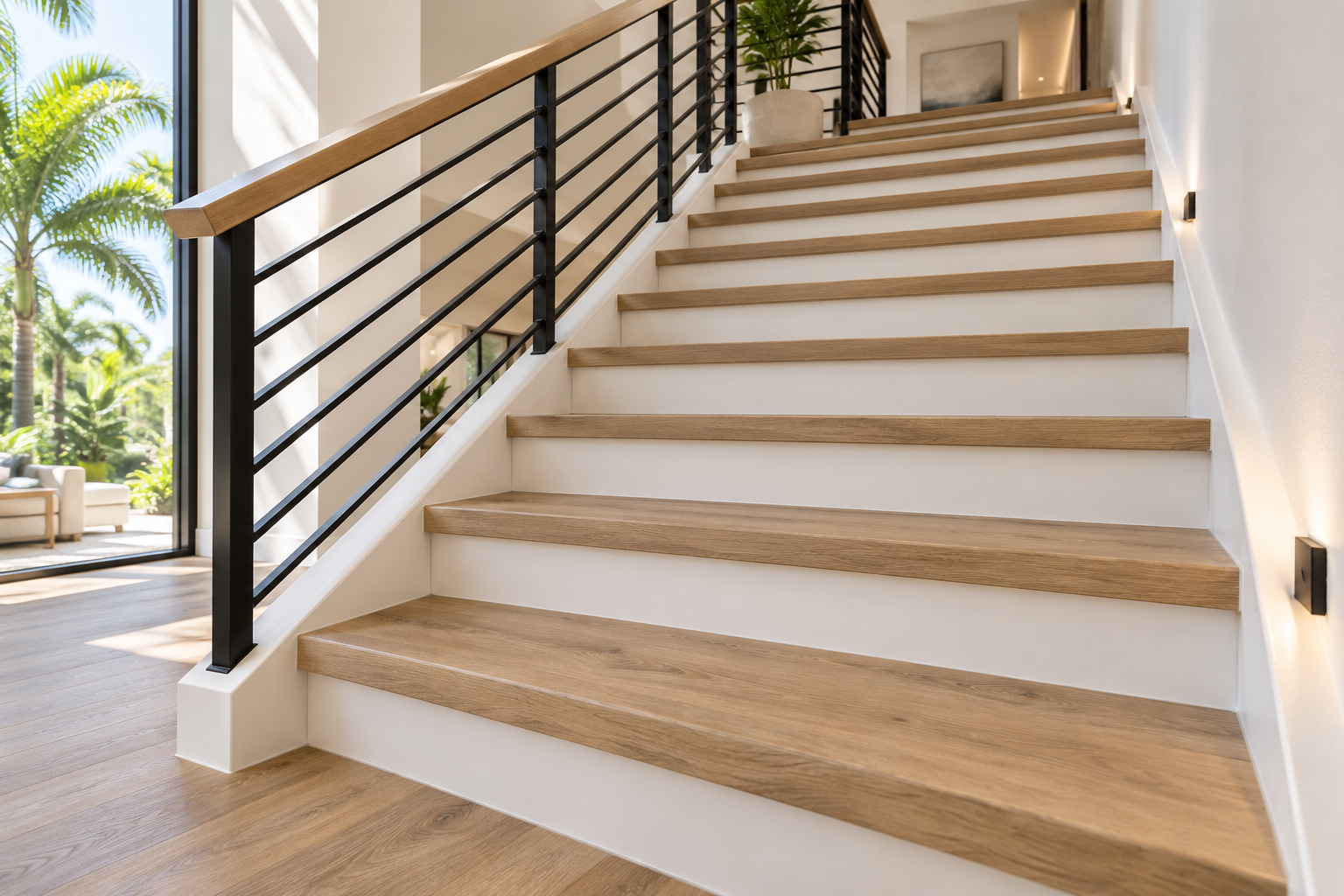
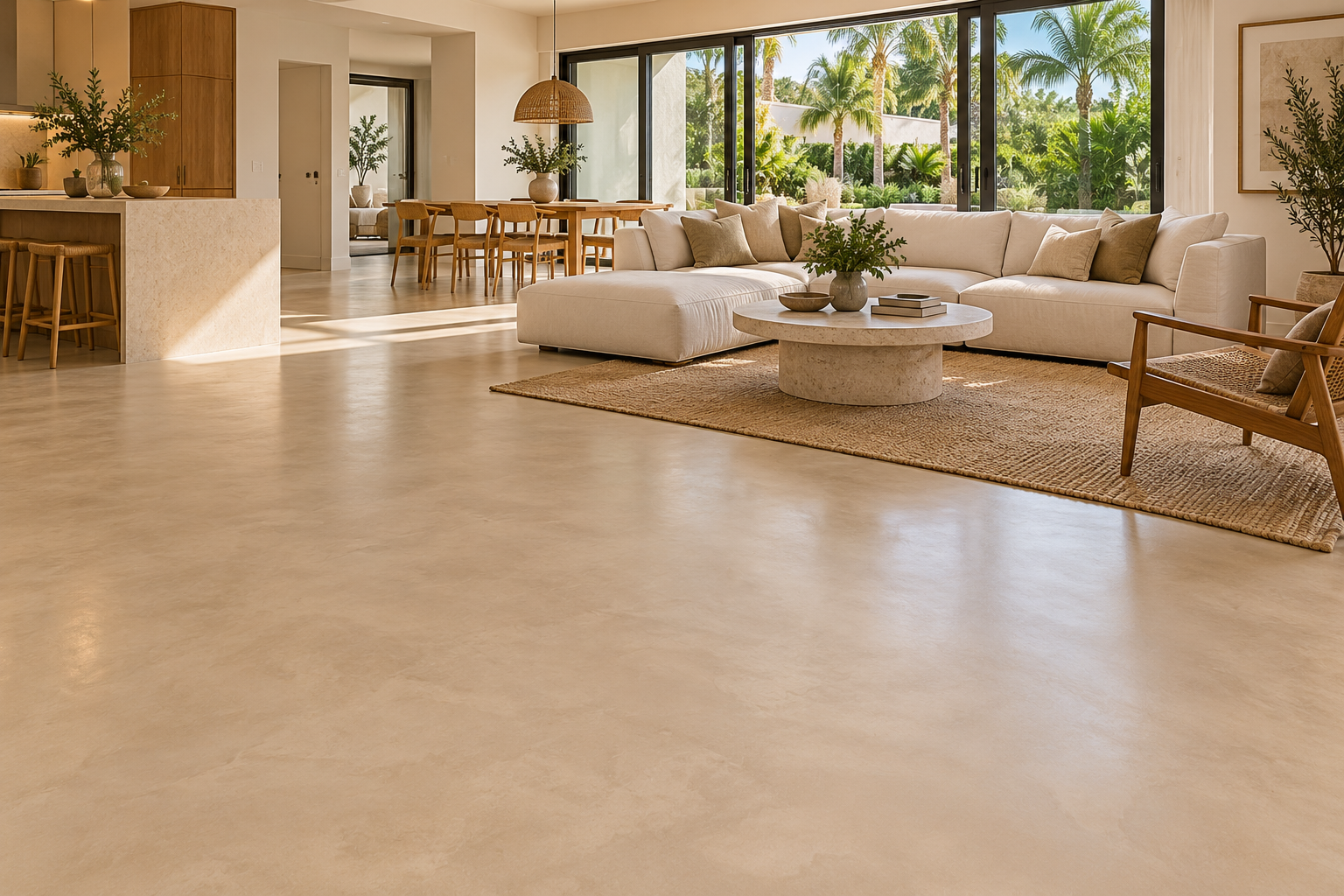
Seamless floors are attracting attention in 2026, especially in homes where owners want a warm, quiet-looking surface instead of a grid of grout joints. Microcement can deliver that hand-troweled, continuous appearance in soft sand, limestone, beige, and greige tones. But choosing it for a Florida home involves more than selecting a color: the concrete slab, existing tile, moisture exposure, waterproofing, and installer experience can determine whether the finished floor performs as expected.
Quick answer: Microcement is a thin, multi-layer decorative coating system that can create a nearly continuous concrete-look floor. Selected systems may be installed over sound concrete or existing tile, but only after the substrate has been assessed and prepared according to the specific manufacturer’s requirements. Microcement is not automatically waterproof, crack-proof, or suitable for every bathroom or outdoor area.
Why Are Seamless Microcement Floors Getting Attention in 2026?
The design direction is toward fewer visual interruptions, tactile finishes, and warmer natural colors. A 2026 flooring-trends article published by SEMCO Surfaces identifies microcement and other continuous finishes as prominent options in contemporary interiors. That is an industry supplier’s assessment—not independent Florida sales data or a verified Google search-volume report.
In an open-plan Orlando home, the attraction is easy to understand. A continuous warm-beige floor can connect the kitchen, dining area, and living room without the repeated lines of traditional square tile. Microcement also complements natural oak cabinetry, soft-white walls, and the organic, coastal-inspired interiors common in Central Florida renovations.
The trend is relevant, but the technical details matter more than the aesthetic promise.
What Is Microcement Flooring?
Microcement is a decorative, relatively thin coating applied in layers over a prepared substrate. The exact composition varies: systems may use cementitious components with polymers, resins, primers, reinforcement, and protective topcoats. There is no single universal microcement recipe or installation thickness.
For example, SEMCO’s X-Bond system describes a finished thickness of about 1/8 inch, while other manufacturers publish thinner multi-layer assemblies. Those figures are product-specific, not a general guarantee that every microcement installation adds the same amount of height.
Is Microcement the Same as Polished Concrete?
No. Polished concrete is the existing concrete surface mechanically refined through grinding and polishing. Microcement is a new coating system installed on top of a compatible substrate. The two can look similar, but they differ in preparation, thickness, repair methods, coatings, and maintenance.
Is Microcement the Same as Epoxy Flooring?
Not necessarily. Epoxy floors use resin-based coating systems; some products marketed as microcement also contain resin components. A decorative microcement system may be finished with a polyurethane topcoat. Always compare the complete product specification, not only the name used in marketing.
Can Microcement Be Installed Over Existing Tile in Florida?
Sometimes, yes—but only when the existing tile is a suitable, stable substrate and the chosen system expressly allows it. This is one of the most appealing renovation scenarios because it may avoid removing every tile.
A qualified installer should check whether the tile is firmly bonded, whether any pieces sound hollow, whether there is movement or cracking, and whether the surface is contaminated with waxes or sealers. Grout joints and tile edges may require special preparation, filling, leveling, or reinforcement to prevent their pattern from becoming visible through the new finish.
Skipping demolition does not mean skipping preparation. It may also be necessary to address door clearance, appliance removal, baseboards, thresholds, and the final height at adjoining rooms.
For a different renovation option, see our guide to installing SPC flooring over existing tile in Florida. That is a floating plank system, not a microcement overlay.
What Should Be Checked on a Florida Concrete Slab?
Concrete is common in Orlando, Kissimmee, St. Cloud, and many other Central Florida communities. It can be a suitable base for an approved microcement system, but it should never be assumed ready simply because it looks dry and flat.
1. Moisture Conditions
The installer should follow the coating manufacturer’s specified moisture-testing method and limits. ASTM F2170 describes in-situ relative-humidity testing of concrete slabs; ASTM notes that excessive slab moisture can contribute to coating deterioration and debonding. A test result describes conditions at the time and locations measured, not a lifetime guarantee.
The allowable moisture level is system-specific. Do not borrow a number from an unrelated SPC, epoxy, or tile product and treat it as a universal microcement threshold.
2. Cracks and Movement Joints
A thin decorative coating cannot be expected to stop active structural movement. Existing cracks, construction joints, and other movement conditions require evaluation and detailing consistent with the manufacturer’s system. Covering a crack without understanding its cause may allow it to telegraph through the finished surface.
3. Surface Preparation and Bonding
The substrate may need grinding, repairs, cleaning, priming, or leveling. The required surface profile and compatible primer depend on the actual coating. An installer should document the preparation steps and follow the manufacturer’s technical data sheet rather than applying a generic bonding product.
4. Room Conditions During Application
Temperature, humidity, ventilation, and curing time can affect application. Florida’s outdoor climate is not a substitute for measuring the conditions inside the project. Confirm when the floor may be walked on, furnished, washed, and exposed to water.
Is Microcement Waterproof Enough for Florida Bathrooms?
A decorative microcement finish should not be assumed to waterproof a bathroom or shower by itself. Some manufacturers offer complete wet-area systems with membranes, reinforcement, and protective topcoats. For example, ATRIA USA’s technical overview specifies that wet-area installations require waterproofing beneath the finish, and SEMCO describes additional membrane and sealer components for wet-area waterproofing.
That distinction is critical in a shower. A smooth, continuous appearance does not replace correct drainage, shower slope, waterproofing continuity, and compatible details at penetrations and corners.
Is Microcement Slippery When Wet?
Traction depends on the exact finish, topcoat, texture, and use location. A surface described as matte is not automatically slip-resistant. Request the manufacturer’s applicable slip-resistance data and written suitability for the intended bathroom, shower, kitchen, or exterior application. In wet spaces, appearance should never be the only selection criterion.
Can Microcement Be Used in a Florida Kitchen?
A properly specified floor system may be suitable for a kitchen, but homeowners should ask how it handles spilled liquids, cleaning chemicals, chair movement, dropped objects, and abrasion. The protective finish often plays a major role in stain resistance and day-to-day maintenance.
Microcement also requires attention to the sequence of cabinet and appliance work. If a kitchen island is being moved or anchored, the flooring and cabinetry teams should coordinate before the final coating is applied.
Can Microcement Be Installed on a Lanai or Pool Deck?
Only when the exact system is rated for exterior use and the installer designs for UV exposure, temperature changes, drainage, wet traction, and the substrate. Indoor microcement products should not be assumed suitable outdoors. Some suppliers offer exterior-rated systems, but their requirements vary.
For pool decks, compare a manufacturer-approved exterior coating with 2cm porcelain pavers, textured tile, or other exterior-rated surfaces. The best choice depends on the location and complete assembly—not the word seamless.
Microcement vs. Porcelain Tile vs. SPC Flooring
| Question | Microcement | Porcelain tile | SPC flooring |
|---|---|---|---|
| Appearance | Hand-applied, nearly continuous finish | Individual tiles and grout joints | Interlocking wood- or stone-look planks |
| Existing tile overlay | Possible with approved preparation and system | Possible in some approved tile-over-tile assemblies | Possible with product-approved flatness and substrate conditions |
| Wet areas | Requires an approved complete wet-area system | Requires suitable tile, traction, and waterproofing assembly | Product-specific; waterproof core does not waterproof the room |
| Repair appearance | Local patches may remain visible | Individual tiles may be replaceable | Individual planks may be replaceable depending on layout |
| Key installation risk | Substrate preparation, cracking, and finish compatibility | Substrate movement, lippage, and waterproofing | Subfloor flatness, expansion clearance, and locking joints |
No material wins in every situation. Microcement is most compelling when the seamless appearance is the primary goal and a qualified installer can document a suitable system. Porcelain can be attractive for predictable tile performance and a wide choice of finishes. SPC may be preferable when the project calls for a floating wood-look floor and the product is approved for the room.
What Does Microcement Flooring Cost in Florida?
Installed pricing varies significantly with the system, existing surface, demolition needs, moisture remediation, crack repairs, reinforcement, wet-area waterproofing, project size, and desired finish. A small bathroom can cost more per square foot than a large open living area because it has more corners and detail work.
Published prices from individual installers are not reliable statewide averages. For a meaningful comparison, request a written proposal that separates surface preparation, system layers, waterproofing if applicable, labor, protective topcoat, and maintenance requirements. Ask whether the contractor includes a mock-up and how changes in substrate conditions are handled.
Can Microcement Crack, Scratch, or Stain?
Yes. Claims that any decorative coating is completely crack-proof, scratch-proof, or stain-proof should be treated cautiously. Microcement performance depends on the substrate, product system, application quality, protective finish, and use conditions.
A moving slab crack can show through a coating. Dragged furniture or grit can abrade a finish. Strong chemicals or prolonged spills may damage certain sealers. Ask what the manufacturer actually warrants and how repairs are performed. Because a hand-troweled finish has natural variation, a small repair may not blend invisibly with the surrounding area.
What Colors Are Trending for Seamless Floors in 2026?
Warm sand, ivory, soft limestone, greige, and muted clay tones work with current organic and coastal-inspired interiors. The most effective color is the one that complements the home’s daylight, cabinetry, and furnishings—not necessarily the palest sample in the catalog.
Microcement is hand-applied, so slight color movement and texture variation are part of the visual character. Ask for a physical sample or a sufficiently large mock-up under the room’s actual lighting. Confirm whether the sample includes the same protective topcoat planned for the project, because topcoats can change sheen and perceived color.
What to Ask a Microcement Installer Before Signing
Request the exact product manufacturer and complete layer-by-layer system specification. Confirm written approval for the existing substrate and intended room, documented moisture and crack evaluation, preparation method, primer, reinforcement where required, finish coats, protective sealer, slip-resistance data, curing schedule, cleaning instructions, and warranty coverage.
Ask to see completed floor projects—not only wall samples—and find out who is responsible if moisture or substrate movement causes a problem. In a Florida condo, verify association approval, acoustic requirements, and any applicable building rules before ordering materials.
Frequently Asked Questions
Is microcement flooring a good choice for Florida homes?
It can be, especially for homeowners who want a seamless contemporary appearance. The exact system must suit the substrate, moisture conditions, traffic, and room use.
Can microcement go directly over old ceramic tile?
Some systems can be installed over sound existing tile after specified preparation. Loose tile, cracks, grout joints, and incompatible coatings may require repairs or removal.
Is microcement waterproof?
Not automatically. Wet-area performance depends on the complete manufacturer-approved assembly, which may include a waterproofing membrane and protective topcoat.
Does microcement crack over concrete slabs?
It can. Substrate movement, active cracks, and unsuitable preparation may cause cracks to appear in the decorative finish. A coating does not repair structural movement.
Is microcement slippery in bathrooms?
It depends on the exact surface texture, sealer, and tested slip resistance. Select a system approved for the intended wet-use location.
Is microcement cheaper than porcelain tile?
Not necessarily. Specialized labor, substrate preparation, and multiple coating layers can make microcement expensive. Compare complete installed proposals rather than material prices alone.
How thick is a microcement floor?
It depends on the manufacturer’s complete system. Some systems add only a few millimeters; others require additional leveling, reinforcement, or waterproofing layers.
Can microcement be used outdoors in Florida?
Only when the selected product system is specifically approved for exterior exposure, wet traction, UV conditions, and the proposed substrate.
How do you clean microcement floors?
Follow the manufacturer’s care instructions. Generally, remove abrasive grit, use approved pH-appropriate cleaners, and avoid harsh products that may damage the protective finish.
Can microcement be repaired without replacing the whole floor?
Some damage can be patched or refinished, but a hand-applied finish may make an exact visual match difficult. Ask the installer about repair methods before choosing the system.
Choose the Right System, Not Just the Seamless Look
Microcement can create a distinctive, warm, grout-free visual effect in Florida interiors. Its success depends on product selection, moisture and crack assessment, installation workmanship, and realistic maintenance expectations. Before committing to a decorative overlay, compare the complete microcement system with porcelain and SPC options that meet your project’s requirements.
Planning a flooring project in Orlando or Central Florida? Contact Green House Floors and More to compare flooring options and discuss the technical questions to bring to your installer. If you are considering microcement specifically, confirm the selected system and qualified installer are appropriate for your property before purchasing.
Sources and Technical References
- SEMCO Surfaces — 2026 Flooring Trends for Modern Interiors (industry perspective, published in 2026).
- SEMCO Surfaces — Microcement USA / X-Bond System (manufacturer-specific system and wet-area details).
- ATRIA USA — Microcement Product System (wet-area membrane and multi-layer assembly details).
- ASTM International — ASTM F2170 Concrete Slab Relative Humidity Test (technical standard and moisture-related failure context).