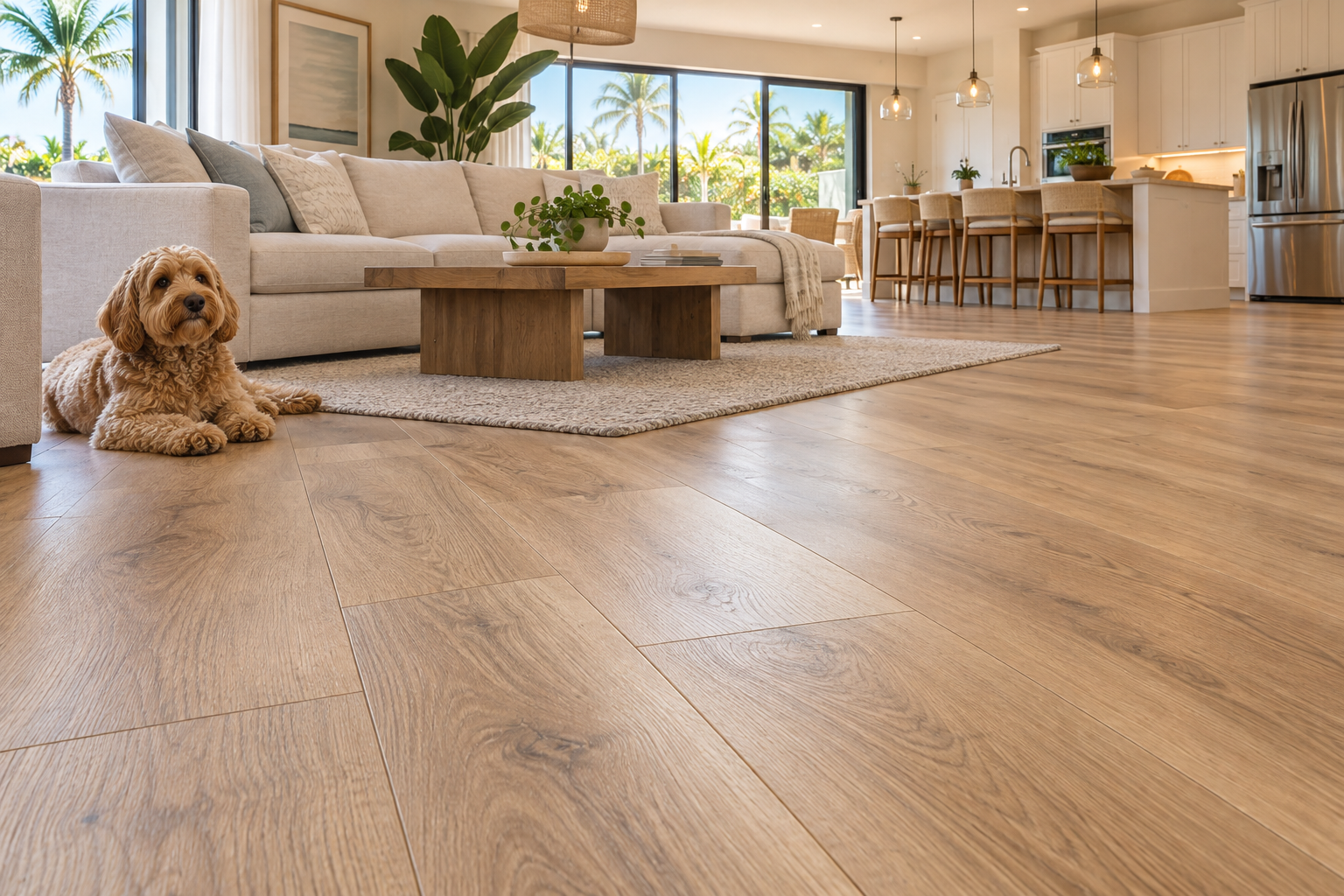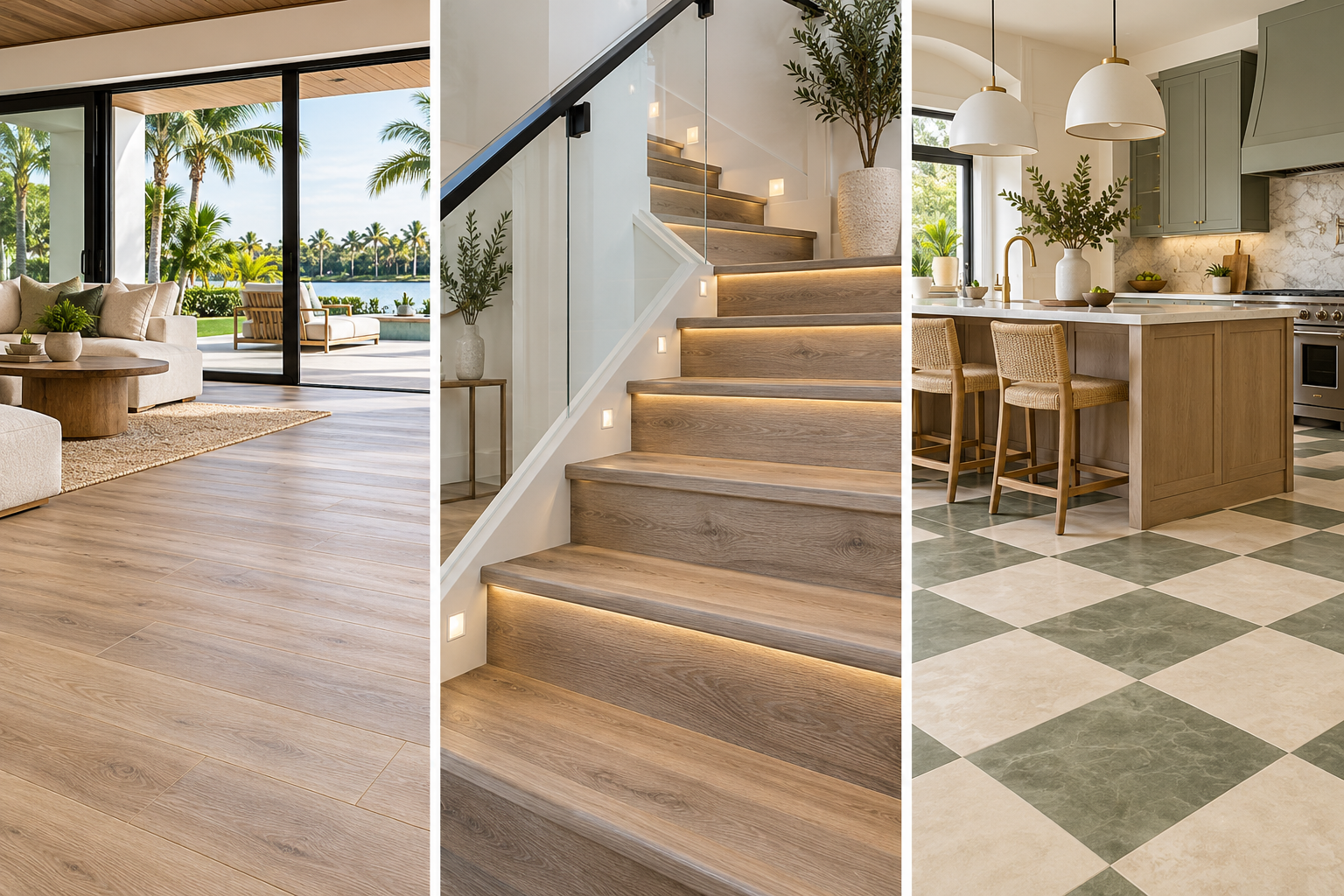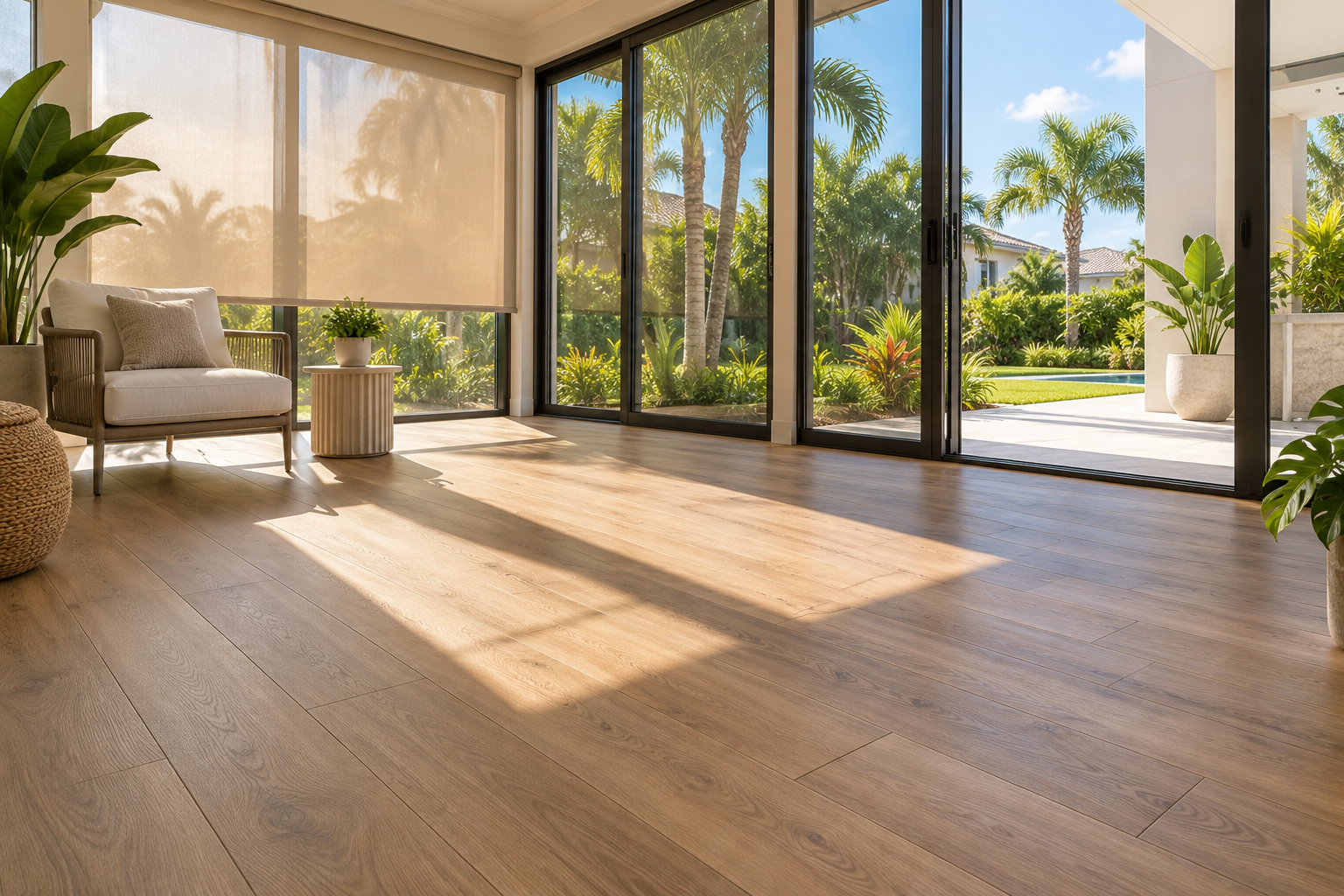
Walk into any flooring showroom in 2026, and you’ll hear two acronyms thrown around constantly: SPC and LVP. They look similar, they’re priced similarly — so why does it matter which one you choose?
The short answer: it matters more than most people realize. SPC (Stone Plastic Composite) and LVP (Luxury Vinyl Plank) are often used interchangeably by salespeople, but they’re not the same product. One is actually a subcategory of the other — and understanding the distinction could save you thousands of dollars and a very frustrating renovation experience.
First, let’s clear up the confusion
LVP is the broad category: any vinyl flooring manufactured in a plank format that mimics the look of hardwood. SPC is a specific type of LVP defined by its rigid core material — a dense blend of limestone powder and PVC. There’s also WPC (Wood Plastic Composite), another rigid-core LVP variant that trades some density for a slightly softer underfoot feel.
In 2026, when most flooring retailers say “LVP,” they usually mean either SPC or WPC. Classic flexible LVP has largely been phased out of the premium market. But the devil is in the details of the core.
SPC core: Stone + PVCWPC core: Wood fiber + foamLVP: Umbrella term
How they compare in real-world use
SPC — Stone Plastic Composite
- Extremely rigid — won’t dent under heavy furniture
- 100% waterproof, including the core
- Handles temperature swings better (garages, sunrooms)
- Thinner profile, easier under door frames
- Slightly harder underfoot feel
- Ideal for high-traffic and commercial spaces
WPC/Flexible LVP
- Softer, warmer underfoot feel
- Better acoustic performance (quieter)
- Can show indentations under heavy loads over time
- Less tolerant of extreme temperature changes
- Often cheaper per square foot
- Good choice for bedrooms and living rooms
What’s changed in 2026?
Three years ago, the biggest complaint about SPC was its cold, hard feel and the hollow “click” sound when walking across it. Manufacturers have largely solved both. Most premium SPC planks now ship with an attached acoustic underlayment — an IXPE or cork backing that cushions impact noise and adds warmth. The gap between SPC and WPC in comfort has narrowed dramatically.
On the design side, digital embossing technology has improved to the point where high-end SPC planks are genuinely difficult to distinguish from real hardwood, even up close. Wire-brushed textures, hand-scraped finishes, and beveled edges are now standard in mid-range lines — not luxury add-ons.
Another 2026 trend worth noting: thicker wear layers. Where 6–8 mil was once considered generous, many SPC products now offer 12–20 mil wear layers, dramatically extending lifespan in pet-heavy or commercial environments.
Which one should you actually choose?
Basements, kitchens, mudrooms, and anywhere with moisture or temperature fluctuation? Choose SPC without hesitation. Its stone core is genuinely dimensionally stable — it won’t buckle in a flooded basement or a hot garage the way even WPC eventually will.
Bedrooms, upstairs living rooms, or spaces where comfort is the priority? WPC-core LVP remains a compelling choice, and the cost difference can be meaningful over large square footages.
For whole-home installations where you want visual consistency across all rooms? Go with SPC throughout. The performance benefits outweigh the minor comfort trade-off, and modern attached underlayments have largely closed that gap anyway.
In 2026, SPC is the default smart choice for most homeowners. It’s more durable, more waterproof, more dimensionally stable, and increasingly comfortable thanks to improved backing technology. WPC still earns its place in comfort-first rooms — but if you’re putting flooring through just one room and want something that performs for a decade without worry, SPC wins the argument.