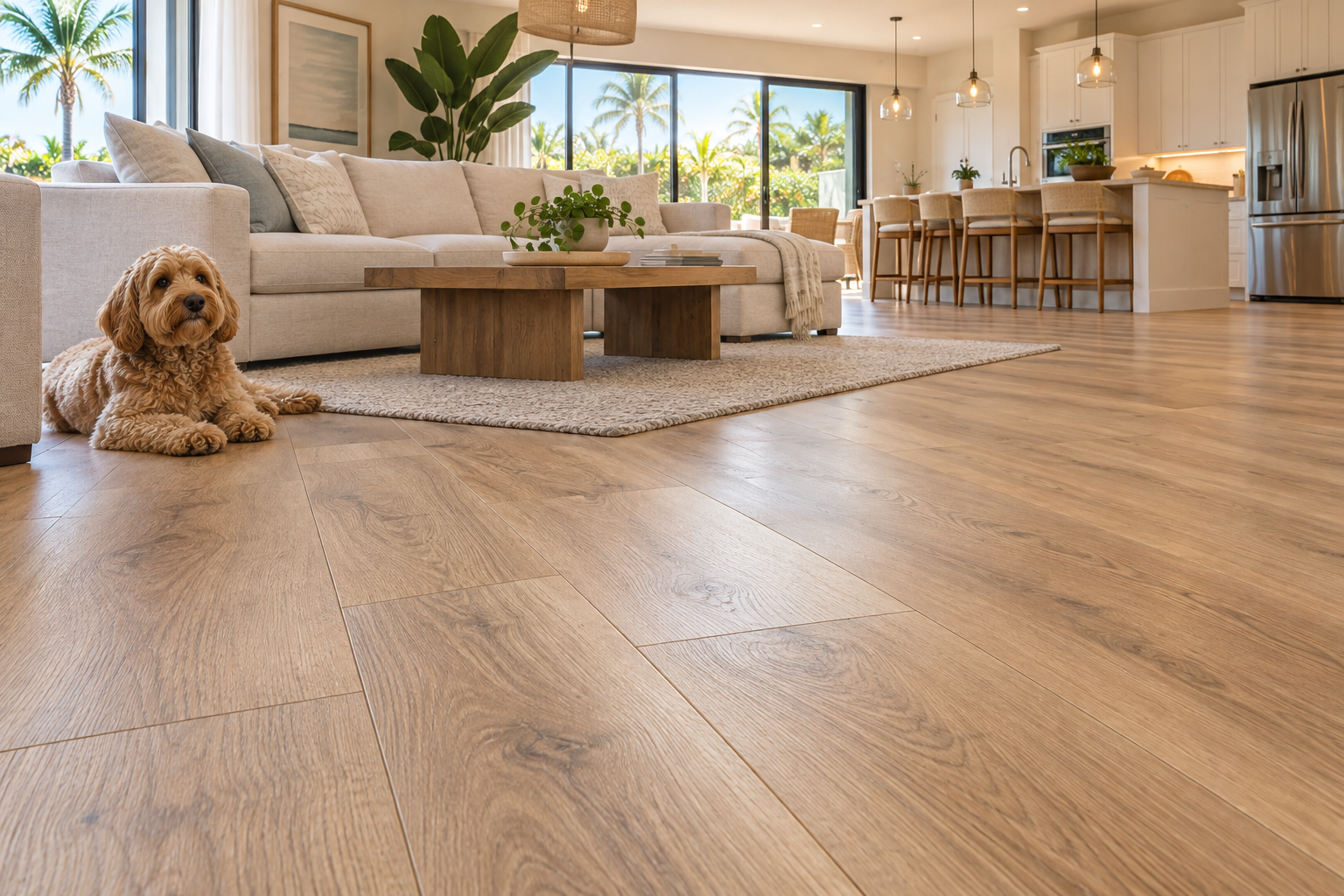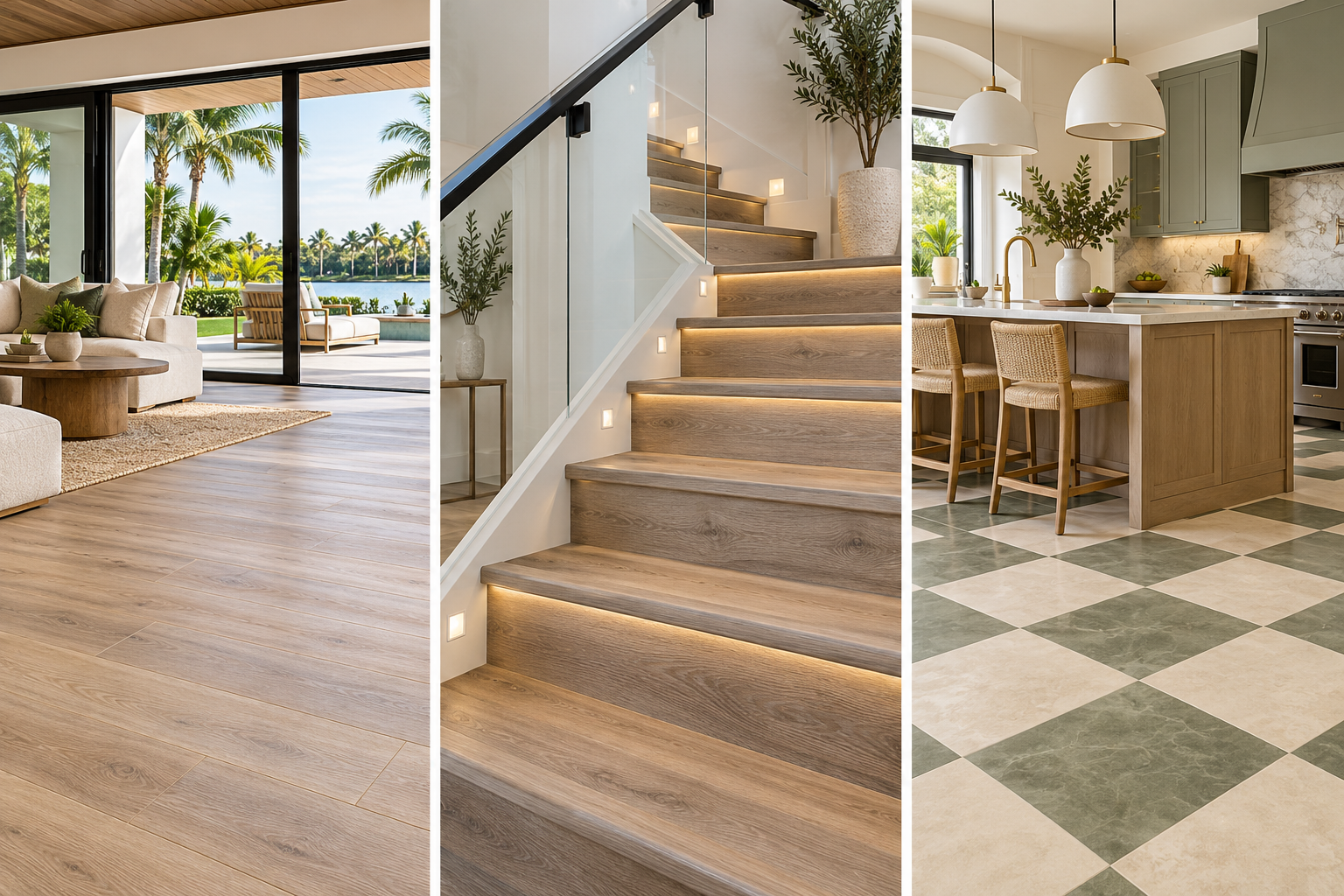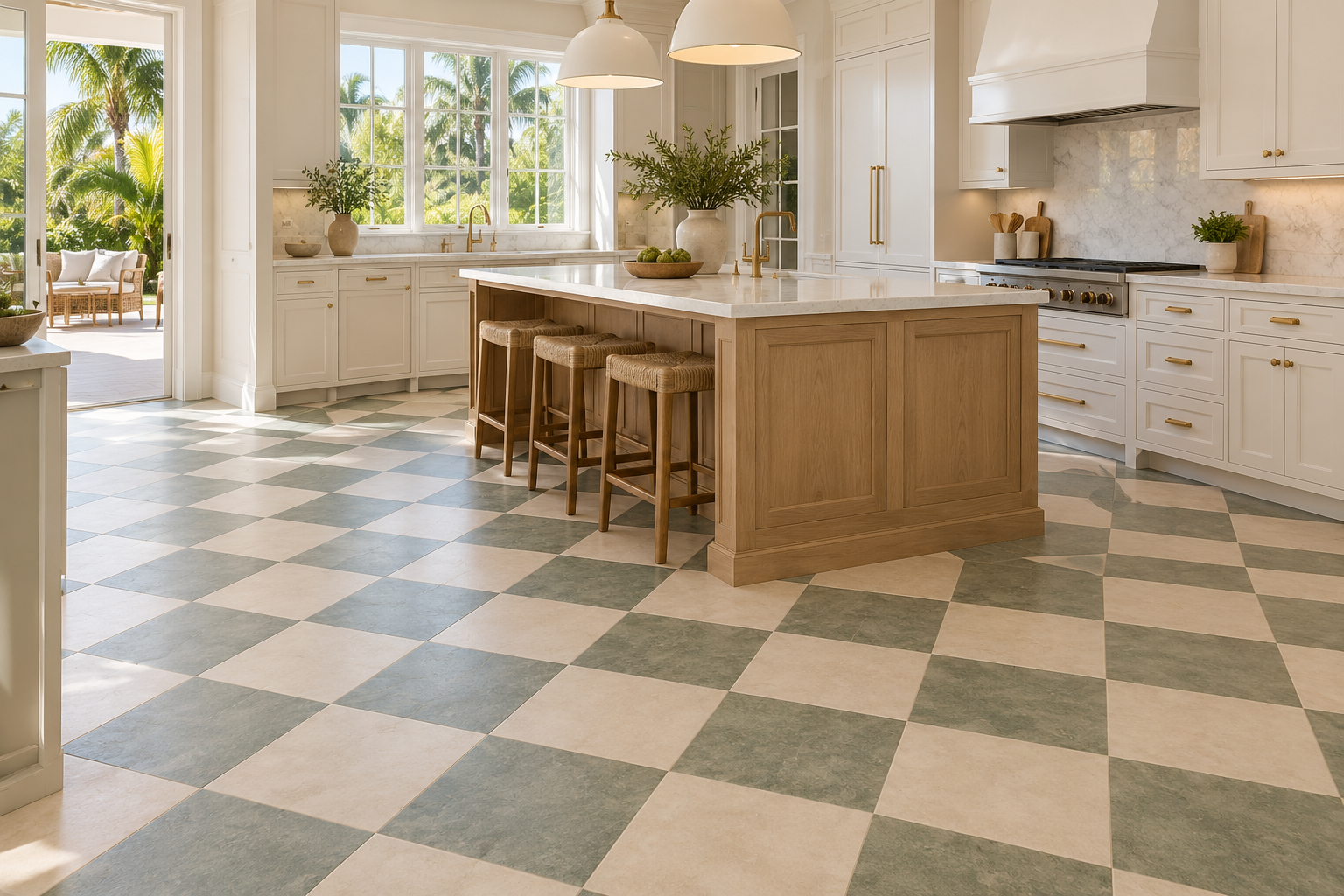
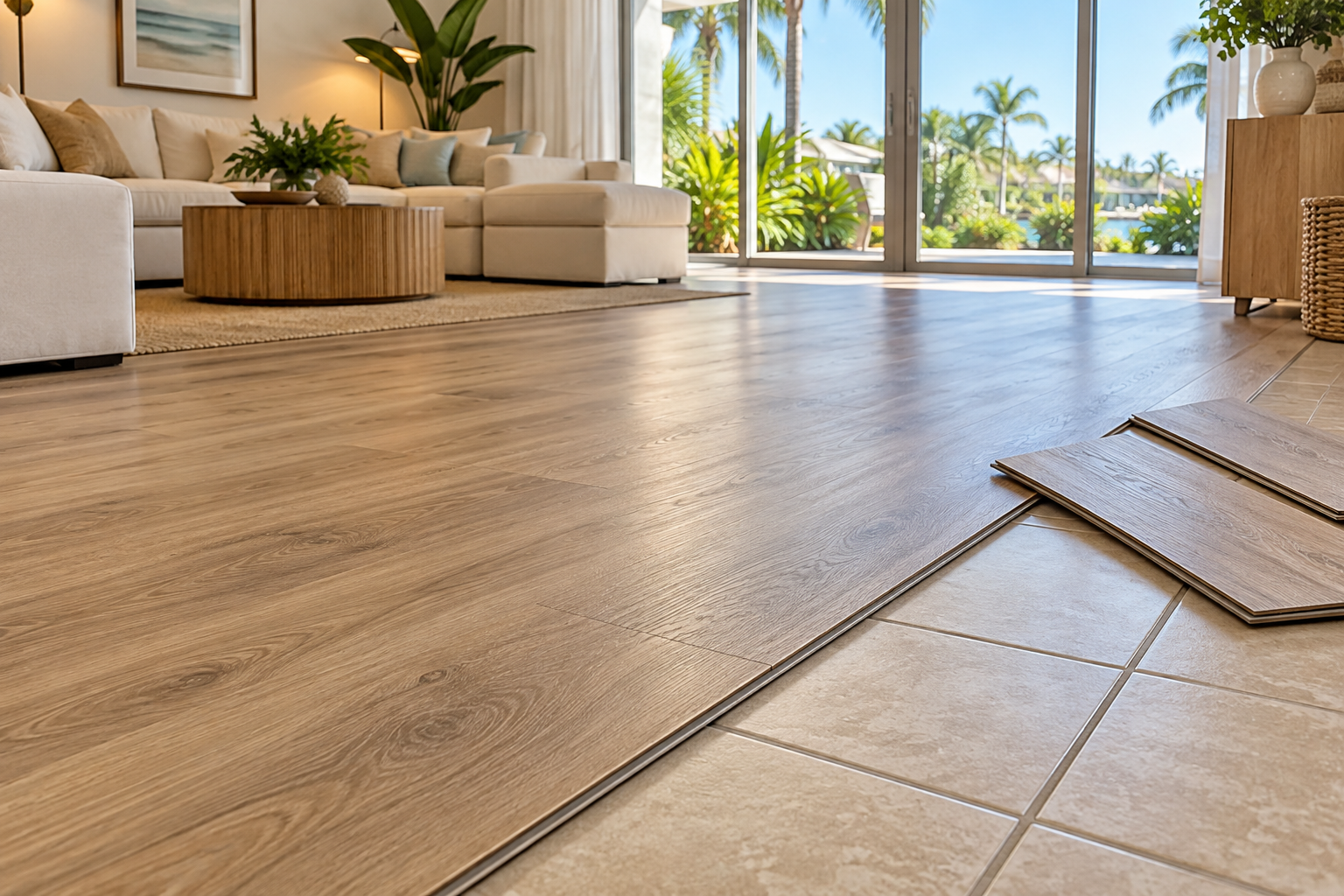
Replacing an outdated ceramic tile floor does not always require tearing it out. In some Florida homes, a manufacturer-approved floating SPC (stone plastic composite) floor can be installed over existing ceramic or porcelain tile. The catch: the tile underneath must be sound, flat, stable, and compatible with the specific SPC product. A no-demolition approach is an option to evaluate, not a shortcut around subfloor preparation.
Quick Answer: Can SPC Flooring Go Over Tile?
Yes, in many cases—but only when the SPC manufacturer permits installation over the existing tile and the entire floor assembly meets its requirements. Inspect for loose tiles, excessive grout-joint depth, uneven surfaces, moisture problems, and height restrictions first. If those conditions cannot be corrected safely, removing the old tile may be the better solution.
Why Florida Homeowners Consider Installing SPC Over Tile
Older homes in Orlando, Kissimmee, Winter Garden, and other Central Florida communities often have ceramic tile over concrete slabs. Covering a suitable existing tile surface may reduce demolition dust, debris disposal, noise, and disruption. Warm oak-look rigid-core planks can also update a room without the cold appearance some homeowners associate with older tile styles.
However, fewer demolition steps do not automatically mean lower total costs. Surface repairs, grout-joint filling, door adjustments, transitions, baseboard work, and moisture investigation may still be necessary.
Five Conditions to Check Before Installing SPC Over Existing Tile
1. The Existing Tile Must Be Firmly Bonded
Inspect for cracked, loose, rocking, or detached tiles and signs of movement. A hollow sound alone does not diagnose every condition, but suspect areas deserve closer examination. An unstable tile installation is not an acceptable foundation for a floating SPC floor. Repair or remove defective areas according to the flooring system requirements.
2. The Floor Must Meet the SPC Manufacturer’s Flatness Tolerance
SPC is rigid, not a self-leveling product. High tile edges, uneven transitions, and dips can stress click-lock joints, create movement, and produce unwanted noise. Use a long straightedge and check the exact manufacturer’s flatness limit; some products specify 3/16 inch over 10 feet, but limits vary. Correct out-of-tolerance areas with preparation materials approved for the substrate and SPC system.
3. Grout Joints May Need Filling
Wide or recessed grout lines can leave unsupported areas beneath thin rigid-core planks. Whether they require filling depends on their width and depth and the flooring manufacturer’s written instructions. Use a compatible patching or smoothing product when required, and allow it to cure properly before installation.
4. Moisture Problems Must Be Investigated
Florida’s concrete slab-on-grade construction makes moisture assessment important. Existing tile can conceal moisture-related conditions, and a waterproof SPC plank does not make the substrate or the entire installation waterproof. Check for leaks, water intrusion, dampness, and any testing or vapor-retarder requirements specified by the manufacturer. Do not trap an unresolved moisture problem beneath new flooring.
5. Added Floor Height Must Work With Doors and Transitions
Installing SPC over tile raises the finished floor. Before ordering materials, check exterior and interior doors, appliance clearances, cabinets, stair geometry, thresholds, sliding-door tracks, and transitions to adjacent rooms. Accessibility and trip hazards matter as much as appearance. Never assume a door or transition can be modified without evaluating its function.
What About Underlayment?
Many SPC products include an attached pad. Adding another underlayment without manufacturer approval can create excessive movement, compromise locking joints, or affect warranty coverage. Follow the specific product’s instructions for installation over ceramic tile, including any required vapor-control layer. Do not combine pads or membranes simply because more cushioning sounds better.
How a Professional Evaluates a No-Demolition SPC Installation
- Confirm that the chosen SPC product explicitly permits installation over existing ceramic or porcelain tile.
- Inspect the existing tile for movement, damage, contamination, and other defects.
- Measure flatness and identify grout joints that require preparation.
- Investigate moisture concerns and follow product-specific testing requirements.
- Plan finished-floor heights, perimeter expansion space, transitions, and door clearances.
- Complete approved repairs and substrate preparation, then install the floor according to the manufacturer.
- Document the substrate condition, selected products, and installation instructions for future warranty questions.
When Is Tile Removal the Better Choice?
Demolition may be necessary when large areas of tile are loose, the substrate is failing, moisture intrusion is unresolved, significant height changes cannot be accommodated, or the selected SPC manufacturer does not allow installation over the existing surface. Tile removal can also reveal problems that an overlay would hide. Ask for a written comparison of both approaches rather than deciding on demolition cost alone.
SPC Over Tile vs. Removing Tile First
Overlay: Potentially less demolition and disposal, but only for an approved, stable, prepared surface. It adds floor height and may still require extensive correction.
Removal: More disruption and potentially greater labor and disposal expense, but provides access to the substrate for repairs and can help control finished-floor height. The best approach depends on the actual conditions—not a universal rule.
Frequently Asked Questions
Can you put floating SPC flooring directly over ceramic tile?
Sometimes. The SPC manufacturer must approve tile as a substrate, and the existing floor must meet its requirements for stability, flatness, grout joints, and moisture conditions.
Do you have to fill grout lines before installing SPC over tile?
Not always. Deep or wide grout joints may require filling, depending on the specific flooring manufacturer’s limits and the condition of the existing tile.
Will SPC hide uneven tile floors?
No. Rigid-core SPC can bridge minor texture but does not correct significant high spots, dips, or lippage. Substrate flatness must be checked and corrected before installation.
Is SPC waterproof if it is installed over tile?
Many SPC planks resist water, but that does not waterproof the seams, walls, subfloor, or full assembly. Leaks and slab moisture still require proper evaluation.
Can SPC flooring be installed over tile in a Florida bathroom?
Only if the selected product and installation system are approved for that bathroom application. Follow the manufacturer’s wet-area instructions; a floating SPC floor is not a replacement for a waterproofing system.
Does installing SPC over tile save money?
It may reduce demolition and disposal costs, but savings depend on repairs, leveling, grout preparation, transitions, and door adjustments. Compare complete written estimates.
Is SPC over tile suitable for condos in Orlando?
Potentially, but condominium associations may require approval and specific acoustic performance. Verify building rules, underlayment restrictions, and manufacturer compatibility before proceeding.
Make the Decision Based on the Existing Floor
A successful SPC-over-tile project starts with an inspection, not a product box. If the tile is sound, flat, and compatible with the selected flooring, an overlay can be a practical remodeling option. If not, repairs or removal may protect the new floor and your investment. Green House Floors and More serves flooring shoppers in the Orlando area and can help you explore SPC product options and the installation questions to discuss with a qualified professional.