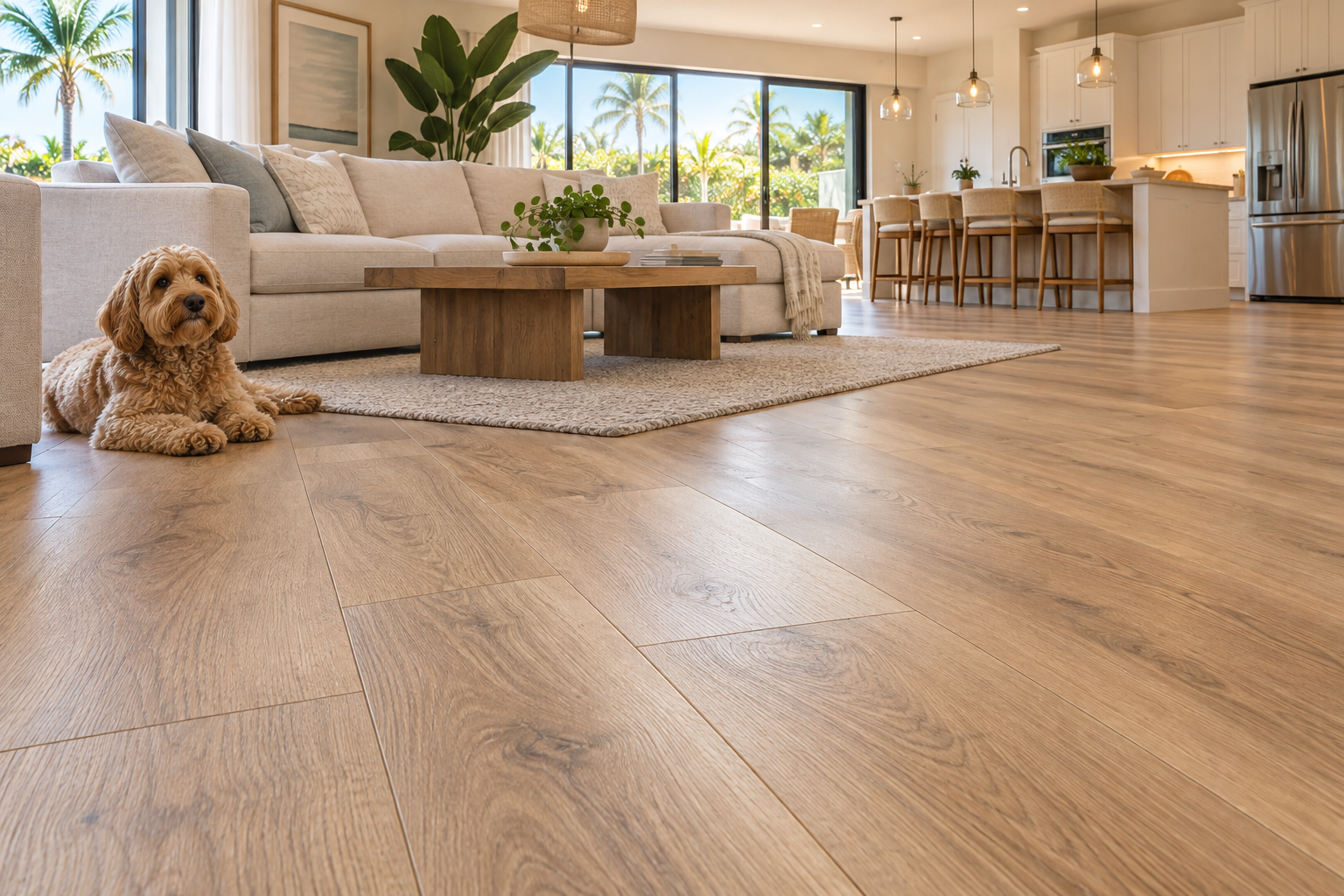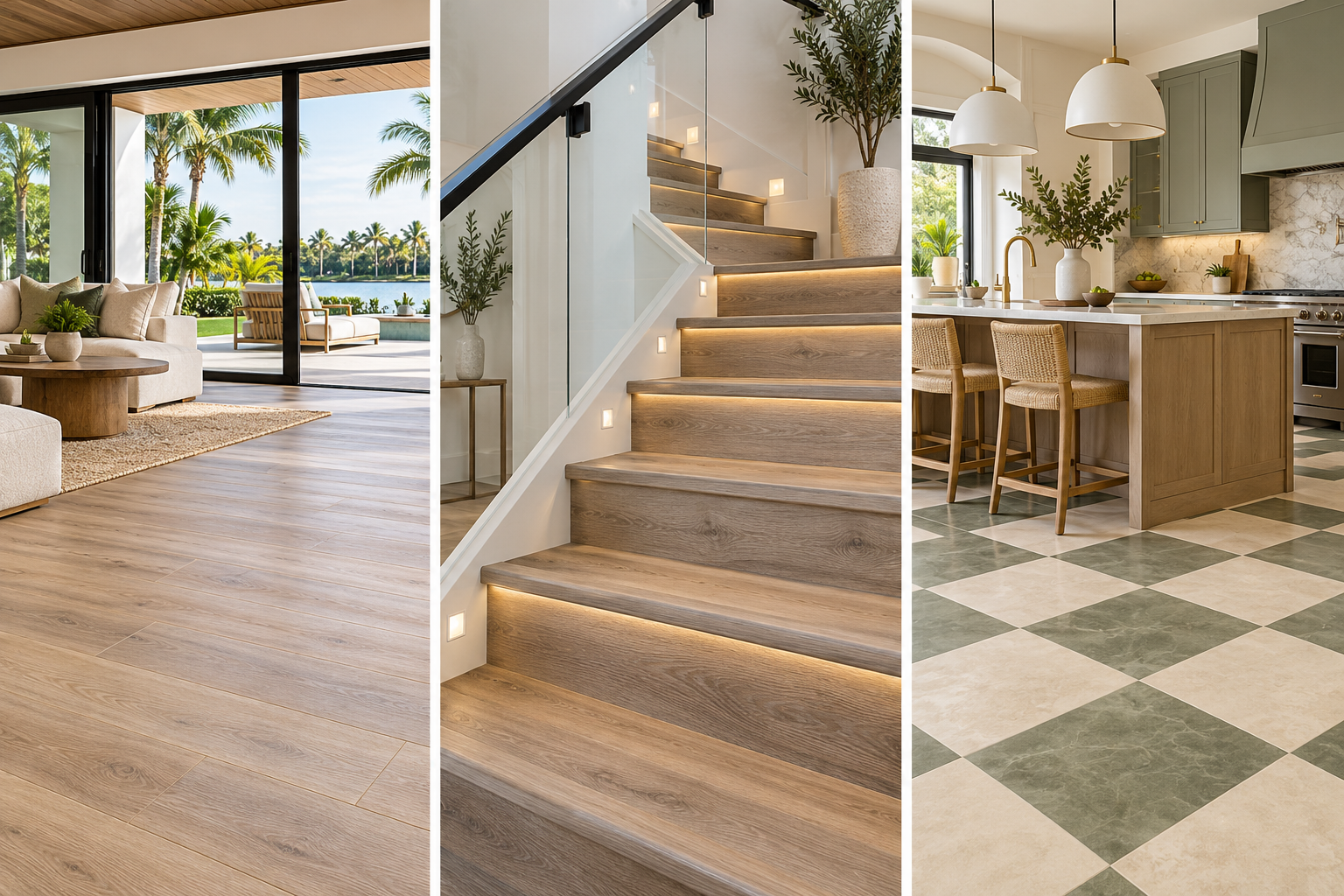
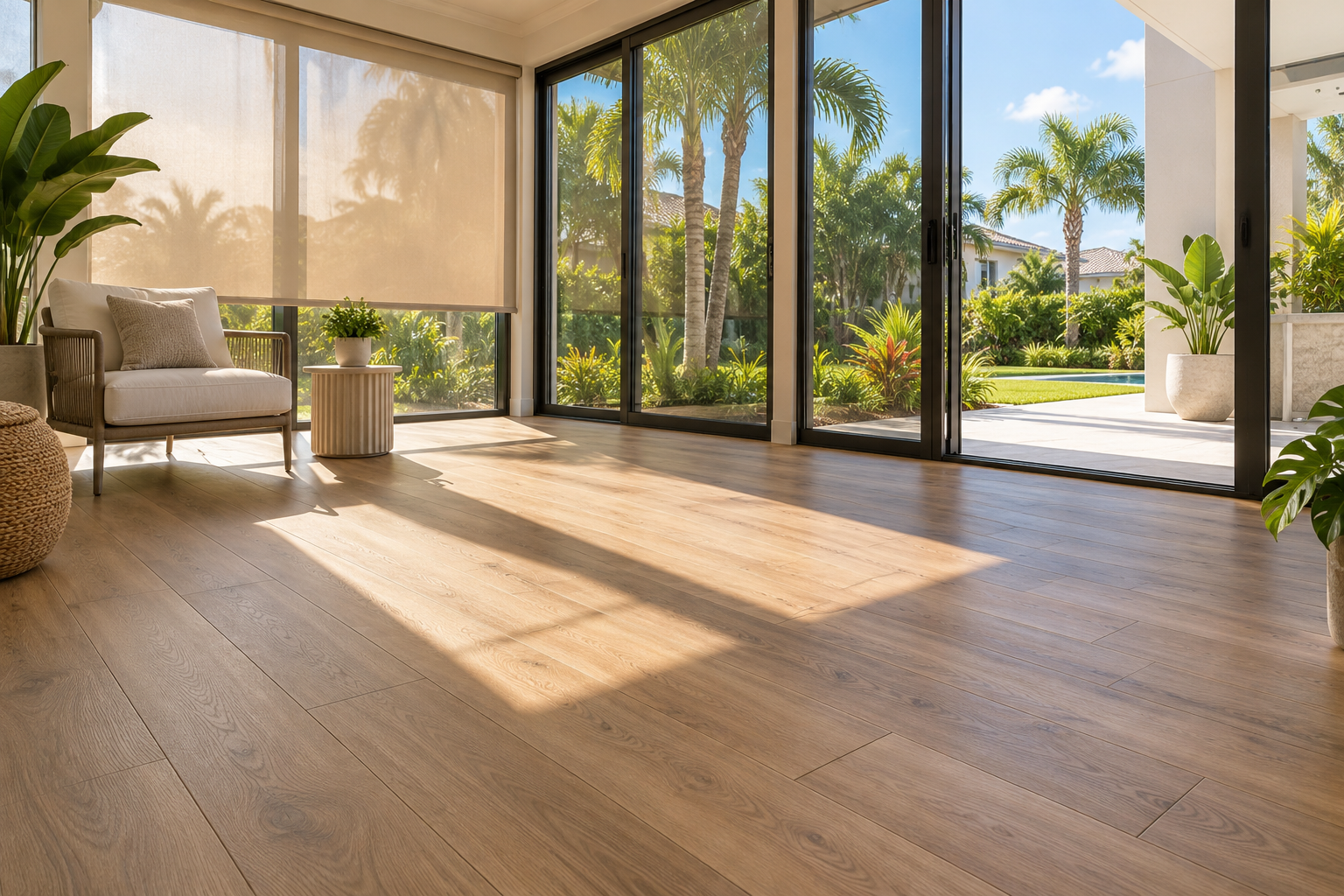
A sunroom can be one of the brightest spaces in a Florida home—and one of the hardest places to select flooring. Large windows, strong afternoon sun, and temperature swings can push a floor beyond the conditions it was designed to handle. Luxury vinyl plank (LVP) and stone plastic composite (SPC) can look beautiful in an enclosed sunroom, but not every product is approved for that application.
Quick answer: LVP or SPC may be suitable for a Florida sunroom only if the exact product’s installation and warranty documents permit the room’s temperature range, direct-sun exposure, and moisture conditions. A waterproof core alone does not establish heat or UV suitability.
Why Florida Sunrooms Are Different From Ordinary Living Rooms
A fully conditioned room with glass walls is not the same as a screened lanai or an unconditioned enclosure. Direct solar radiation can heat the floor surface well above the thermostat reading. Windows, orientation, shading, ventilation, and air conditioning all affect conditions. Assess the actual space instead of relying on Florida’s average outdoor temperature.
What Is the Difference Between LVP and SPC?
LVP is a broad category of vinyl plank flooring. SPC is a rigid-core type of LVP with a mineral-filled polymer core. SPC can offer useful dimensional stability in approved installations, but that does not mean it is safe in unlimited heat or direct sun. Both products can experience problems if exposed beyond their manufacturer’s limits.
Can Direct Sunlight Damage Vinyl Flooring?
Potentially. Excessive heat and UV exposure may contribute to discoloration, distortion, joint movement, or other changes depending on the product and installation. Modern wear layers and UV coatings vary considerably. A marketing phrase such as ‘UV resistant’ is not a substitute for written exposure and warranty limitations.
Floor Temperature vs. Room Temperature
Sunlight striking a dark plank can produce a hotter surface than the surrounding air. Ask whether the manufacturer’s temperature limits apply to ambient room conditions, the floor surface, or both. Use actual measurements where exposure is significant.
Do Window Films or Shades Help?
Solar shades, exterior overhangs, and suitable window treatments can reduce direct exposure, but they do not automatically make an otherwise prohibited flooring installation warranty-compliant. Confirm the product’s instructions first.
Enclosed Sunroom, Screened Lanai, or Three-Season Room?
Conditioned Enclosed Sunroom
A permanently conditioned sunroom may be eligible for selected LVP or SPC products if the manufacturer approves its temperature and sunlight conditions. Check that the HVAC maintains the specified range throughout the year.
Unconditioned Glass Enclosure
An unconditioned room may experience extreme daytime heat and cooler nights. Many indoor-only floating vinyl floors are not approved for these conditions. A product with a more suitable exposure rating—or a different flooring category—may be necessary.
Screened Lanai or Outdoor Patio
Most ordinary interior LVP and SPC floors should not be assumed suitable for outdoor or screened-lanai use. Rain, standing water, direct sun, and temperature extremes require products specifically approved for exterior conditions. Outdoor-rated porcelain is often worth comparing.
Does Waterproof SPC Mean It Works in a Sunroom?
No. Water resistance describes a different performance characteristic from heat stability, UV resistance, and installation suitability. Water can still enter beneath a floating floor, and condensation or slab moisture can create problems even when the plank core resists water.
Florida Concrete Slabs and Moisture Testing
Many Central Florida sunrooms are built over concrete. The installer should inspect cracks, flatness, contamination, and moisture conditions, then follow the exact product’s requirements for testing and vapor control. A converted patio slab may have a different construction and moisture history from the home’s conditioned interior slab. Do not install over unresolved leaks or dampness.
Expansion Gaps, Transitions, and Large Glass Walls
Floating systems commonly require perimeter clearance and sometimes transitions or maximum continuous-run limits. Requirements differ by brand and collection. Fixed cabinetry, thresholds, and door tracks must not pinch the floor. Long runs exposed to sun deserve particular attention, but no single expansion-gap dimension applies to every SPC product.
Should You Choose a Light or Dark Wood-Look Floor?
Light oak, beige, and warm natural finishes can visually suit Florida sunrooms and may absorb less solar energy than some darker surfaces, but appearance alone does not establish a safe surface temperature. Test physical samples in the actual sunlight and review the manufacturer’s exposure limits.
What About Fading and the Manufacturer’s Warranty?
Review the written warranty for exclusions relating to direct sunlight, excessive temperatures, discoloration, non-climate-controlled rooms, and installation behind floor-to-ceiling glass. Ask for the product’s approved temperature range and any required window coverings. Keep copies of installation instructions, moisture test results, and site-condition records.
Alternatives When LVP or SPC Is Not Approved
Porcelain Tile
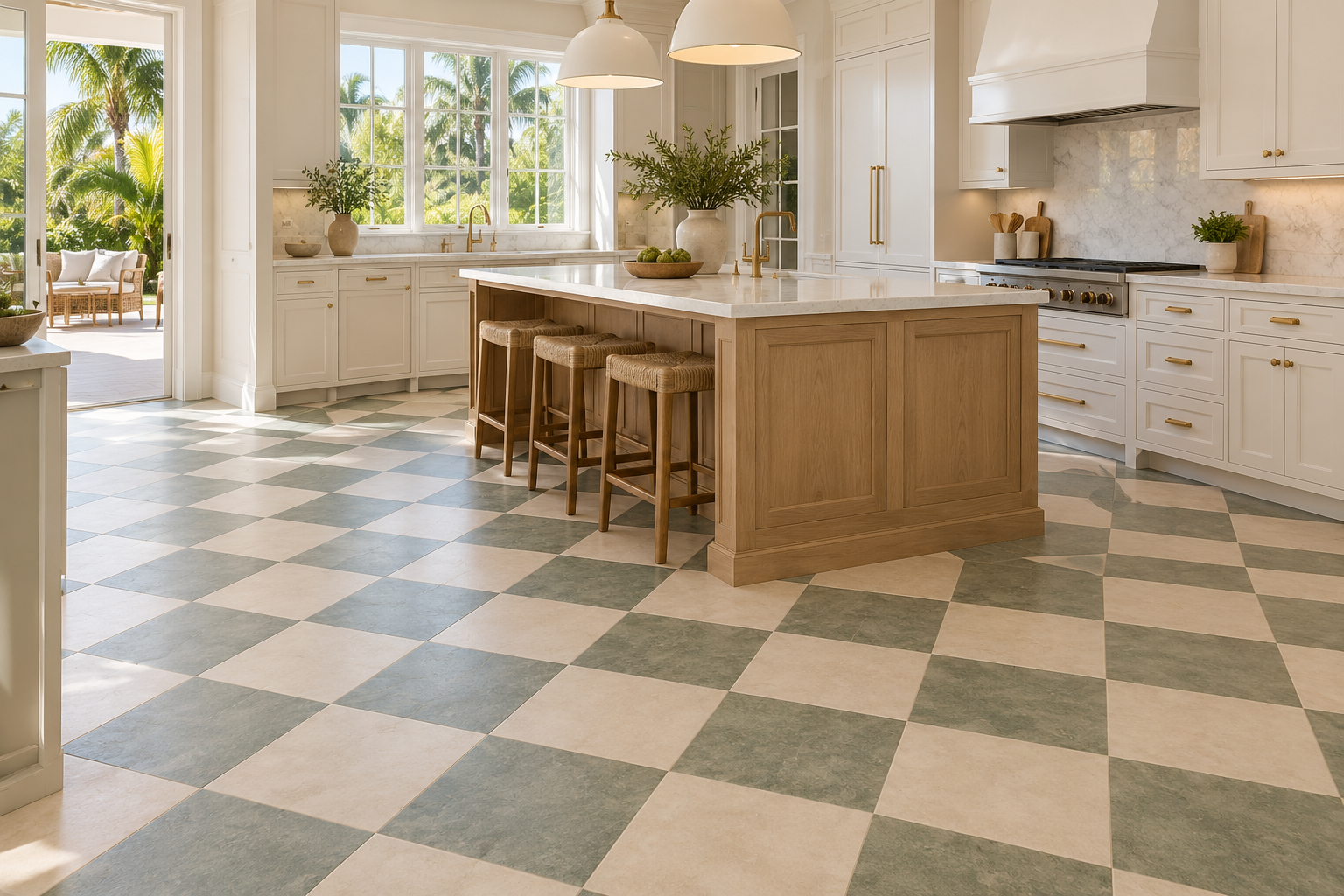
Appropriately rated porcelain is a strong candidate for many sun-exposed spaces. It still requires correct substrate preparation, movement joints, and slip-resistance selection, especially where water may be tracked indoors.
Other Manufacturer-Approved Systems
Depending on the enclosure and substrate, other products may be suitable. Compare their specific indoor/outdoor ratings, maintenance needs, installation methods, and total project costs rather than relying on generic material claims.
What Should a Florida Homeowner Ask Before Buying?
Confirm whether the room is continuously conditioned, record direct-sun exposure, and request the exact flooring SKU’s sunroom approval. Ask about floor-surface and ambient temperature limits, UV warranty exclusions, moisture testing, vapor control, expansion clearances, transitions, and the consequences of leaving the HVAC off. Get these answers in writing before ordering.
Frequently Asked Questions
Can you install SPC flooring in a Florida sunroom?
Sometimes. The exact SPC product must be approved for the room’s direct sunlight, temperature range, substrate, and moisture conditions.
Is LVP suitable for a screened-in Florida lanai?
Do not assume indoor LVP is suitable outdoors. A screened lanai can experience rain and extreme temperatures; use only products approved for those conditions.
Can sunlight make SPC flooring buckle?
Excessive heat and restricted movement can contribute to distortion or buckling. Installation, substrate, and product-specific limits all matter.
Does waterproof vinyl flooring resist UV damage?
Water resistance and UV resistance are separate characteristics. Review the exact manufacturer’s sunlight and discoloration warranty terms.
Are solar shades enough to protect vinyl flooring?
Shades may reduce exposure but cannot override manufacturer installation restrictions. Confirm approval for the actual room conditions.
What flooring is best for a non-air-conditioned sunroom?
Consider products explicitly rated for the room’s temperature, sun, and moisture exposure. Outdoor- or sunroom-rated porcelain may be a practical alternative.
Can SPC be installed over an old sunroom concrete slab?
Only if the product is approved and the slab meets its requirements for moisture, flatness, stability, and preparation.
Will a sunroom installation void the LVP warranty?
It may if the space exceeds the product’s approved temperature or sunlight limits. Check the written warranty before installation.
Choose a Floor That Matches the Room’s Real Conditions
A warm wood-look floor can make a Florida sunroom feel like part of the home, but performance depends on more than appearance. Confirm the enclosure type, actual solar exposure, HVAC conditions, substrate requirements, and the manufacturer’s written approval. Green House Floors and More can help Orlando-area customers compare flooring materials and prepare the right questions for their installer.