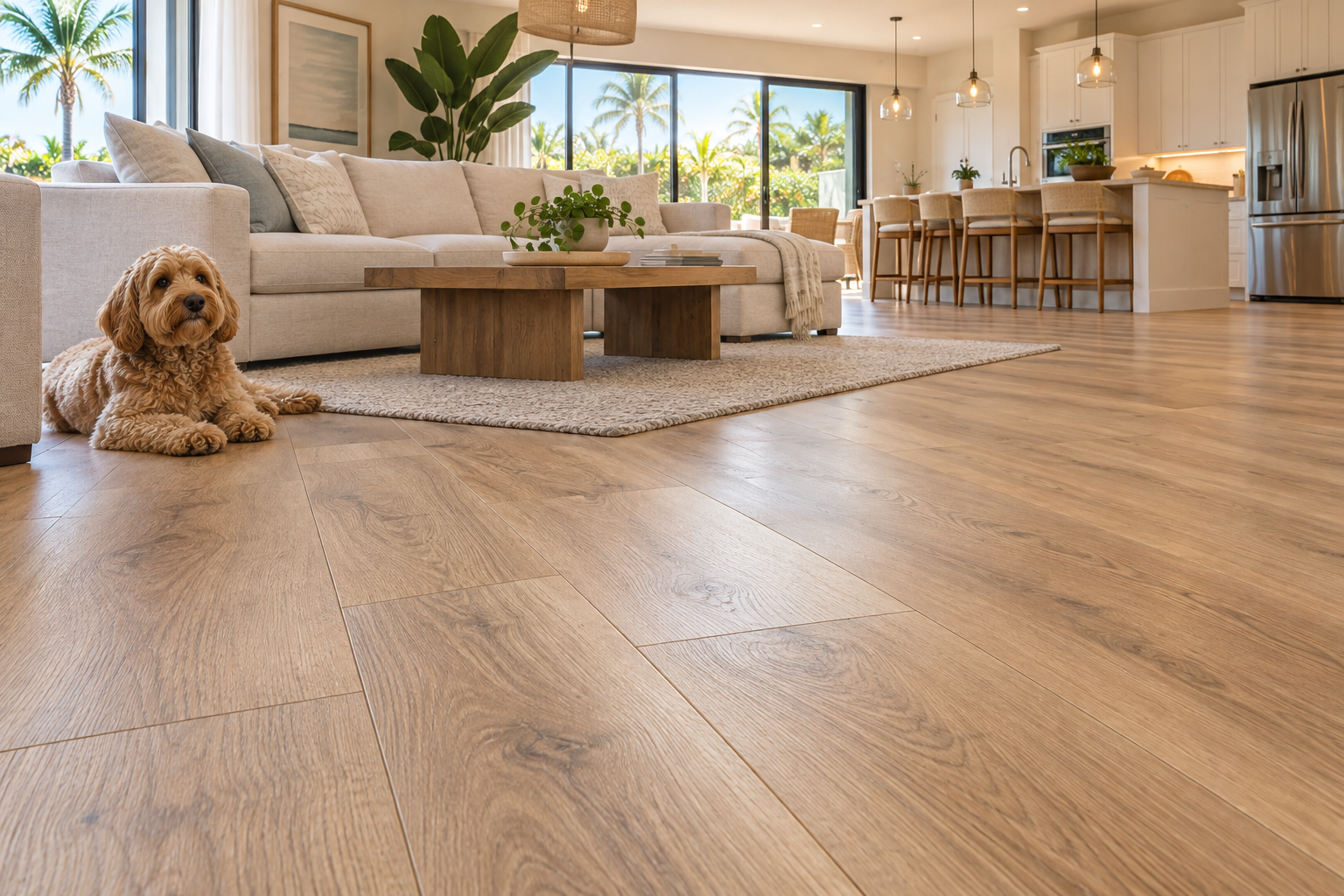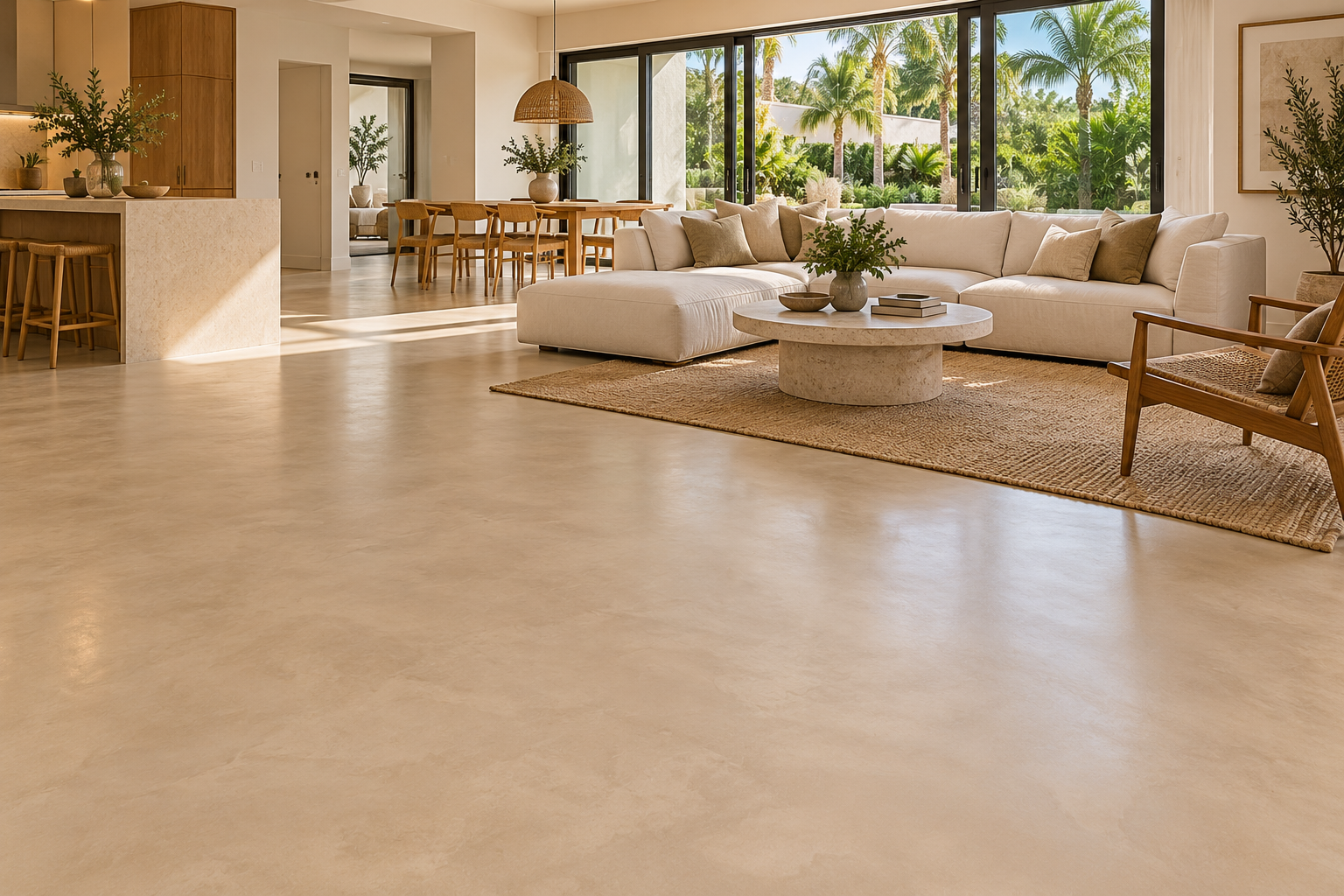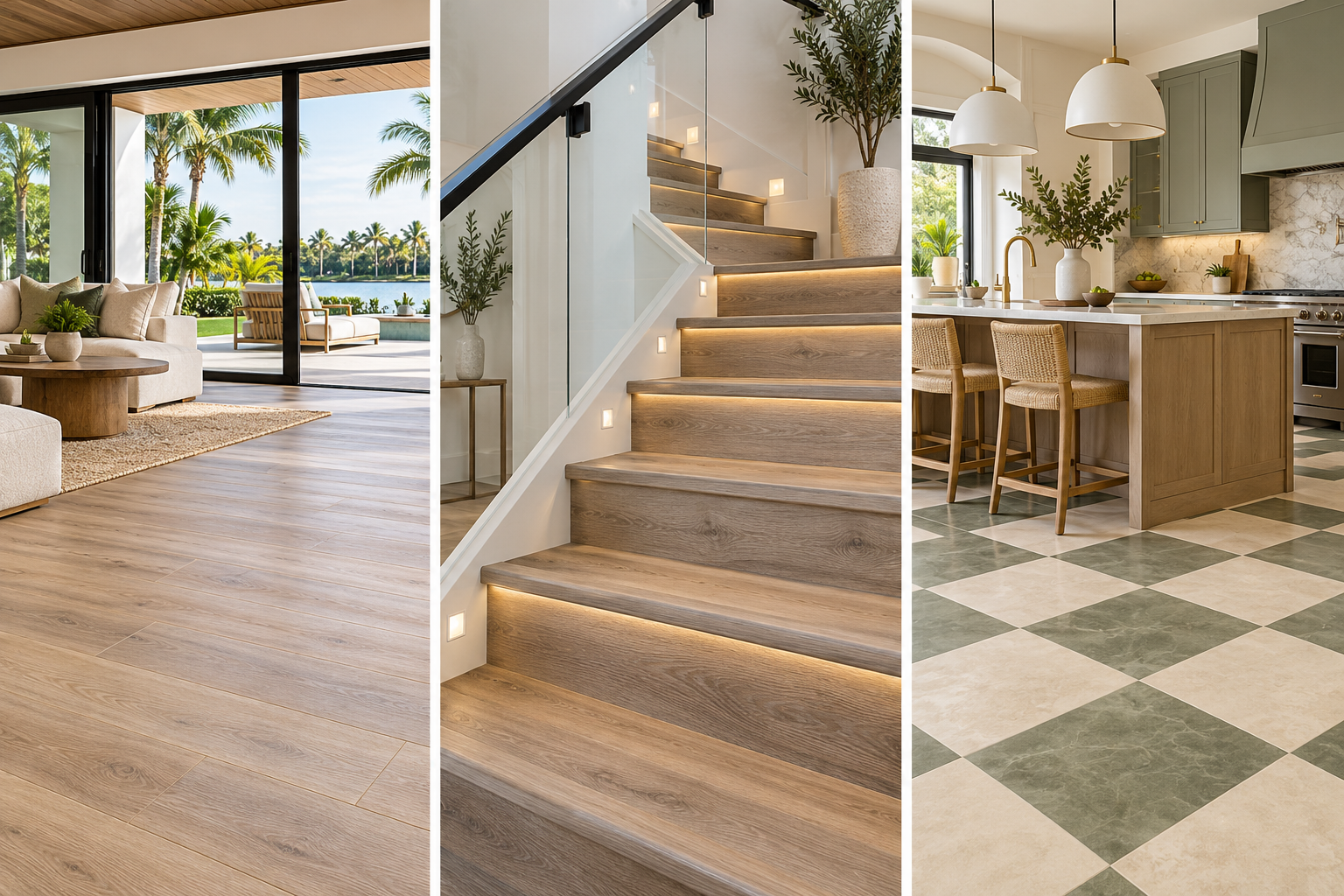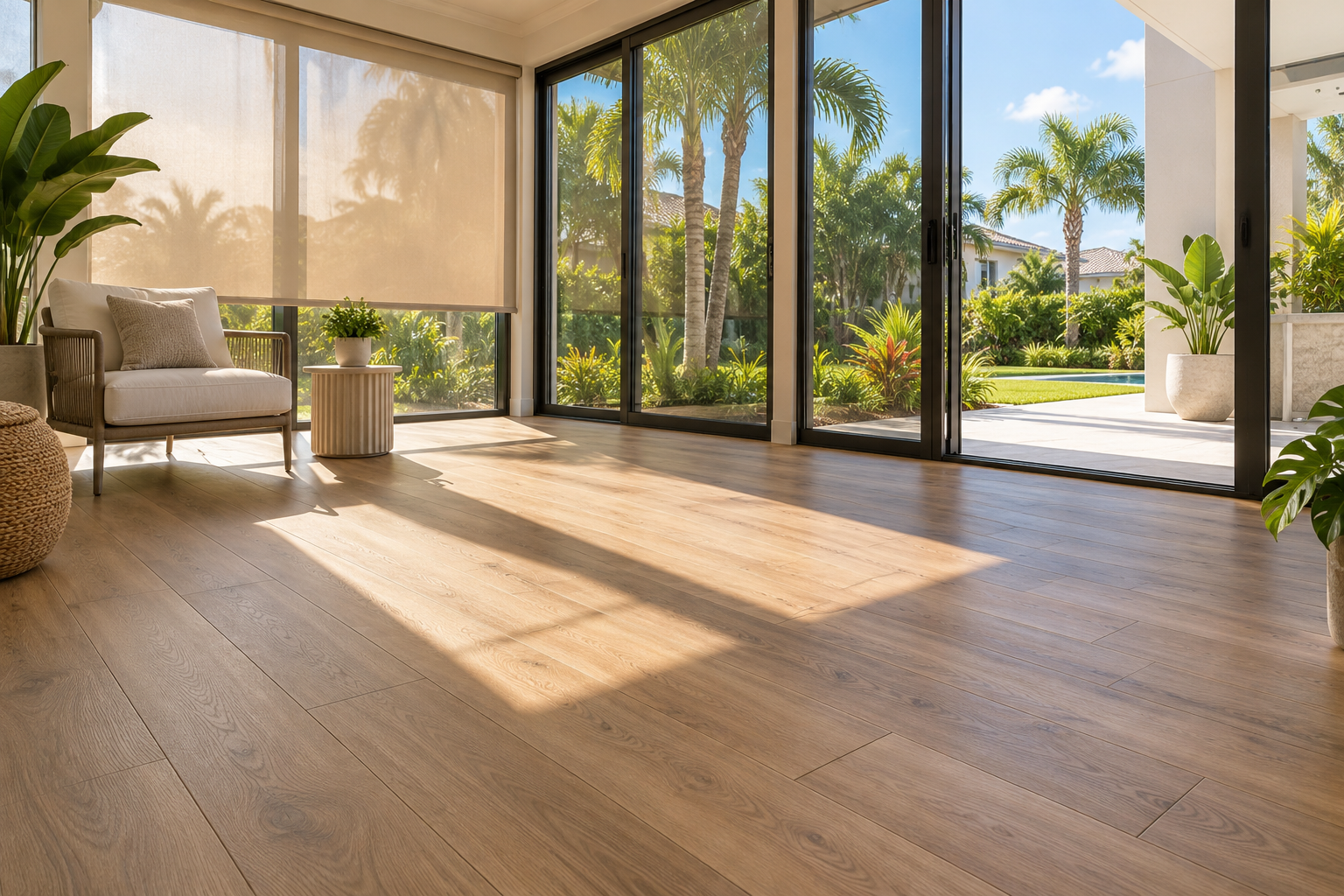
Two luxury vinyl floors can look almost identical on a specification sheet.
Both may be waterproof. Both may have an SPC core. Both may use a 20 or 22 MIL wear layer. Both may carry a residential warranty.
Yet once installed, one can look remarkably similar to natural hardwood while the other immediately looks artificial.
Why?
Because durability specifications don’t tell the entire design story.
In 2026, some of the biggest innovations in SPC and luxury vinyl flooring aren’t happening inside the core. They’re happening where you can actually see and feel them.
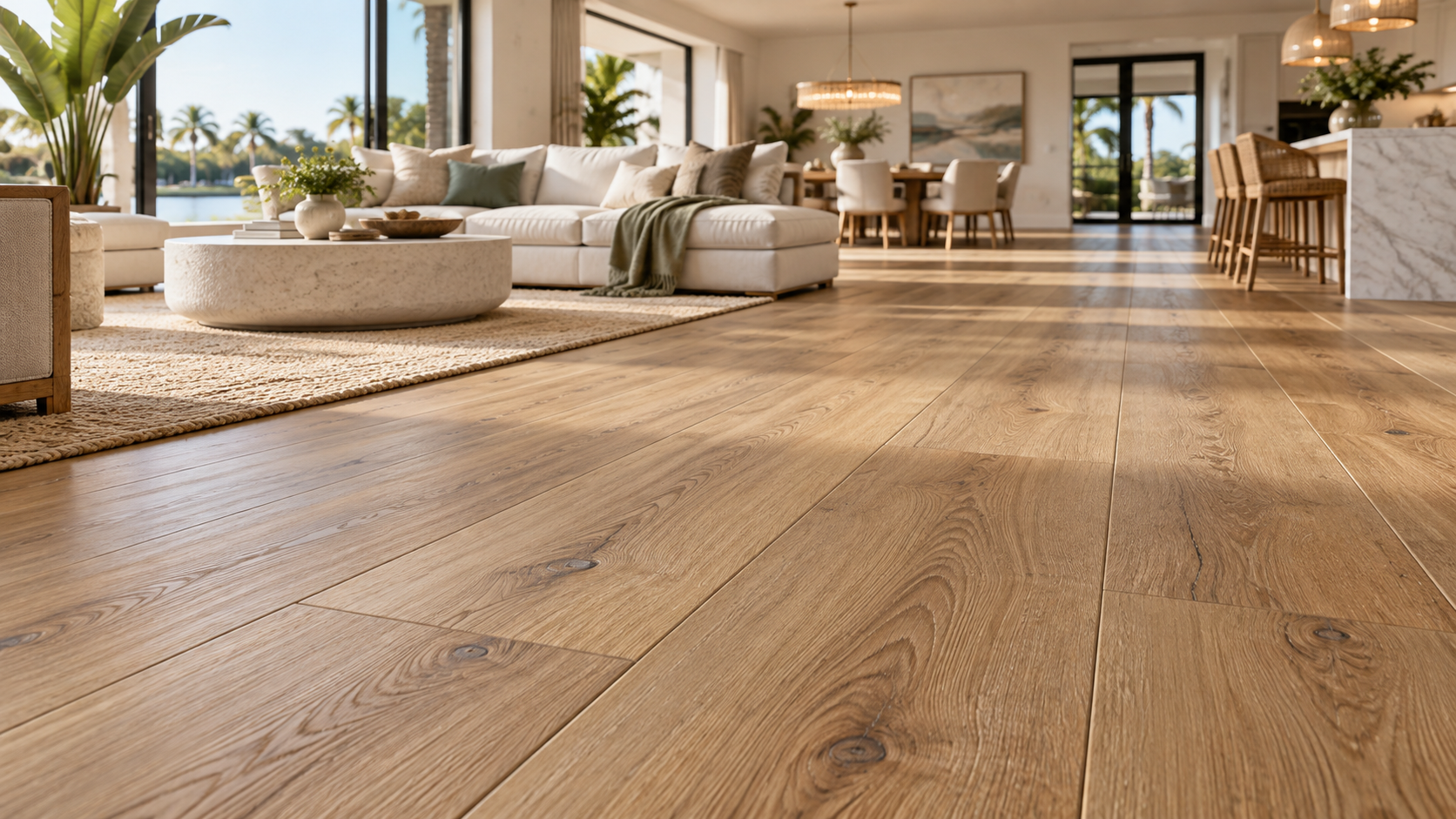
High-definition visuals, EIR textures, matte finishes, larger planks, realistic bevels and lower pattern repetition are changing what resilient flooring can look like.
First: What Makes Vinyl Flooring Look Fake?
The human eye is extremely good at recognizing repetition.
Natural hardwood doesn’t repeat the exact same knot every few feet.
Lower-quality wood-look flooring can reveal its manufactured nature through frequent repeating patterns, texture that doesn’t match the printed grain, excessive shine, artificial-looking knots, flat printed visuals, identical plank coloration, unrealistic bevels, and short or narrow plank formats.
EIR: One of the Most Important Terms to Know
If you’re shopping for realistic wood-look flooring, you may encounter the term EIR.
It means Embossed in Register.
With EIR, the physical embossing is aligned with the printed visual.
See grain. Feel grain. See a knot. Feel the texture associated with it.
That alignment creates depth and helps the flooring react more naturally to light.
Why EIR Matters in Large Installations
The difference becomes particularly noticeable across large open spaces.
Florida homes frequently combine the kitchen, living and dining areas into one continuous flooring installation.
The larger the installation, the more important visual realism becomes.
Matte Is Replacing the Plastic Shine
Traditional vinyl products sometimes had a noticeable shine that immediately identified the material as synthetic.
Modern premium flooring increasingly uses matte or ultra-matte surfaces.
A lower sheen allows the grain and texture to become the visual focus and can also help make minor dust, footprints and everyday surface imperfections less noticeable.
Bigger Planks Can Create a More Realistic Floor
Today’s premium rigid-core products increasingly use wider and longer formats.
Instead of creating a floor filled with short seams, longer boards create more continuous visual movement.
Wider planks can also display more of the wood visual.
But bigger isn’t automatically better. Larger rigid planks require an appropriately prepared subfloor.
Pattern Repetition: The Detail Most Buyers Never Ask About
Imagine installing 1,500 square feet of beautiful oak-look SPC.
At first it looks fantastic. Then you notice the same dark knot. Again. And again.
That’s pattern repetition.
The number of unique visuals used within a collection influences how frequently the same grain pattern appears.
More visual variation generally creates a more natural installation.
Beveled Edges Matter More Than You Think
Premium resilient flooring increasingly attempts to reproduce the dimension of real hardwood through improved bevel technology.
Bevels can help define individual planks and create depth.
What Does “Pressed Bevel” Mean?
Some modern rigid-core products use pressed or enhanced bevel technologies that create more dimensional edges.
Instead of appearing as though a line was simply printed around each plank, the edge itself contributes to the visual profile.
Color Variation Makes Flooring Look More Natural
Real trees aren’t one uniform color.
Flooring manufacturers increasingly incorporate controlled variation into wood-look products for the same reason.
This is particularly effective with today’s popular natural oak, warm brown, honey and chestnut visuals.
Wear Layer Doesn’t Tell You How Expensive a Floor Will Look
A 20 MIL or 22 MIL wear layer tells you something about the protective layer of the flooring.
It does not automatically tell you how realistic the product looks.
Two 20 MIL products can have completely different print quality, texture, pattern variation, bevel construction, finish, plank dimensions and overall visual realism.
Does Thicker SPC Look Better?
Not necessarily.
Thickness and appearance are different characteristics.
A thinner product with excellent printing, EIR embossing, realistic bevels and strong pattern variation could potentially look more authentic than a thicker product without those features.
The Five Questions to Ask Before Buying Wood-Look SPC or LVP
- Does it use EIR or another synchronized embossing technology?
- How many unique plank visuals are included?
- What is the surface sheen?
- What are the plank dimensions?
- What type of bevel does the product use?
Don’t Forget Performance
Visual realism is only part of the equation.
Florida properties create unique performance considerations.
Depending on the application, buyers should also evaluate core construction, overall thickness, wear layer, scratch resistance, water resistance, attached pad, acoustic performance, installation system, subfloor requirements, manufacturer warranty, and commercial versus residential rating.
For Builders and Multifamily Projects, Consistency Matters Too
In multifamily and builder projects, another factor becomes extremely important: repeatability.
A flooring program may need to serve dozens or hundreds of units.
That means decision-makers should consider whether the product can provide consistent specifications, reliable supply and replacement material when future unit turns or repairs occur.
Why This Matters in 2026
The gap between basic vinyl flooring and premium resilient flooring is becoming increasingly visible.
Manufacturers aren’t simply trying to make waterproof flooring anymore.
They’re trying to reproduce the character of natural materials while retaining the practical advantages that made SPC and LVP popular in the first place.
The Green House Floors and More Approach
At Green House Floors and More, we believe flooring should never be evaluated by one number printed on a specification sheet.
Wear layer matters. Thickness matters. Core construction matters. But so do the details you see every day after the installation is finished.
Color. Texture. Grain. Bevels. Plank dimensions. Pattern variation.
Because the goal isn’t simply to find flooring that looks good in a sample.
It’s to find flooring that still looks good when 1,500 square feet of it are installed.
Frequently Asked Questions
What is EIR flooring?
EIR stands for Embossed in Register. It is a manufacturing technique that aligns the physical texture of a flooring plank with its printed wood grain, creating a more realistic appearance and feel.
Does EIR make LVP look more like hardwood?
Yes. By aligning texture with the printed grain and knots, EIR can add depth and realism that conventional embossing may not provide.
Are wider vinyl planks better?
Not automatically. Wider and longer planks can create a more expansive, premium appearance, but the subfloor must meet the manufacturer’s flatness requirements for proper installation.
Does a 22 MIL wear layer mean the flooring looks better?
No. Wear layer relates primarily to surface protection and durability. Visual quality depends on other factors including print quality, texture, pattern variation, finish and bevel design.
What makes luxury vinyl flooring look expensive?
Realistic grain, low pattern repetition, synchronized texture, matte finishes, natural color variation, detailed bevels and appropriate plank dimensions can all contribute to a higher-end appearance.
What should I look for when buying SPC flooring in Florida?
Consider both aesthetics and performance, including core construction, wear layer, thickness, water resistance, installation method, subfloor requirements, attached underlayment, warranty and suitability for the property’s conditions.