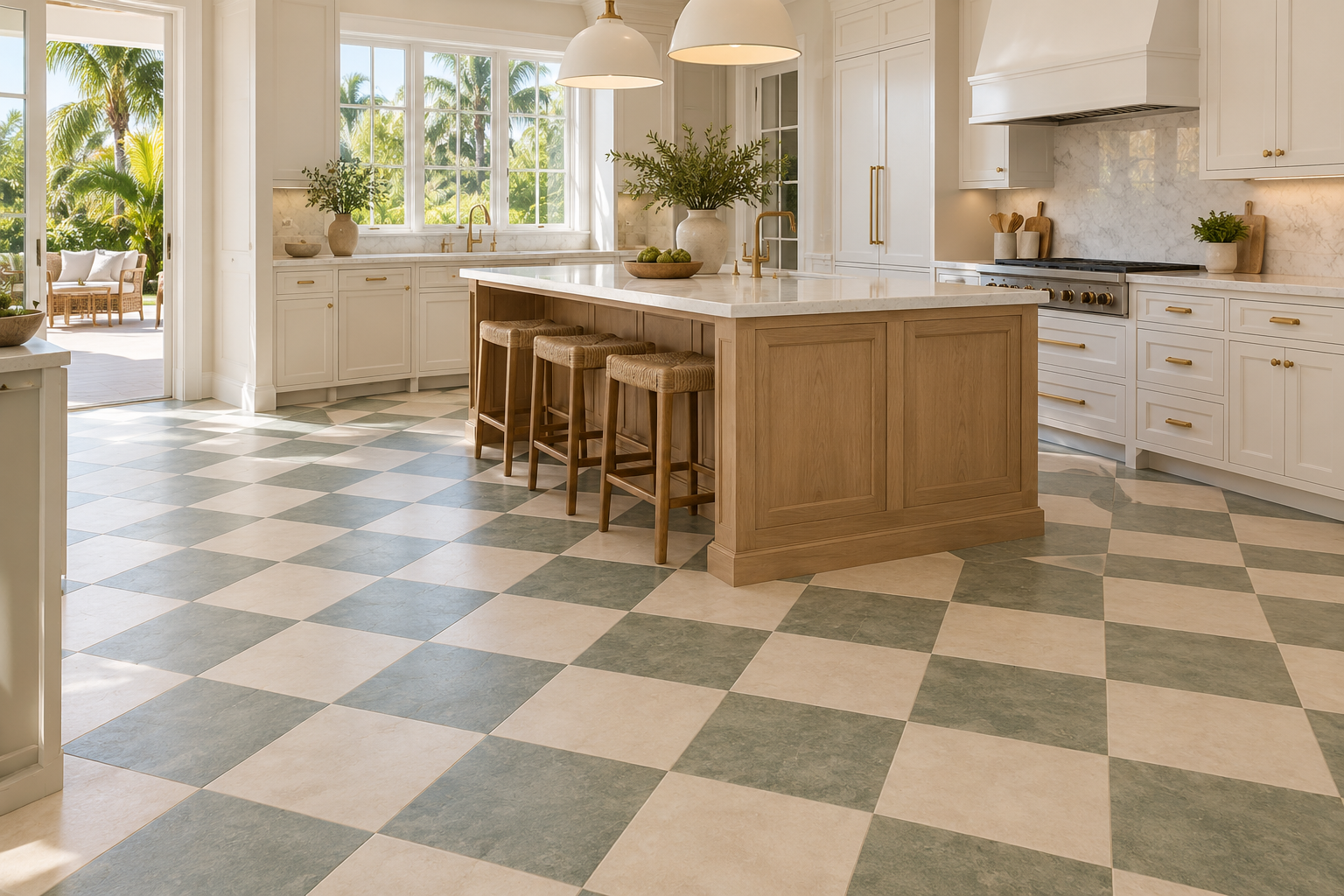
In Florida, humidity doesn’t forgive mistakes. A poorly prepared subfloor is the number one cause of SPC flooring failures. This guide explains how to get it right from the start.
Why the Subfloor Is So Critical in Florida
Florida is one of the most demanding flooring installation markets in the world. With humidity levels ranging from 70% to 90% throughout most of the year, any subfloor preparation error gets amplified. SPC (Stone Plastic Composite) is water-resistant, but that doesn’t make it immune to problems that come from below.
The most common symptoms of a poorly prepared subfloor include: hollow-sounding floors when walking, joints that open over time, edges that lift, and in severe cases, mold growing beneath the floor.
Step 1: Moisture Testing — Never Skip It
Before installing anything, you must measure subfloor moisture. On concrete slabs (very common in Florida), use one of these methods:
- Calcium chloride test (ASTM F1869): the industry standard for concrete slabs.
- In situ relative humidity probe (ASTM F2170): place probes in drilled holes to measure moisture inside the slab.
- Plastic sheet test (quick preliminary method): tape an 18″x18″ plastic sheet to the floor for 24 hours. If there’s condensation, there’s moisture.
The maximum acceptable level for floating SPC over concrete is generally 85% relative humidity or 8 lbs/1000 sq ft/24h on a calcium test. If it exceeds these values, you need a vapor barrier.
| 💡 Important Installing without a moisture test can void the manufacturer’s warranty. Always document your readings with photos and dates. |
Step 2: Flatness Assessment
Rigid SPC does not tolerate subfloor irregularities. Unlike flexible LVP, it doesn’t conform to undulations. The industry’s maximum tolerance is:
- 3/16″ over 10 linear feet for floating installation.
- 1/8″ over 6 linear feet for glue-down installation.
Use a 6 or 10-foot straightedge to check the entire surface. Mark problem areas with chalk. High spots are ground down and low spots are filled with self-leveling compound.
Step 3: Subfloor Correction
Low Areas — Self-Leveling Compound
- Use a fast-setting self-leveling compound (2-4 hours) for greater efficiency.
- Apply primer before self-leveler on porous concrete surfaces.
- Allow full cure before installing (minimum 24 hours or per product specification).
High Areas — Grinding
- Use a floor grinder or diamond disc to level elevated points.
- Vacuum all dust completely before continuing.
Step 4: Cleaning and Conditioning
The subfloor must be clean, dry, and free of:
- Old adhesives, wax, or paint (remove with scraper or chemical remover).
- Grease or oil (industrial degreaser).
- Dust and debris (vacuum with industrial vacuum).
A dirty subfloor prevents proper vapor barrier adhesion and can contaminate the SPC click system.
Step 5: Vapor Barrier
In Florida, a vapor barrier is not optional on concrete slabs — it’s essential. Options by project type:
- 6-mil polyethylene sheet (minimum): overlapped 8″ at seams and sealed with tape.
- Underlayment with integrated vapor barrier: convenient for floating installations.
- Liquid epoxy membrane: for elevated moisture cases or slabs in direct contact with soil.
| 💡 Green House Floors Recommendation For Florida projects with a slab on grade, we always specify a minimum 6-mil vapor membrane. The added cost is minimal compared to the cost of a warranty claim. |
Step 6: Material Acclimation
Although SPC is more dimensionally stable than flexible LVP, it still requires acclimation:
- Minimum 48 hours in the installation environment.
- Boxes should be open or cross-stacked to allow air circulation.
- Room temperature must be between 65°F and 85°F.
Installing material directly off the delivery truck is one of the most expensive mistakes an installer can make.
Summary: Your Pre-Installation Checklist
- ✅ Moisture test documented
- ✅ Flatness verified with 10-foot straightedge
- ✅ Areas corrected with self-leveler or grinding
- ✅ Subfloor clean and free of contaminants
- ✅ Vapor barrier properly installed
- ✅ Material acclimated 48+ hours
| 💡 Need the right materials? At Green House Floors we carry self-leveling compounds, vapor barriers, underlayments, and everything you need for proper subfloor preparation. Ask our technical team. |
Green House Floors and More LLC
8123 S Orange Ave, Unit 170 · Orlando, FL 32809
Distribution from Orlando & Miami · Nationwide Shipping
www.greenhousefloors.com