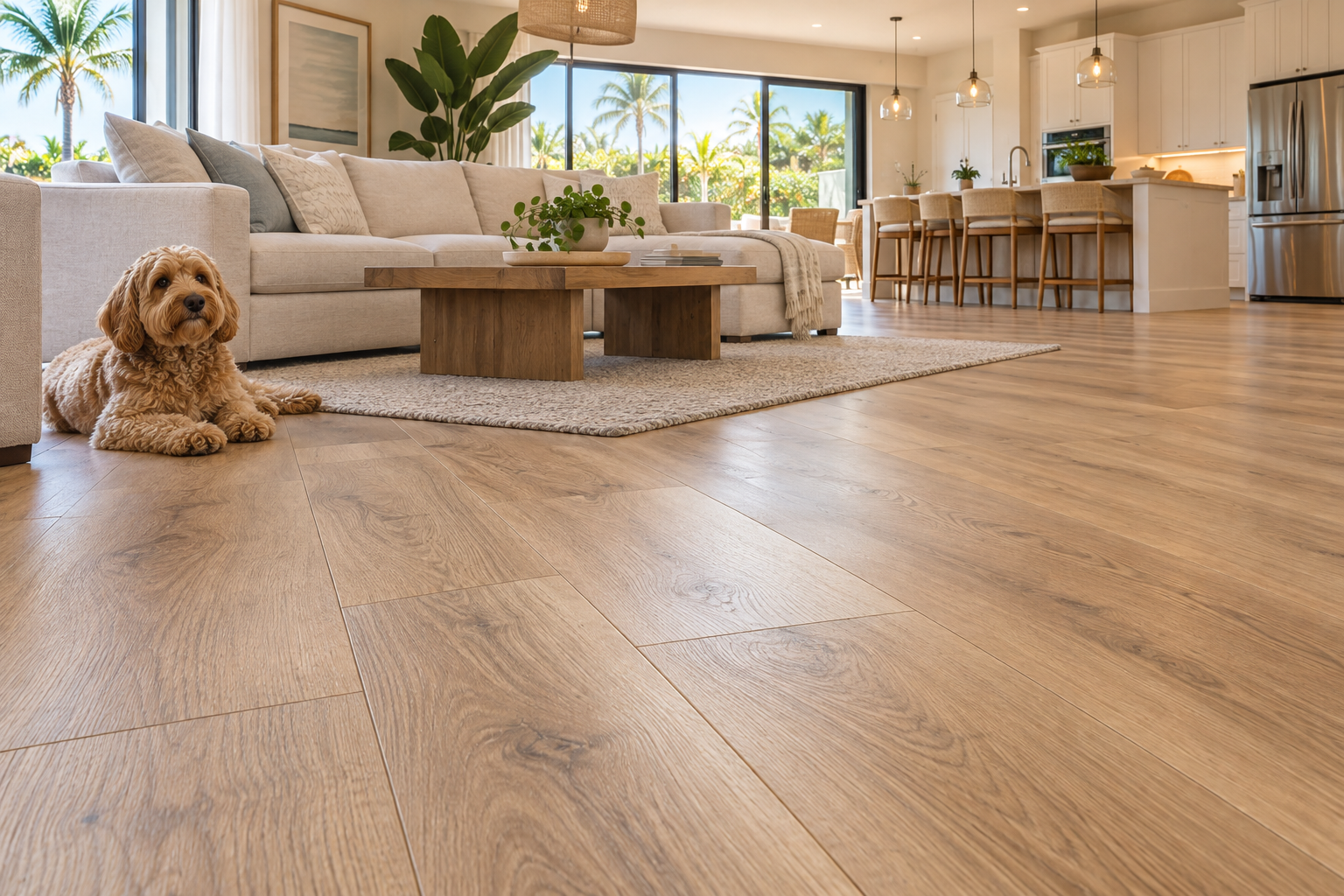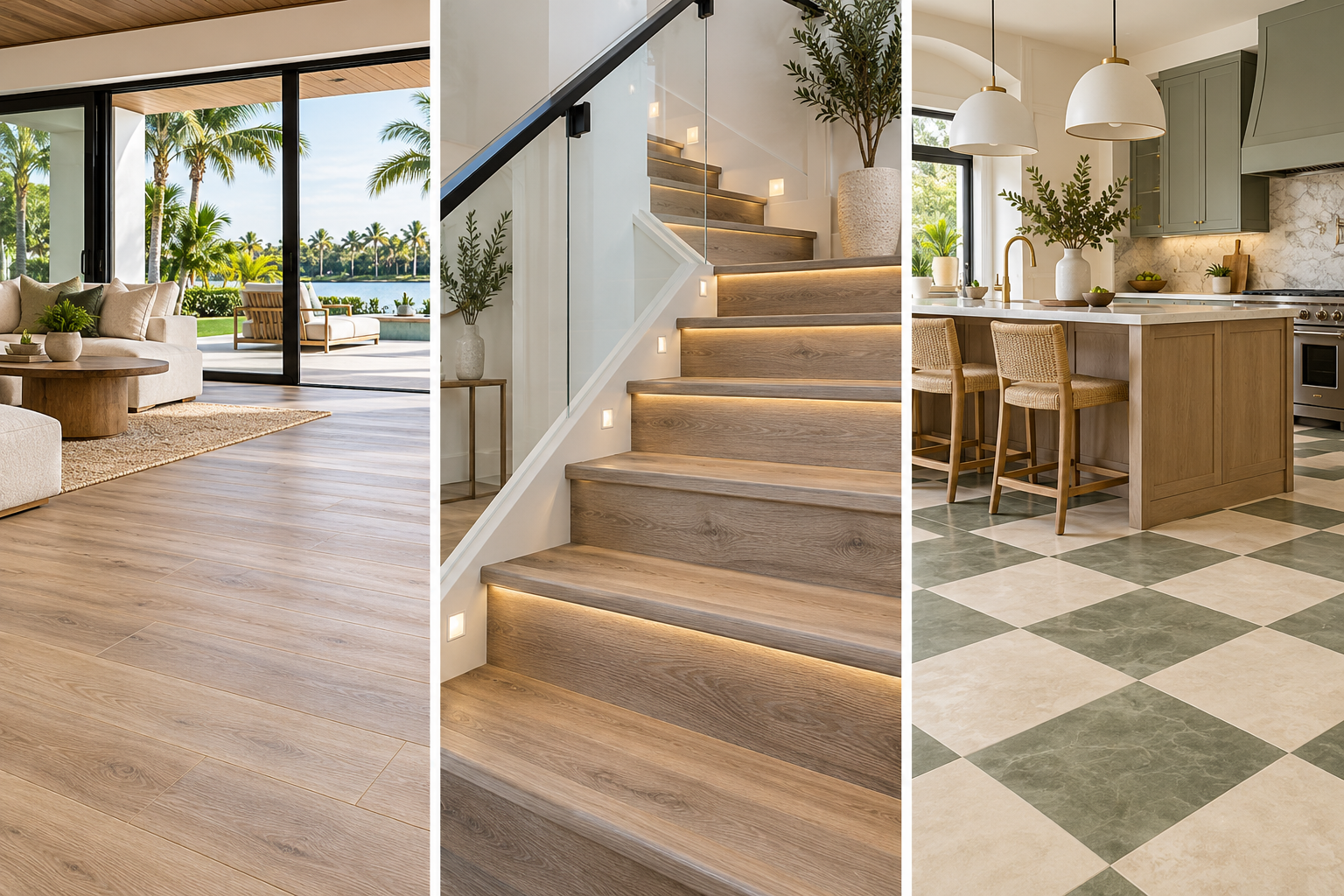
At Greenhouse FL, we work daily with installers and contractors across South Florida who face warranty claim denials that were entirely preventable. The pattern is consistent: the material is fine, the product is right for the space, but a step was skipped or a spec was ignored during installation. Even when the flooring itself is flawless, how it’s installed falls entirely on the installer, and errors like insufficient thinset coverage on tile, improper locking of LVP planks, or failure to stagger seams correctly all void warranty protection.
The exposure is real: losing coverage on a 1,000 sq ft floor represents $4,000–$8,000 in labor alone . These are the seven mistakes you cannot afford to make.
1. Does Skipping Acclimation Actually Void Your LVP or Hardwood Warranty?
Yes, and manufacturers document it explicitly. Engineered hardwood, LVP, and LVT all need time to adjust to the room’s temperature and humidity before installation, and failing to acclimate leads to warping, gapping, or buckling.
The standard window is not negotiable: LVP requires 48–72 hours of acclimation at room temperature before any plank goes down . Manufacturers often require proper acclimation before installation and specify acceptable humidity ranges, and staying within those guidelines is what keeps coverage valid.
In Florida’s subtropical climate, where interior humidity can shift 20+ points between a job site with no HVAC running and a finished, conditioned space, skipping this step is especially damaging. The plank you install at 82°F in an unconditioned unit will behave very differently once a central air system drops that space to 74°F and 50% RH permanently.
Acclimation is not a courtesy step. It is a documented warranty condition.
2. What Subfloor Conditions Will Cause a Manufacturer to Deny Your Warranty Claim?
Subfloor condition is the most cited reason for warranty denial across all flooring categories. Even the most impervious porcelain tile or 100% waterproof LVP will fail if the concrete subfloor beneath it is not properly prepared, because concrete is porous and Florida’s high water table means moisture is constantly wicking up through the slab, creating a perfect environment for mold, mildew, and adhesive failure.
Moisture emissions from the subfloor cannot exceed three pounds per 1,000 square feet per 24 hours as measured with the calcium chloride test, or in excess of 75% in-situ relative humidity, and the responsibility for determining whether the concrete is dry enough lies with the owner and installer.
Beyond moisture readings, flatness is also a documented warranty condition. Ceramic tile with height variations exceeding manufacturer specifications voids warranties immediately.
For LVP, surface irregularities above 3mm cause joints to loosen, gaps to form, and warranty coverage to disappear.
In a humid environment like Florida, ignoring the subfloor is the single biggest mistake a remodeler can make, because moisture is the number one enemy of flooring regardless of how waterproof the surface material is.
The subfloor report is your liability shield. Document it before any product goes down.
3. Can Using the Wrong Underlayment or Adhesive Void Your Flooring Warranty?
It can, and it does more often than most installers expect. Some installers double up without realizing the floor already has built-in padding, and both that and skipping it entirely cause real problems.
Adding another layer on top of built-in padding creates instability and voids most warranties.
Using the wrong adhesive or applying it improperly can cause bonding issues and movement that manufacturers will attribute directly to installer error, not product defect.
For engineered wood, the stakes are equally precise. Most engineered wood flooring products specifically recommend, and often require, underlayment for warranty purposes, and the type of underlayment recommended varies based on installation method and subfloor material.
Every brand has specific requirements and some void warranties for unapproved products. Reading the spec sheet before selecting underlayment is not optional.
The wrong underlayment is not a minor deviation. Manufacturers treat it as a breach of installation protocol.
4. What Happens When You Exceed Room Size Limits or Skip Expansion Gaps?
Even in expansive open-concept layouts, laminate and LVP have specific room size limits that cannot be ignored without consequences, and when you exceed the manufacturer’s maximum room size recommendations, typically around 1,000 square feet for most products, you are setting yourself up for buckling and gaps.
Expansion gaps compound the problem when they are too narrow or left out entirely. Failing to leave proper expansion gaps, usually ¼”–½” around walls, can cause buckling as the flooring expands, and spacers and trim finishes must be used correctly.
Florida’s humidity causes floors to swell, so always leaving the recommended gaps at edges is not a suggestion but a technical requirement.
Stagger patterns carry the same weight. Staggered seams are not just for aesthetics but prevent structural weaknesses, and seams should be offset by the recommended minimum, usually 6 inches for planks.
Every linear inch of missing gap is a potential warranty exclusion waiting to surface.
5. Does Installing Flooring in the Wrong Location Void the Warranty?
Yes, and it is one of the cleanest reasons for a denial. Flooring manufacturers will warn you when a certain type of flooring is not intended for specific areas of the house, and if you install flooring in a location that goes against those recommendations, the warranty will likely not cover any resulting damages.
Radiant heat systems are a particular trap for LVP installers. The radiant heat system must be embedded into the subfloor and cannot be in direct contact with LVP flooring, because direct contact will cause damage and void all manufacturer warranty.
LVP is intended for interior use only and should not be installed in locations where the substrate below the building structure is exposed to the elements or where there are structural problems related to ongoing moisture exposure.
Product misuse is always on the installer’s record. The spec sheet defines the approved use case.
6. Why Is Florida’s Climate the Most Demanding Environment for Keeping a Warranty Valid?
Florida operates at the edge of what most flooring products are engineered to handle. Florida’s humid weather makes moisture a constant challenge, and without a proper moisture-resistant membrane, there is real risk of warping or buckling of wood or laminate, mold and mildew growth, and breakdown of adhesives that keep floors secure.
Florida’s high water table and humidity mean moisture vapor can migrate through concrete slabs and subfloors even when you never see standing water, and this leads to warped boards, cracked tiles, or moldy substrates, especially when proper moisture barriers or vapor testing are skipped.
The standard vapor barrier specification in Florida for floating floors is 6-mil polyethylene sheeting. The seams must be taped with moisture-resistant tape to create a continuous seal, and a standard foam underlayment should never be relied upon as a moisture barrier.
From an insurance standpoint, the exposure goes further than the warranty itself. Insurance companies may deny claims related to moisture damage if installations were not performed by licensed professionals or do not comply with applicable codes, and this risk exposure can cost thousands in unrecovered damage expenses.
In Florida, moisture mitigation is not a best practice. It is the baseline.
7. How Do Certified Installers in Florida Protect Your Manufacturer Warranty Coverage?
The gap between a standard warranty and an extended one is often just the installer’s credentials. Standard manufacturer warranties provide 1 year of limited coverage, while certified installers can unlock up to 10 years on porcelain tile .
Certified installers have been trained on the ins and outs of flooring installation, follow manufacturer guidelines including acclimation periods, and ensure flooring is placed based on manufacturer recommendations, allowing it to last longer and reducing repairs and premature wear.
Documentation is the other half of the equation. Professional installation documentation supports insurance claims and provides evidence of proper installation when claims arise, and licensed contractors provide comprehensive documentation including material certifications, installation photos, and compliance verification.
Many installers skip the manual and void the warranty. The installers who protect their clients’ coverage are the ones who read every spec sheet for every product, every time, and document what they find.
Certification does not guarantee a perfect floor. It does guarantee a defensible one.
Installation Checklist: 7 Steps to Keep the Warranty Intact
Before the first plank or tile goes down, confirm the following:
· Acclimation: LVP, LVT, and engineered hardwood rested 48–72 hours in the conditioned space at final room temperature and humidity.
· Moisture test documented: Calcium chloride or RH probe results recorded and within manufacturer thresholds .
· Subfloor flatness verified: No deviation greater than 3/16″ over 10 feet for LVP; spec per manufacturer for ceramic and hardwood.
· Vapor barrier installed correctly: 6-mil poly sheeting for floating floors over concrete; seams taped and overlapped per spec.
· Approved underlayment only: Cross-referenced with manufacturer’s approved products list; no double-layering over pre-attached pad.
· Expansion gaps maintained: ¼”–½” at all walls, fixed objects, and transitions; spacers used throughout.
· Room size and product placement confirmed: Material approved for the specific application zone .
Every item on this list corresponds to a documented exclusion in a standard manufacturer warranty. Miss one and the coverage is at risk.
At Greenhouse FL, we supply LVP, hardwood, ceramic tile, and finished flooring materials to installers and contractors throughout Florida who understand that product quality and installation precision are the same investment. Our team reviews technical specs with every order and can help cross-reference manufacturer requirements before material arrives on the job site.
, Greenhouse FL | greenhouse-fl.com
🖼