One of the most frequent — and most expensive — mistakes in flooring installation is using adhesive when it’s not needed, or not using it when it’s absolutely essential. This technical guide settles the question definitively, with clear criteria for each material type, each project type, and every situation you might encounter in the field.
Three Systems, Three Completely Different Rules
There are three main flooring installation methods: floating without adhesive, glue-down with adhesive, and nail or staple-down for hardwood. Each product and situation has its correct method. Using the wrong one can ruin the installation, void the manufacturer’s warranty, and generate repair costs that fall on the installer.
The most common mistake in the Florida market is installing floating SPC with adhesive without manufacturer direction, or installing flexible LVP in wet areas without proper perimeter sealing. Both errors produce the same result: premature failures that end in claims and rework at your expense.
Floating LVP — No Adhesive in the Vast Majority of Cases
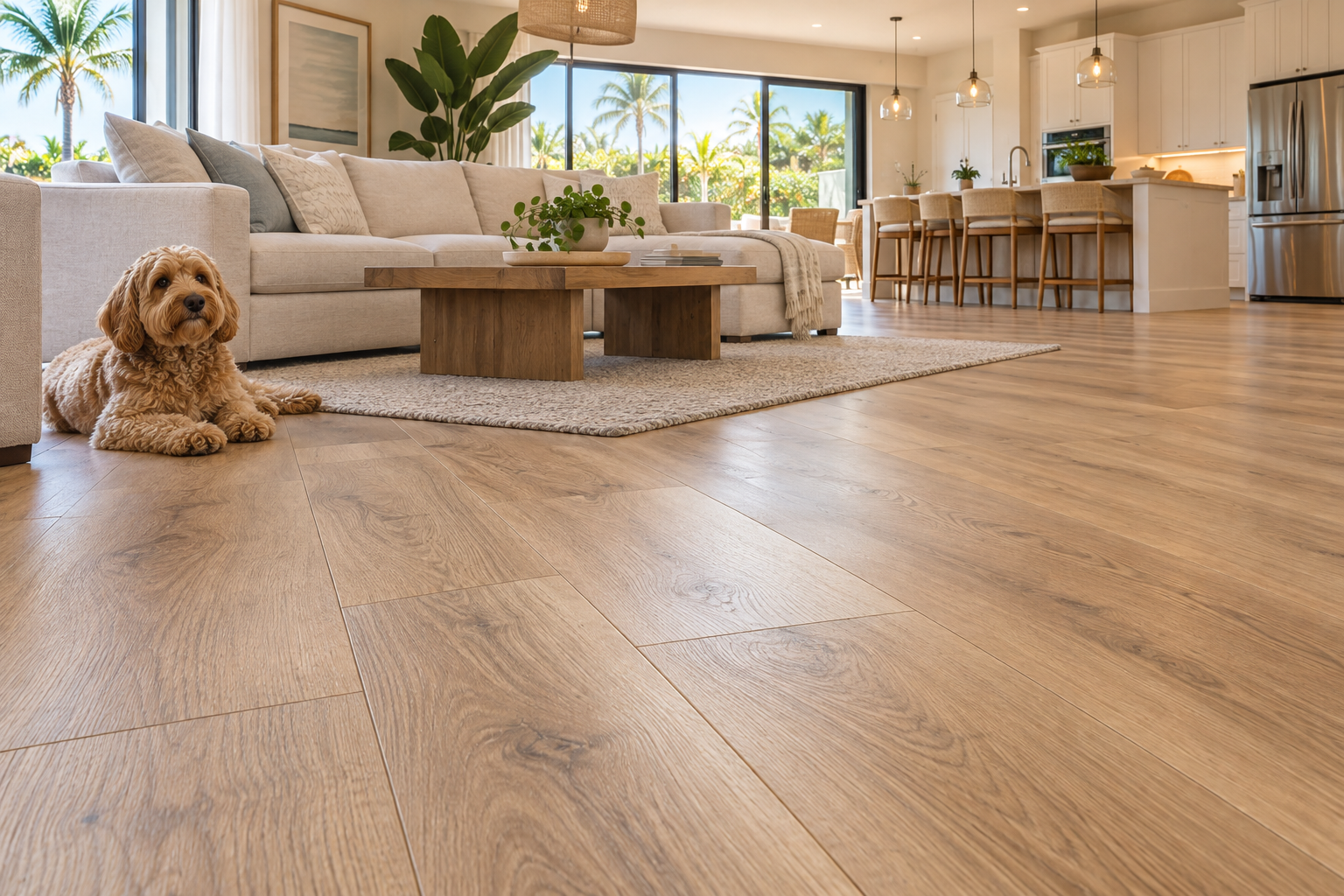
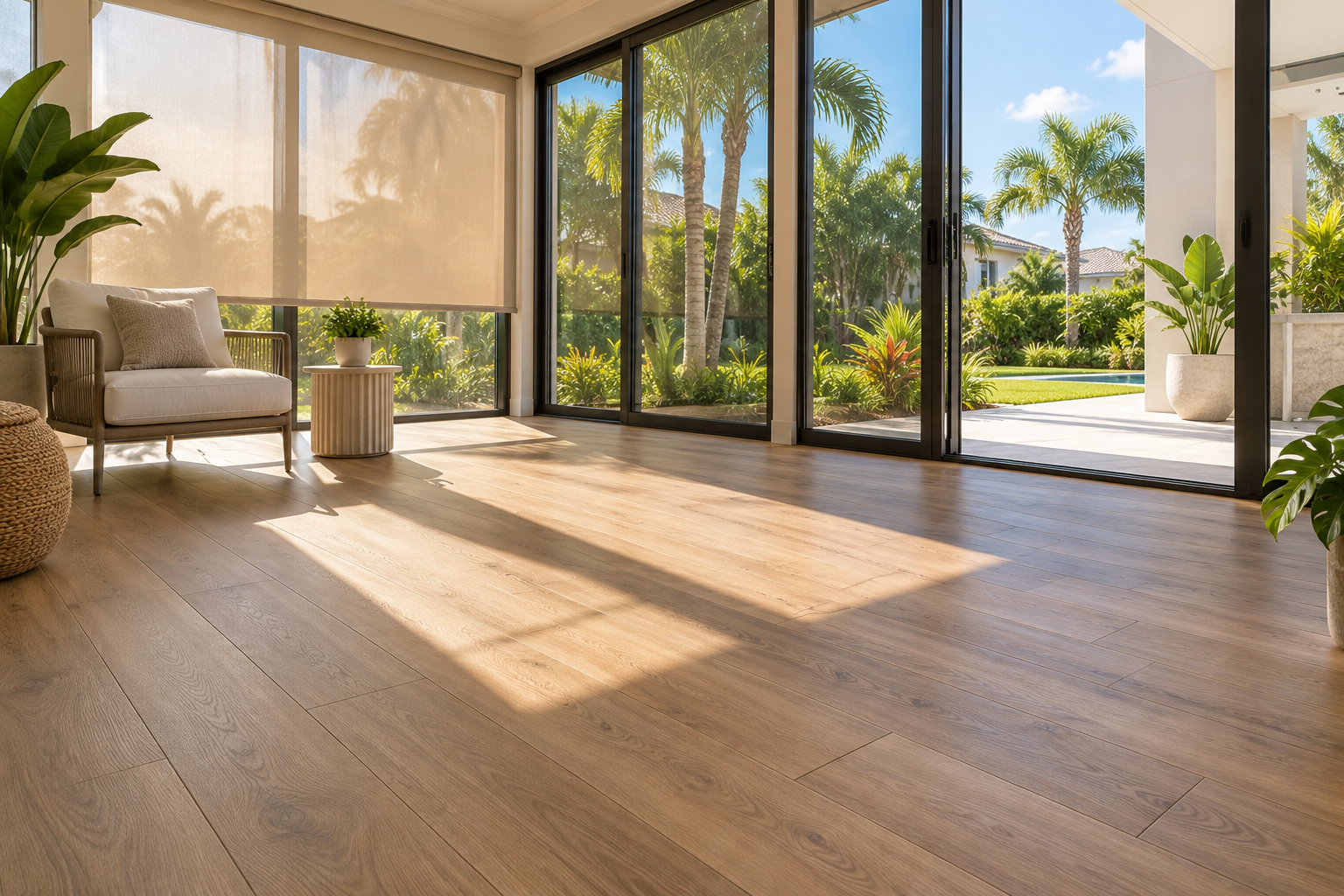
Click LVP is designed to be installed floating, without adhesive. The floor rests on the subfloor and underlayment without being attached to them, allowing it to expand and contract naturally with temperature and humidity changes — something critical in Florida, where the variation between outdoor conditions and air-conditioned interiors can be dramatic.
When NOT to use adhesive on floating LVP:
- In standard residential installations with click systems (uniclic, loc, snap) — representing 90% of LVP installations in today’s market.
- When the subfloor is correctly leveled and within the manufacturer’s tolerances (generally 3/16 inch over 10 feet).
- In areas where temperature can vary between 65°F and 85°F, since the floor needs free movement room.
- When the specified underlayment is already correctly installed and acts as a separation layer.
When to USE adhesive on LVP:
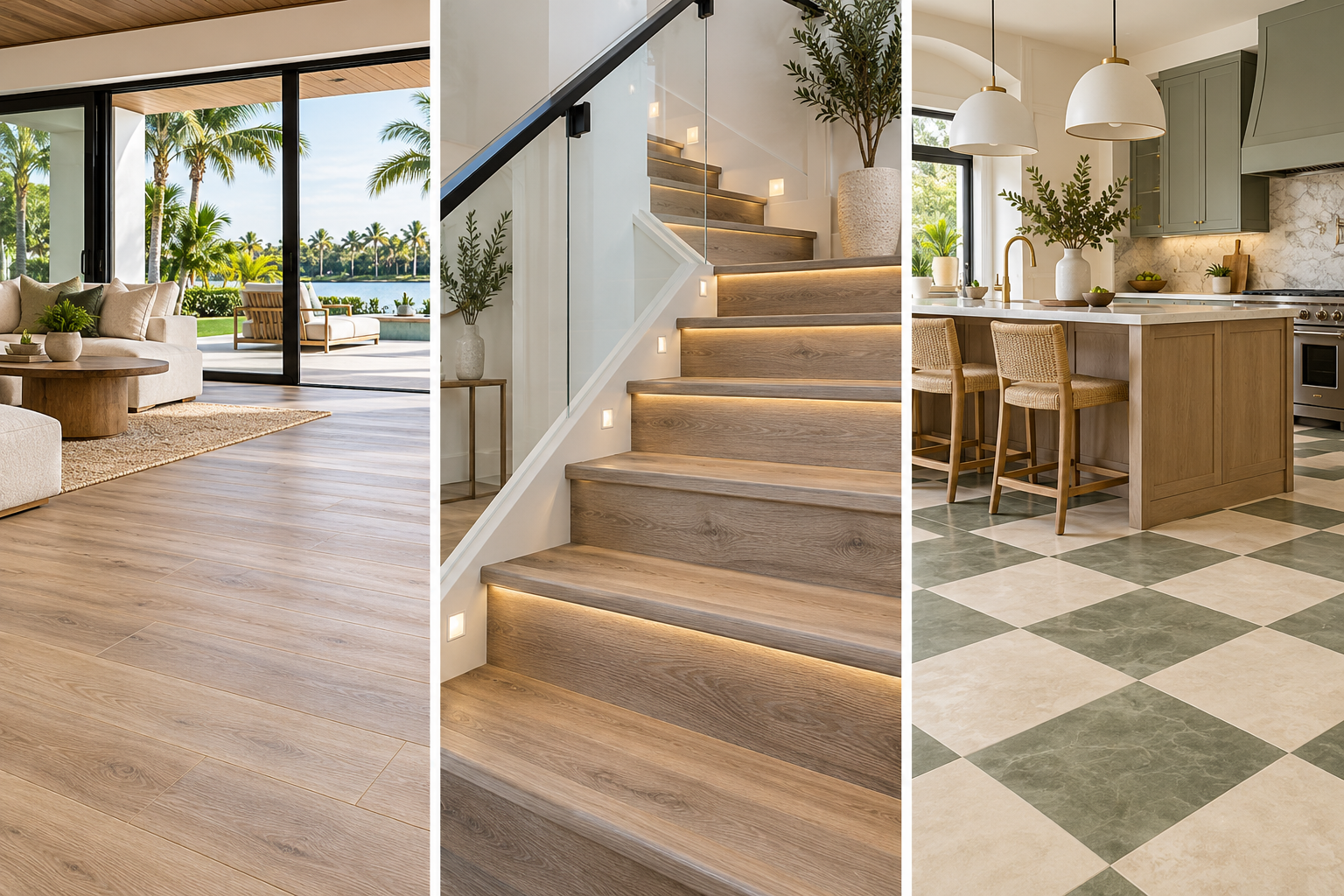
- On stair installations, where each individual plank must be secured to prevent movement and fall risk.
- In extremely high-traffic areas — gyms, very active commercial spaces — where movement can gradually loosen the click system.
- When the manufacturer explicitly specifies a glue-down installation for that specific product.
- In very low-profile flexible LVP without a robust click system, requiring adhesive to stay in place.
| 💡 Critical warning Using adhesive on a floating click LVP without manufacturer direction can block the floor’s natural movement and cause severe warping, edge lifting, and click tongue failure. This mistake voids the warranty automatically. |
Rigid SPC — Floating or Glue-Down Depending on the Project
SPC has an advantage over flexible LVP: its stone and PVC core makes it more dimensionally stable. However, this doesn’t mean it always goes floating. The decision depends on the area size, use type, and specific project conditions.
Floating installation — when it applies:
- Residential rooms and areas up to 1,000 sq ft without many directional changes or obstacles.
- Living rooms, hallways, bedrooms, and residential offices with moderate use.
- When the project has radiant heating below — floating SPC transfers heat more uniformly.
- When the client may need to replace the floor in the future without demolition.
Glue-down installation — when it’s necessary:
- High-traffic commercial projects where constant movement can gradually loosen the click system.
- Areas larger than 1,000-1,500 sq ft where accumulated expansion and contraction can create floor tensions.
- Stairs, ramps, and sloped areas where gravity creates additional forces on the click system.
- Installations over electric radiant heating where adhesive helps maintain stability.
For SPC glue-down, the most recommended adhesive is pressure-sensitive (PSA) low-VOC. Always apply with the specified notched trowel size — the notch size determines coverage per square foot.
Porcelain and Ceramic — Always With Mortar, Never Without
Ceramic and porcelain always require adhesive. There is no such thing as floating porcelain. Mortar creates the support bed that distributes weight, maintains level, and permanently bonds the tile to the subfloor.
- Standard polymer-modified thinset (gray or white): for standard-format ceramic up to 15×15 on walls and floors.
- Large-format mortar: required for any tile 15×15 or larger. Greater elasticity and better coverage under the tile.
- Back-buttering (double coat): mandatory technique for 24×48 slabs and larger. Apply mortar to both the subfloor AND the back of the tile.
- Fast-setting mortar: for tight-deadline projects needing foot traffic in under 24 hours.
- Two-component epoxy adhesive: for pools, showers with aggressive chemicals, or industrial areas.
| 💡 The 95% Rule — Non-Negotiable For large-format porcelain, you must achieve at least 95% mortar coverage on the back of the tile. Less coverage means insufficient support, higher cracking risk under point loads, and hollow spots detectable when walking. |
Common Adhesive Mistakes to Avoid
In daily practice, the same mistakes repeat themselves. Knowing them helps you avoid them and recognize them in others’ work.
- Using standard thinset on large-format tiles: insufficient support, hollow spots, and cracking risk under concentrated weight.
- Not respecting the adhesive open time: if thinset skins over before placing the tile, it loses all adhesion.
- Incorrect mixing — too much water: significantly weakens the adhesive, extends cure time, and reduces final strength.
- Not combing adhesive in the correct direction: trowel lines must be perpendicular to the tile’s longest side to maximize collapse and coverage.
- Installing over adhesive that started curing: if there’s surface skinning, remove it and apply fresh. Never reuse adhesive that has begun to set.
| 💡 Ask Green House Floors We can recommend the right adhesive for the product you purchase from us. We don’t just sell the floor — we provide the complete technical solution so your project comes out perfect from day one. |
Green House Floors and More LLC
8123 S Orange Ave, Unit 170 · Orlando, FL 32809
Distribution from Orlando & Miami · Nationwide Shipping
www.greenhousefloors.com